

Join Our Newsletter To Be Informed When New Videos Are Posted
Hebrew Text
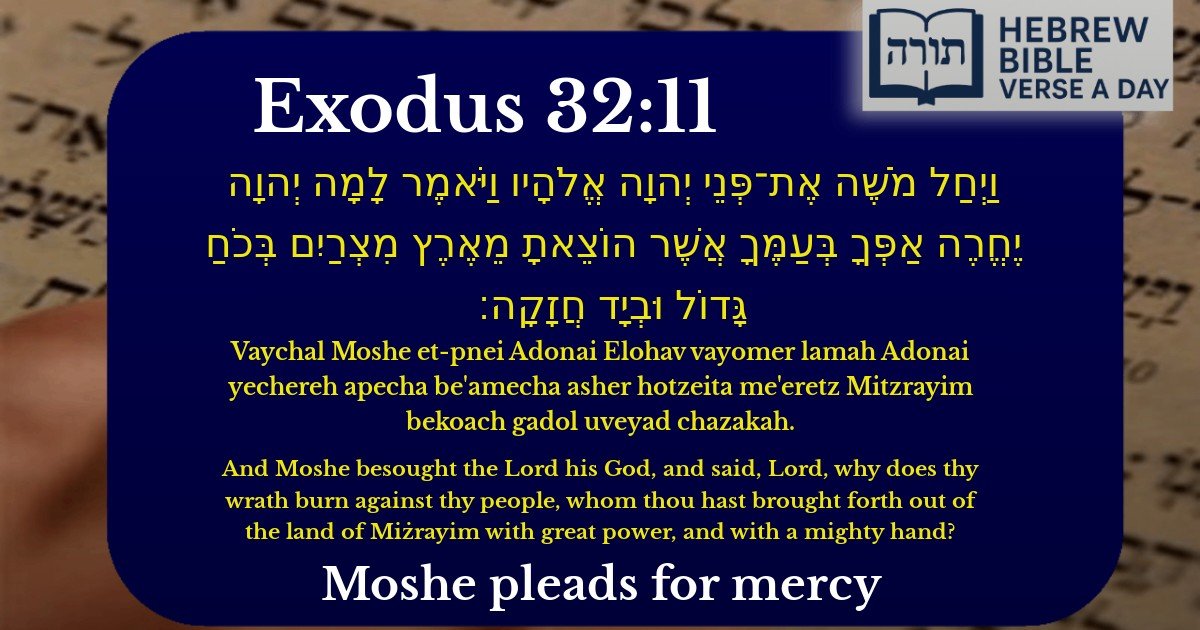
וַיְחַל מֹשֶׁה אֶת־פְּנֵי יְהוָה אֱלֹהָיו וַיֹּאמֶר לָמָה יְהוָה יֶחֱרֶה אַפְּךָ בְּעַמֶּךָ אֲשֶׁר הוֹצֵאתָ מֵאֶרֶץ מִצְרַיִם בְּכֹחַ גָּדוֹל וּבְיָד חֲזָקָה׃
English Translation
And Moshe besought the Lord his God, and said, Lord, why does thy wrath burn against thy people, whom thou hast brought forth out of the land of Miżrayim with great power, and with a mighty hand?
Transliteration
Vaychal Moshe et-pnei Adonai Elohav vayomer lamah Adonai yechereh apecha be'amecha asher hotzeita me'eretz Mitzrayim bekoach gadol uveyad chazakah.
Hebrew Leining Text
וַיְחַ֣ל מֹשֶׁ֔ה אֶת־פְּנֵ֖י יְהֹוָ֣ה אֱלֹהָ֑יו וַיֹּ֗אמֶר לָמָ֤ה יְהֹוָה֙ יֶחֱרֶ֤ה אַפְּךָ֙ בְּעַמֶּ֔ךָ אֲשֶׁ֤ר הוֹצֵ֙אתָ֙ מֵאֶ֣רֶץ מִצְרַ֔יִם בְּכֹ֥חַ גָּד֖וֹל וּבְיָ֥ד חֲזָקָֽה׃
🎵 Listen to leining
Parasha Commentary
📚 Talmud Citations
This verse is quoted in the Talmud.
📖 Berakhot 32a
The verse is cited in the context of discussing the power of prayer, particularly Moses' intercession on behalf of the Israelites after the sin of the golden calf.
📖 Sanhedrin 44a
The verse is referenced in a discussion about divine mercy and the effectiveness of righteous individuals' prayers to avert harsh decrees.
Context of the Verse
This verse (Shemot 32:11) appears in the aftermath of the sin of the Golden Calf, when Hashem's anger burned against Bnei Yisrael for their idolatry. Moshe Rabbeinu intercedes on their behalf, pleading for divine mercy. The language and structure of Moshe's prayer are carefully analyzed by classical commentators to understand his approach to seeking forgiveness for the nation.
Moshe's Prayer Strategy
Rashi explains that Moshe's phrasing "ויחל" (besought) implies he made himself chulin (common or profane), meaning he prayed intensely and without concern for his own dignity, demonstrating his self-sacrifice for the Jewish people. The Talmud (Berachot 32a) derives from here that one should be persistent in prayer, even if it requires boldness before Hashem.
Emphasizing Hashem's Relationship with Israel
Moshe frames his argument by:
Theological Implications
The Kli Yakar highlights how Moshe's question "למה... יחרה אפך" challenges the very notion of divine anger against the people Hashem chose. This reflects the principle that teshuva (repentance) can override even severe decrees, as later seen when Hashem accepts Moshe's plea.
Model of Leadership
Rabbeinu Bachya observes that Moshe refers to Hashem as "יהוה אלהיו" (the Lord his God), showing his personal connection to the Divine even while advocating for the nation. This models how leaders must maintain their own spiritual integrity while fighting for their people.