

Join Our Newsletter To Be Informed When New Videos Are Posted
Hebrew Text
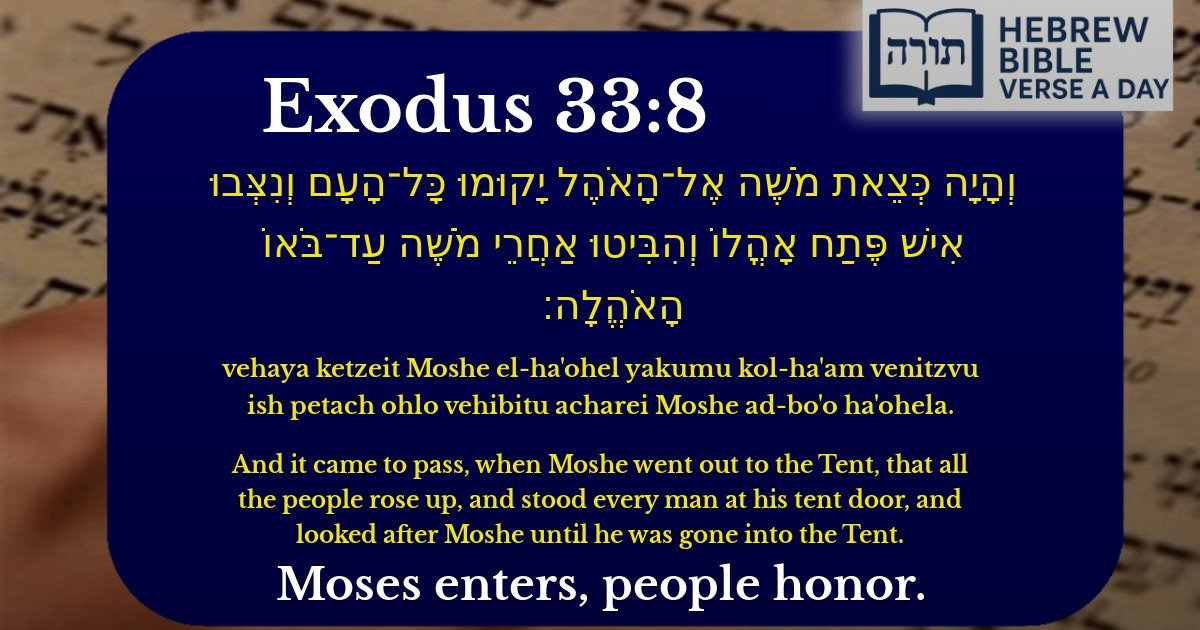
וְהָיָה כְּצֵאת מֹשֶׁה אֶל־הָאֹהֶל יָקוּמוּ כָּל־הָעָם וְנִצְּבוּ אִישׁ פֶּתַח אָהֳלוֹ וְהִבִּיטוּ אַחֲרֵי מֹשֶׁה עַד־בֹּאוֹ הָאֹהֱלָה׃
English Translation
And it came to pass, when Moshe went out to the Tent, that all the people rose up, and stood every man at his tent door, and looked after Moshe until he was gone into the Tent.
Transliteration
Vehaya ketzeit Moshe el-ha'ohel yakumu kol-ha'am venitzvu ish petach ohlo vehibitu acharei Moshe ad-bo'o ha'ohela.
Hebrew Leining Text
וְהָיָ֗ה כְּצֵ֤את מֹשֶׁה֙ אֶל־הָאֹ֔הֶל יָק֙וּמוּ֙ כׇּל־הָעָ֔ם וְנִ֨צְּב֔וּ אִ֖ישׁ פֶּ֣תַח אׇהֳל֑וֹ וְהִבִּ֙יטוּ֙ אַחֲרֵ֣י מֹשֶׁ֔ה עַד־בֹּא֖וֹ הָאֹֽהֱלָה׃
🎵 Listen to leining
Parasha Commentary
📚 Talmud Citations
This verse is not quoted in the Talmud.
Rashi's Explanation
Rashi (Shemot 33:8) explains that the people would stand at the openings of their tents to show honor and respect to Moshe Rabbeinu as he walked to the Ohel Mo'ed (Tent of Meeting). This demonstrates the great reverence Bnei Yisrael had for Moshe, recognizing his elevated spiritual stature. Rashi further notes that the phrase "וְהִבִּיטוּ אַחֲרֵי מֹשֶׁה" ("and looked after Moshe") implies they would gaze at him with awe until he entered the tent.
Rambam's Perspective
In Hilchot De'ot (6:3), Rambam discusses the importance of honoring Torah scholars, deriving from verses like this one. He explains that just as the people stood for Moshe, we learn the obligation to rise before those who possess Torah wisdom. This act of standing reflects the value of Torah leadership in Klal Yisrael.
Talmudic Insights
Midrashic Interpretation
The Midrash Tanchuma (Ki Tisa 27) elaborates that the people's gazing after Moshe represented their longing for his spiritual presence. When Moshe entered the Ohel Mo'ed, the Shechinah would descend, and the people hoped some holiness would extend to them through Moshe's merit.
Sforno's Commentary
Sforno explains that the people's behavior demonstrated their recognition that Moshe served as their intermediary with Hashem. By watching him enter the Ohel Mo'ed, they showed their understanding that through Moshe, they could maintain their connection to the Divine Presence.