

Join Our Newsletter To Be Informed When New Videos Are Posted
Hebrew Text
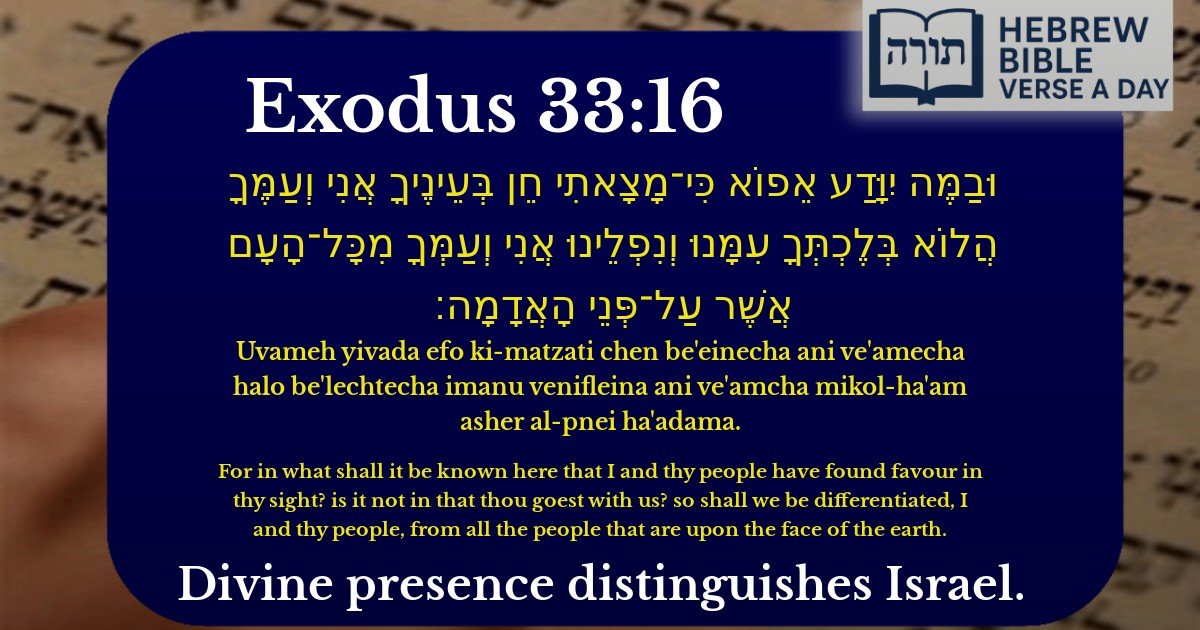
וּבַמֶּה יִוָּדַע אֵפוֹא כִּי־מָצָאתִי חֵן בְּעֵינֶיךָ אֲנִי וְעַמֶּךָ הֲלוֹא בְּלֶכְתְּךָ עִמָּנוּ וְנִפְלֵינוּ אֲנִי וְעַמְּךָ מִכָּל־הָעָם אֲשֶׁר עַל־פְּנֵי הָאֲדָמָה׃
English Translation
For in what shall it be known here that I and thy people have found favour in thy sight? is it not in that thou goest with us? so shall we be differentiated, I and thy people, from all the people that are upon the face of the earth.
Transliteration
Uvameh yivada efo ki-matzati chen be'einecha ani ve'amecha halo be'lechtecha imanu venifleina ani ve'amcha mikol-ha'am asher al-pnei ha'adama.
Hebrew Leining Text
וּבַמֶּ֣ה ׀ יִוָּדַ֣ע אֵפ֗וֹא כִּֽי־מָצָ֨אתִי חֵ֤ן בְּעֵינֶ֙יךָ֙ אֲנִ֣י וְעַמֶּ֔ךָ הֲל֖וֹא בְּלֶכְתְּךָ֣ עִמָּ֑נוּ וְנִפְלִ֙ינוּ֙ אֲנִ֣י וְעַמְּךָ֔ מִכׇּ֨ל־הָעָ֔ם אֲשֶׁ֖ר עַל־פְּנֵ֥י הָאֲדָמָֽה׃ {פ}
🎵 Listen to leining
Parasha Commentary
📚 Talmud Citations
This verse is not quoted in the Talmud.
Context of the Verse
This verse (Shemot 33:16) is part of Moshe Rabbeinu's dialogue with Hashem following the sin of the Golden Calf. Moshe pleads for Divine favor and a sign that Bnei Yisrael remain the chosen nation despite their transgression. The question "וּבַמֶּה יִוָּדַע" ("For in what shall it be known") reflects Moshe's request for a tangible manifestation of Hashem's presence among the people.
Rashi's Explanation
Rashi (Rabbi Shlomo Yitzchaki) explains that Moshe is asking for a unique distinction that will set Bnei Yisrael apart from all other nations. The phrase "הֲלוֹא בְּלֶכְתְּךָ עִמָּנוּ" ("is it not in that thou goest with us?") refers to the Divine Presence (Shechinah) accompanying them, which would be the ultimate sign of favor. Rashi emphasizes that this visible manifestation of Hashem's presence would be the definitive proof of their special status.
Rambam's Perspective
Rambam (Maimonides) in Moreh Nevuchim (Guide for the Perplexed 1:64) discusses the concept of Divine Providence (Hashgachah Pratit). He explains that Moshe's request aligns with the idea that Bnei Yisrael's unique relationship with Hashem is demonstrated through direct Divine guidance, as opposed to other nations who are governed by natural law. The phrase "וְנִפְלֵינוּ" ("so shall we be differentiated") highlights this exclusivity.
Midrashic Interpretation
The Midrash (Shemot Rabbah 45:6) elaborates that Moshe sought assurance that Hashem's presence would not depart from Bnei Yisrael even in times of sin. The term "חֵן" ("favor") is interpreted as an enduring bond, transcending momentary failures. The Midrash compares this to a king who, despite his servant's mistakes, continues to walk with him, demonstrating unwavering loyalty.
Key Themes
Practical Implications
This verse teaches that the hallmark of Bnei Yisrael's relationship with Hashem is His constant presence in their midst. This idea is foundational to Jewish belief in Divine Providence and the concept of a "ממלכת כהנים וגוי קדוש" ("a kingdom of priests and a holy nation" – Shemot 19:6). The presence of the Shechinah, whether in the Mishkan or in daily life, remains a central aspiration in Jewish thought and practice.