

Join Our Newsletter To Be Informed When New Videos Are Posted
Hebrew Text
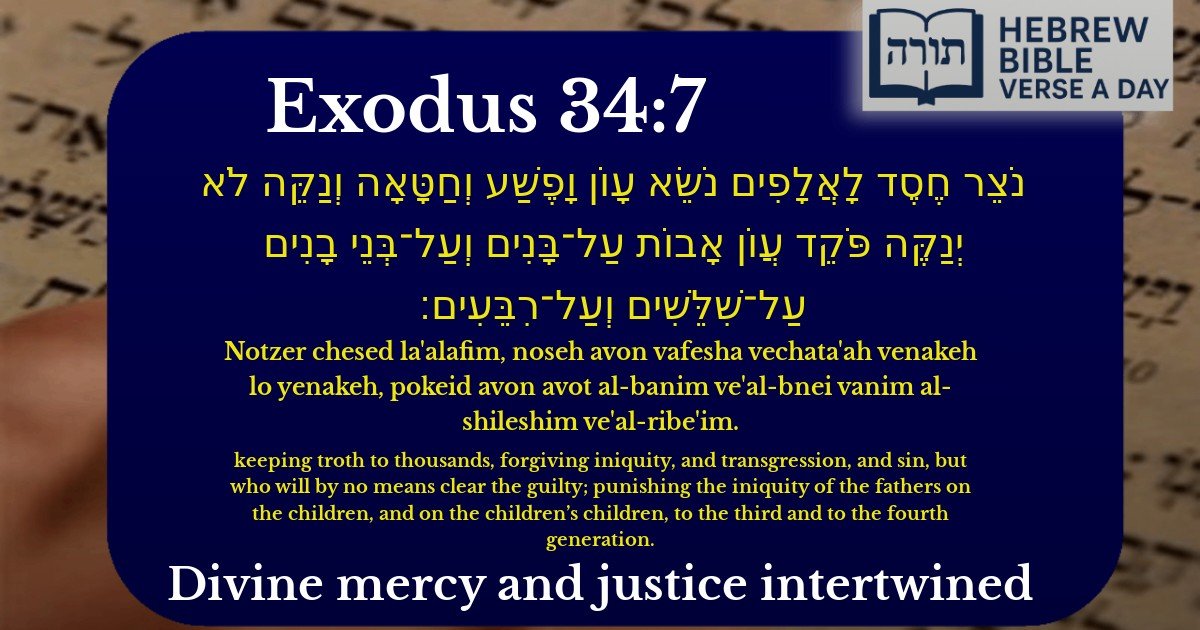
נֹצֵר חֶסֶד לָאֲלָפִים נֹשֵׂא עָוֺן וָפֶשַׁע וְחַטָּאָה וְנַקֵּה לֹא יְנַקֶּה פֹּקֵד עֲוֺן אָבוֹת עַל־בָּנִים וְעַל־בְּנֵי בָנִים עַל־שִׁלֵּשִׁים וְעַל־רִבֵּעִים׃
English Translation
keeping troth to thousands, forgiving iniquity, and transgression, and sin, but who will by no means clear the guilty; punishing the iniquity of the fathers on the children, and on the children’s children, to the third and to the fourth generation.
Transliteration
Notzer chesed la'alafim, noseh avon vafesha vechata'ah venakeh lo yenakeh, pokeid avon avot al-banim ve'al-bnei vanim al-shileshim ve'al-ribe'im.
Hebrew Leining Text
נֹצֵ֥ר*(בספרי תימן נֹצֵ֥ר בנו״ן רגילה) חֶ֙סֶד֙ לָאֲלָפִ֔ים נֹשֵׂ֥א עָוֺ֛ן וָפֶ֖שַׁע וְחַטָּאָ֑ה וְנַקֵּה֙ לֹ֣א יְנַקֶּ֔ה פֹּקֵ֣ד ׀ עֲוֺ֣ן אָב֗וֹת עַל־בָּנִים֙ וְעַל־בְּנֵ֣י בָנִ֔ים עַל־שִׁלֵּשִׁ֖ים וְעַל־רִבֵּעִֽים׃
🎵 Listen to leining
Parasha Commentary
📚 Talmud Citations
This verse is quoted in the Talmud.
📖 Sanhedrin 27b
The verse is discussed in the context of divine justice and the concept of collective punishment, with rabbis debating its interpretation and application.
📖 Yoma 86a
The verse is referenced in a discussion about repentance and divine forgiveness, contrasting God's mercy with the punishment of sins across generations.
Divine Attributes of Mercy and Justice
The verse (Shemot 34:7) describes Hashem's middot (attributes), emphasizing both His boundless mercy and strict justice. Rashi explains that "נֹצֵר חֶסֶד לָאֲלָפִים" ("keeping troth to thousands") refers to Hashem preserving the merit of righteous deeds for future generations—rewarding descendants for the good deeds of their ancestors up to the thousandth generation. This underscores the principle of zechut avot (merit of the fathers), where the righteousness of earlier generations benefits their offspring.
Forgiveness of Sins
The phrase "נֹשֵׂא עָוֺן וָפֶשַׁע וְחַטָּאָה" ("forgiving iniquity, transgression, and sin") delineates three categories of sin, as explained by Rambam (Hilchot Teshuvah 1:1-2):
The Sforno adds that Hashem's forgiveness is contingent upon sincere repentance, aligning with the principle that divine mercy is accessible to those who seek it.
Divine Justice for the Guilty
The phrase "וְנַקֵּה לֹא יְנַקֶּה" ("but who will by no means clear the guilty") teaches that unrepentant sinners will not escape judgment. The Mechilta explains that this refers to those who persist in wickedness without remorse, demonstrating that divine justice is absolute for those who refuse to change their ways.
Intergenerational Consequences
The latter part of the verse, "פֹּקֵד עֲוֺן אָבוֹת עַל־בָּנִים" ("punishing the iniquity of the fathers on the children"), raises theological questions about divine fairness. The Talmud (Sanhedrin 27b) clarifies that this applies only when descendants continue the sinful ways of their ancestors, as the verse concludes in Devarim 24:16: "Each man shall be put to death for his own sin." Rambam (Hilchot Teshuvah 5:2) further emphasizes that punishment only extends to later generations if they uphold the same sinful behavior.
Balance of Mercy and Justice
The Midrash Tanchuma (Ki Tisa 3) highlights the contrast in this verse: Hashem's mercy extends for thousands of generations, while His justice affects only up to the fourth generation. This teaches that divine compassion far outweighs retribution, reinforcing the principle that teshuvah is always within reach.