

Join Our Newsletter To Be Informed When New Videos Are Posted
Hebrew Text
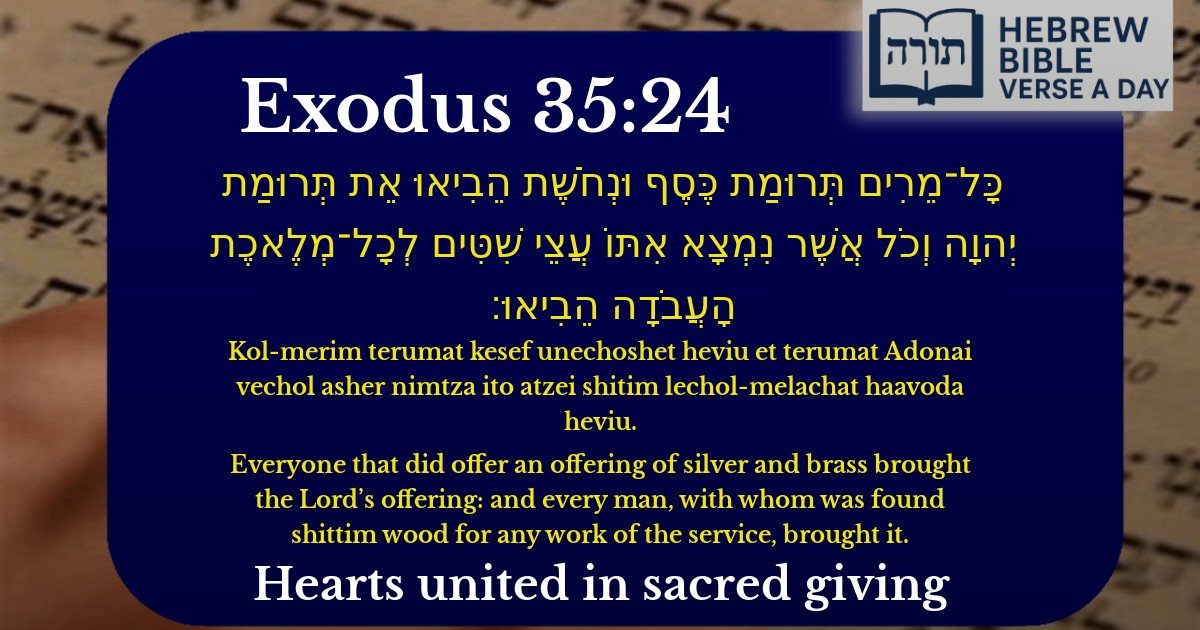
כָּל־מֵרִים תְּרוּמַת כֶּסֶף וּנְחֹשֶׁת הֵבִיאוּ אֵת תְּרוּמַת יְהוָה וְכֹל אֲשֶׁר נִמְצָא אִתּוֹ עֲצֵי שִׁטִּים לְכָל־מְלֶאכֶת הָעֲבֹדָה הֵבִיאוּ׃
English Translation
Everyone that did offer an offering of silver and brass brought the Lord’s offering: and every man, with whom was found shittim wood for any work of the service, brought it.
Transliteration
Kol-merim terumat kesef unechoshet heviu et terumat Adonai vechol asher nimtza ito atzei shitim lechol-melachat haavoda heviu.
Hebrew Leining Text
כׇּל־מֵרִ֗ים תְּר֤וּמַת כֶּ֙סֶף֙ וּנְחֹ֔שֶׁת הֵבִ֕יאוּ אֵ֖ת תְּרוּמַ֣ת יְהֹוָ֑ה וְכֹ֡ל אֲשֶׁר֩ נִמְצָ֨א אִתּ֜וֹ עֲצֵ֥י שִׁטִּ֛ים לְכׇל־מְלֶ֥אכֶת הָעֲבֹדָ֖ה הֵבִֽיאוּ׃
🎵 Listen to leining
Parasha Commentary
📚 Talmud Citations
This verse is not quoted in the Talmud.
Context in the Torah
This verse (Exodus 35:24) appears in the section detailing the contributions made by Bnei Yisrael for the construction of the Mishkan (Tabernacle). It follows Moshe's call for voluntary donations of materials needed for the sacred work, emphasizing the generosity and unity of the people in this holy endeavor.
Interpretation of the Materials
Rashi explains that the phrase "כָּל־מֵרִים תְּרוּמַת כֶּסֶף וּנְחֹשֶׁת" ("Everyone that did offer an offering of silver and brass") refers to those who contributed metals used in the Mishkan's construction. Silver (כֶּסֶף) was used for the sockets of the Mishkan's beams, while brass (נְחֹשֶׁת) was used for the altar and its utensils (Rashi on Exodus 38:24-29).
The Significance of Shittim Wood
The verse also mentions "עֲצֵי שִׁטִּים" (shittim wood), which was used for the Mishkan's structure, including the Ark, table, and altar. The Midrash (Shemot Rabbah 35:1) notes that this wood was a possession of the righteous, as Yaakov Avinu had planted these trees in Egypt, anticipating their future use in the Mishkan. This teaches that even physical materials can attain holiness when dedicated to divine service.
Voluntary Contributions and Unity
The Ramban (Nachmanides) highlights that the phrase "וְכֹל אֲשֶׁר נִמְצָא אִתּוֹ" ("every man, with whom was found") underscores the voluntary nature of these donations. The people gave willingly, demonstrating their collective commitment to the Mishkan's construction. The Talmud (Yoma 75a) similarly praises the unity of Bnei Yisrael in this mitzvah, as all contributed according to their means.
Spiritual Lessons