Frequently Asked Questions
Q: What does Exodus 35:32 mean in the context of building the Mishkan (Tabernacle)?
A: Exodus 35:32 describes the skills given by Hashem to Betzalel, the chief artisan of the Mishkan. According to Rashi, this verse highlights that Betzalel was divinely inspired with wisdom, understanding, and knowledge ('chochmah, tevunah, and da'at') to craft sacred items from gold, silver, and copper for the Mishkan. This emphasizes that holy work requires both talent and divine guidance.
Q: Why is working with gold, silver, and copper mentioned specifically in Exodus 35:32?
A: The Rambam explains that these metals were chosen for their symbolic and practical roles in the Mishkan. Gold represents the highest sanctity (used for the Ark), silver for communal offerings (like the sockets), and copper for the altar, showing different levels of holiness. The Midrash Tanchuma adds that these materials reflect the diversity of contributions needed for serving Hashem.
Q: How does Exodus 35:32 apply to using our talents today?
A: The Talmud (Berachot 55a) teaches that Betzalel's divinely granted skills teach us to use our unique abilities for sacred purposes. Just as Betzalel crafted items for the Mishkan, we should direct our talents—whether art, craftsmanship, or other skills—toward mitzvot and improving the world (tikkun olam), as the verse implies all wisdom comes from Hashem.
Q: What is the significance of 'contriving works of art' in this verse?
A: The term 'לחשוב מחשבת' (to contrive works of art) refers to intricate design, not just physical labor. Rashi notes this emphasizes the importance of intention (kavanah) in sacred craftsmanship. The Sforno adds that such artistry elevates physical materials to spiritual ends, showing how beauty can serve holiness in Jewish tradition.
Q: Why was Betzalel chosen for this task in Exodus 35:32?
A: The Midrash (Shemot Rabbah 48:3) states Betzalel was selected because of his lineage (from the tribe of Judah) and his righteous character. His name even means 'in the shadow of G-d,' symbolizing divine inspiration. The verse highlights that his skills were not innate but granted by Hashem specifically for building the Mishkan, teaching that sacred work requires both merit and divine help.


Context of the Verse
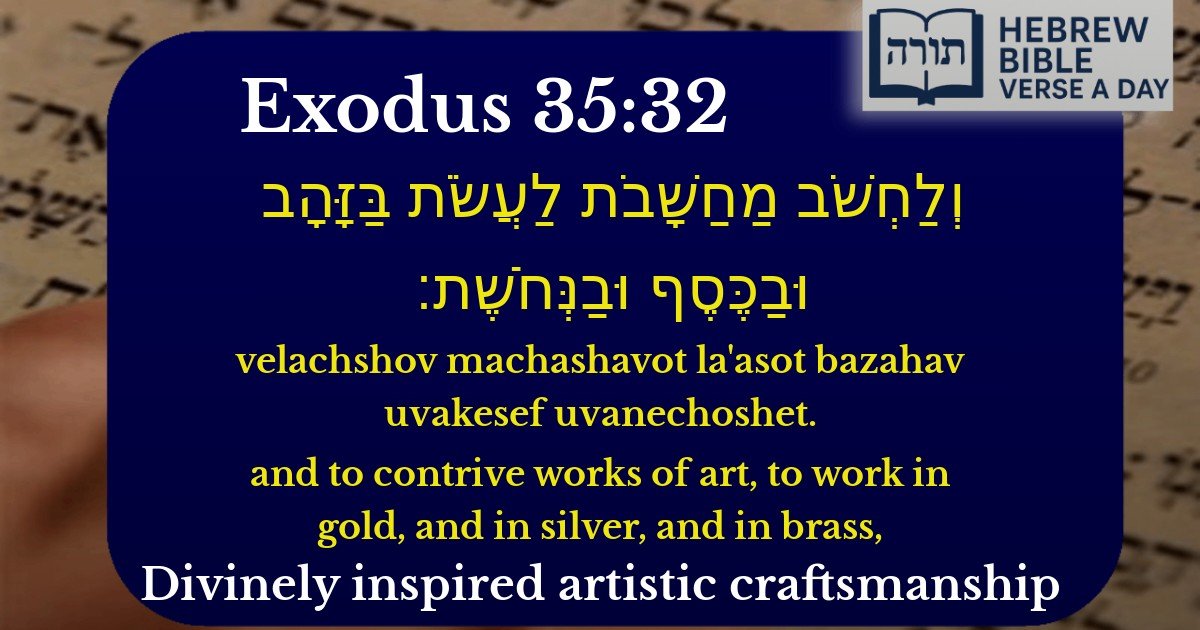
The verse (Shemot 35:32) describes the skills granted by Hashem to Betzalel, the chief artisan of the Mishkan (Tabernacle). It emphasizes his divinely inspired ability to craft intricate works in gold, silver, and copper—materials essential for the sacred vessels and structure of the Mishkan.
Rashi's Explanation
Rashi (Shemot 35:32) clarifies that "לַחְשֹׁב מַחַשָׁבֹת" refers to Betzalel's unique capacity to conceptualize and execute complex artistic designs. This was not merely technical skill but a form of divine wisdom ("חוכמה") enabling him to combine ("לחבּר") different materials in harmony with the spiritual blueprint of the Mishkan.
Rambam on Divine Inspiration
Rambam (Moreh Nevuchim 3:51) notes that such craftsmanship transcends ordinary artistry. Betzalel's work required ruach hakodesh (divine inspiration) to align physical creation with metaphysical intent, ensuring the Mishkan's vessels facilitated kedusha (holiness).
Midrashic Insights
Halachic Significance
The Kli Yakar (Shemot 31:3) highlights that Betzalel's artistry was bound by halacha. His "contriving" ("לַחְשֹׁב") was not freeform creativity but a disciplined execution of the divine plan, teaching that even artistic expression must serve a higher spiritual purpose.