

Join Our Newsletter To Be Informed When New Videos Are Posted
Hebrew Text
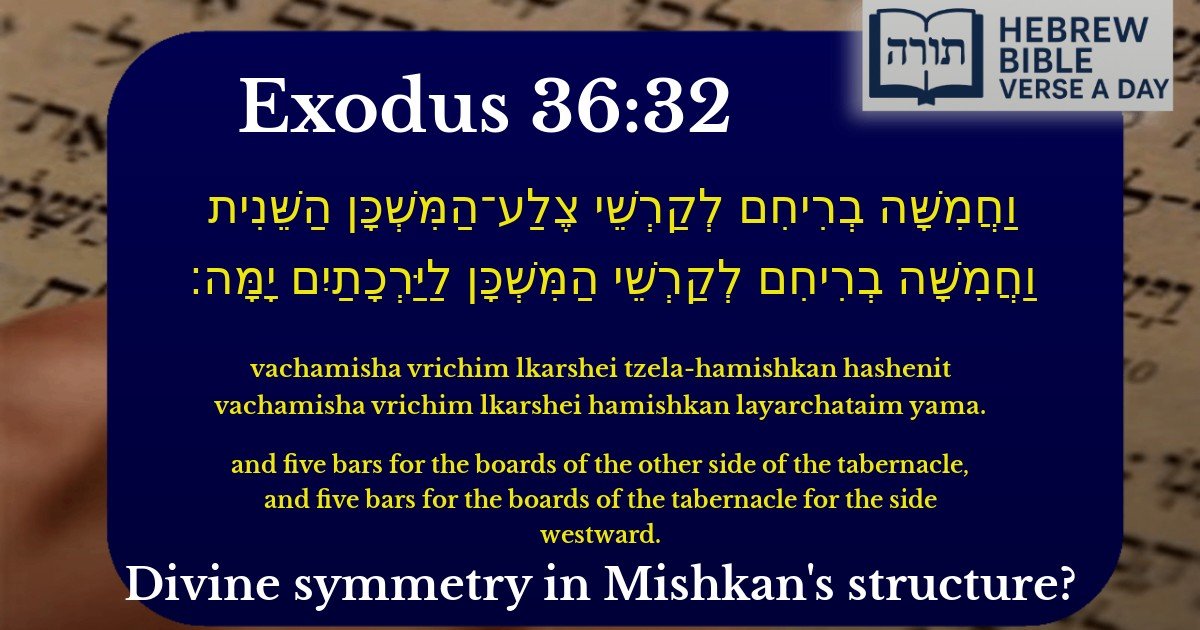
וַחֲמִשָּׁה בְרִיחִם לְקַרְשֵׁי צֶלַע־הַמִּשְׁכָּן הַשֵּׁנִית וַחֲמִשָּׁה בְרִיחִם לְקַרְשֵׁי הַמִּשְׁכָּן לַיַּרְכָתַיִם יָמָּה׃
English Translation
and five bars for the boards of the other side of the tabernacle, and five bars for the boards of the tabernacle for the side westward.
Transliteration
Vachamisha vrichim lkarshei tzela-hamishkan hashenit vachamisha vrichim lkarshei hamishkan layarchataim yama.
Hebrew Leining Text
וַחֲמִשָּׁ֣ה בְרִיחִ֔ם לְקַרְשֵׁ֥י צֶֽלַע־הַמִּשְׁכָּ֖ן הַשֵּׁנִ֑ית וַחֲמִשָּׁ֤ה בְרִיחִם֙ לְקַרְשֵׁ֣י הַמִּשְׁכָּ֔ן לַיַּרְכָתַ֖יִם יָֽמָּה׃
🎵 Listen to leining
Parasha Commentary
📚 Talmud Citations
This verse is not quoted in the Talmud.
Explanation of the Verse (Exodus 26:26-27)
The verse describes the construction of the Mishkan (Tabernacle), specifically the five bars used to reinforce the wooden boards on the northern and western sides. These bars provided structural stability, ensuring the Mishkan remained upright and secure.
Rashi's Commentary
Rashi (Exodus 26:26) explains that the five bars were made of acacia wood and overlaid with gold. He notes that these bars were inserted through rings attached to the boards, holding them firmly in place. The repetition of "five bars" for both sides emphasizes uniformity in construction, ensuring balance and symmetry in the Mishkan's design.
Rambam's Perspective
In Hilchot Beit HaBechirah (Laws of the Temple), Rambam (Maimonides) draws parallels between the Mishkan and the later Beit HaMikdash (Temple). He highlights that the precise measurements and structural integrity of the Mishkan reflect the divine requirement for holiness in sacred spaces. The five bars symbolize strength and permanence, qualities essential for a dwelling place of the Shechinah (Divine Presence).
Midrashic Insights
Practical Halachic Implications
The Talmud (Shabbat 98b) discusses the importance of the Mishkan's construction as a model for future sacred buildings. The Gemara notes that the bars were arranged horizontally, with the middle bar extending from one end to the other, symbolizing unity. This detail teaches that communal structures—both physical and spiritual—must be built with cohesion and shared purpose.
Symbolism of the Westward Side
The western side of the Mishkan (facing the Holy of Holies) held particular significance. The Kli Yakar (Exodus 26:27) explains that the westward bars allude to the hidden divine light (Ohr HaGanuz), stored away for the righteous in the World to Come. The structural reinforcement on this side hints at the enduring nature of holiness, even when not visibly manifest.