

Join Our Newsletter To Be Informed When New Videos Are Posted
Hebrew Text
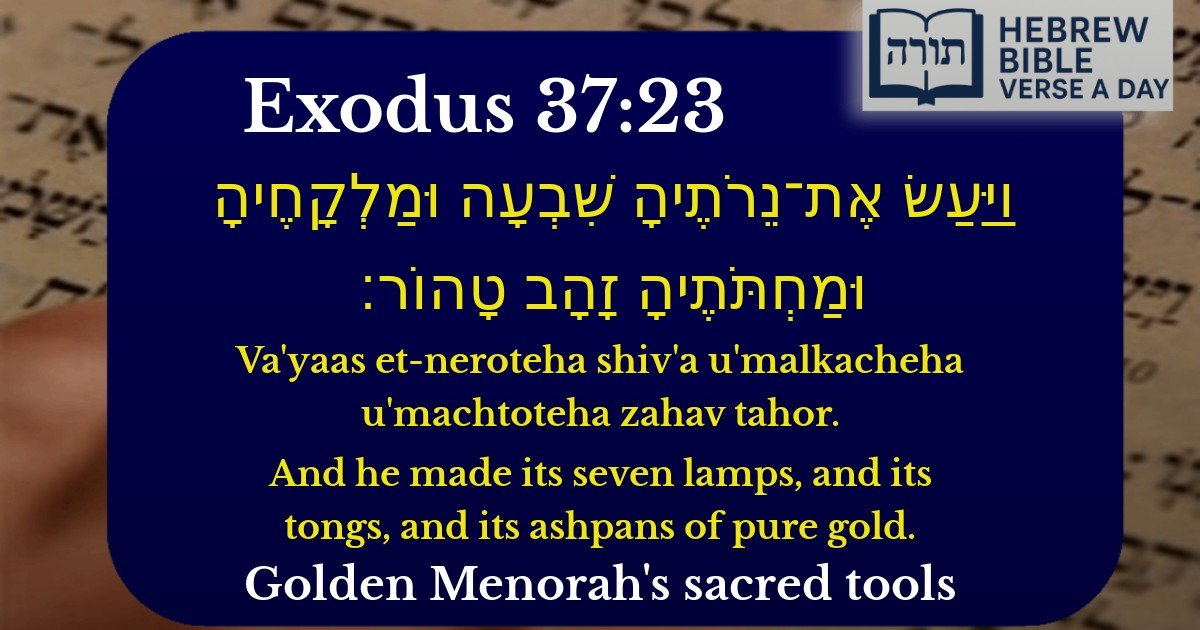
וַיַּעַשׂ אֶת־נֵרֹתֶיהָ שִׁבְעָה וּמַלְקָחֶיהָ וּמַחְתֹּתֶיהָ זָהָב טָהוֹר׃
English Translation
And he made its seven lamps, and its tongs, and its ashpans of pure gold.
Transliteration
Va'yaas et-neroteha shiv'a u'malkacheha u'machtoteha zahav tahor.
Hebrew Leining Text
וַיַּ֥עַשׂ אֶת־נֵרֹתֶ֖יהָ שִׁבְעָ֑ה וּמַלְקָחֶ֥יהָ וּמַחְתֹּתֶ֖יהָ זָהָ֥ב טָהֽוֹר׃
🎵 Listen to leining
Parasha Commentary
📚 Talmud Citations
This verse is quoted in the Talmud.
📖 Menachot 28b
The verse is referenced in a discussion about the construction and details of the menorah in the Temple, particularly focusing on the materials used and the number of lamps.
📖 Yoma 33a
The verse is cited in the context of discussing the purity and sanctity of the Temple vessels, emphasizing the use of pure gold for the menorah and its accessories.
The Construction of the Menorah's Accessories
The verse describes the crafting of the menorah's accessories: its seven lamps, tongs, and ashpans, all made from pure gold. According to Rashi (Shemot 25:38), the tongs (מַלְקָחֶיהָ) were used to trim the wicks, while the ashpans (מַחְתֹּתֶיהָ) were small containers to collect the burnt wick trimmings. The Rambam (Hilchos Beis HaBechirah 3:12) explains that these utensils were essential for maintaining the menorah's purity and proper function in the Mishkan.
Symbolism of the Seven Lamps
The seven lamps (נֵרֹתֶיהָ שִׁבְעָה) correspond to the seven branches of the menorah, which the Midrash (Bamidbar Rabbah 15:7) associates with the seven days of Creation or the seven wisdoms of Torah. The Zohar (Terumah 152a) further connects them to the divine light of wisdom that emanates into the world. The use of pure gold (זָהָב טָהוֹר) signifies the unblemished sanctity required for the Mishkan's service.
Halachic Significance of the Materials
Practical Lessons from the Accessories
The Kli Yakar (Shemot 25:38) notes that the tongs and ashpans teach a moral lesson: just as the menorah required constant care to remain pure, so too must a person refine their character and remove spiritual "impurities" through Torah and mitzvos. The meticulous design reflects the ideal of serving Hashem with precision and devotion.