Frequently Asked Questions
Q: What is being described in Exodus 37:26?
A: This verse describes how Betzalel, the craftsman appointed by Hashem, overlaid the golden altar (Mizbe'ach HaKetoret) with pure gold, covering its top, sides, horns, and adding a golden rim around it. This altar was used for burning incense in the Mishkan (Tabernacle). Rashi explains that this meticulous craftsmanship followed Hashem's exact instructions.
Q: Why was the altar covered in gold?
A: Gold symbolizes purity and holiness in Jewish tradition. The Mizbe'ach HaKetoret, used for the sacred incense offering, required the highest level of sanctity. The Rambam (Hilchot Klei HaMikdash 2:4) teaches that gold overlay elevated its appearance and reflected the importance of the avodah (service) performed there.
Q: What is the significance of the golden rim mentioned in this verse?
A: The golden rim (זֵר זָהָב) served both a functional and symbolic purpose. The Talmud (Zevachim 59b) explains that it acted as a crown, representing the honor of the mitzvah. The Midrash (Shemot Rabbah 34:2) compares it to a crown on a bride, showing the altar’s beauty in serving Hashem.
Q: Why does the verse specifically mention the horns of the altar?
A: The horns (קַרְנֹתָיו) were prominent features of the altar. Rashi notes that they were symbolic of strength and refuge (as horns represent power in Tanach). During certain services, blood was placed on them (Vayikra 4:7), emphasizing their role in atonement. Their gilding with gold highlighted their sanctity.
Q: How does this verse apply to us today without the Mishkan?
A: The Mizbe'ach HaKetoret teaches the value of hiddur mitzvah (beautifying commandments). Just as Betzalel used the finest materials for Hashem’s service, we should perform mitzvot with excellence. The Rambam (Hilchot Isurei Mizbe’ach 7:11) also derives from this verse that sacred items must be treated with utmost respect.

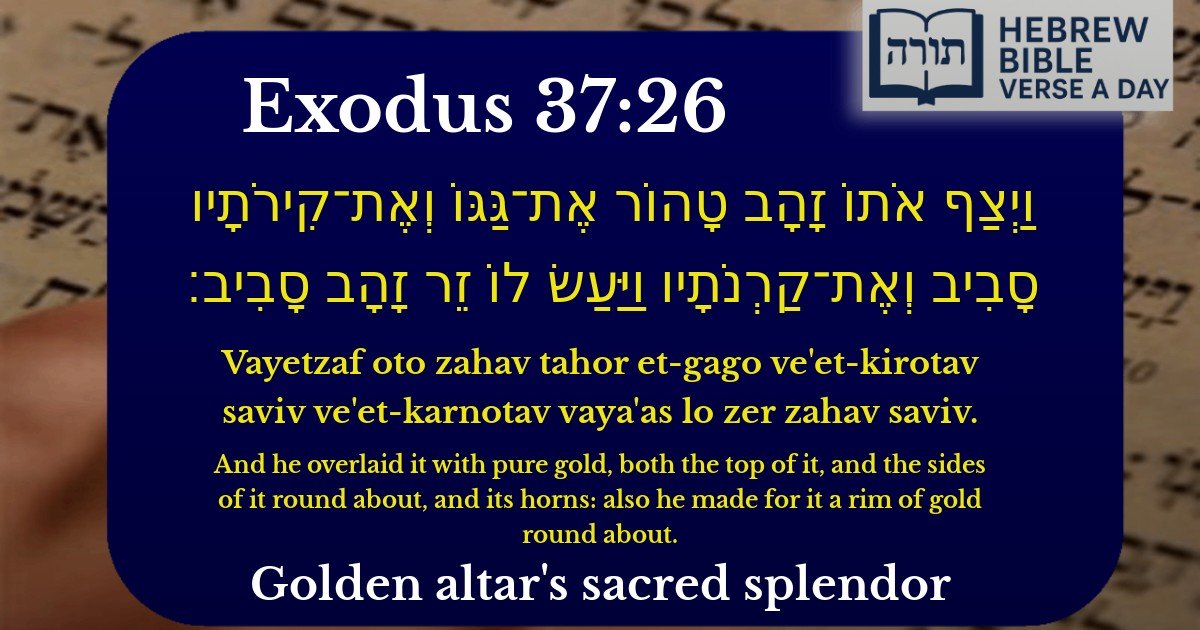

Commentary on Shemot 30:3
The verse describes the gold overlay of the Mizbe'ach HaKetoret (Altar of Incense), emphasizing its complete covering with pure gold. This detail holds deep significance in Jewish tradition.
Rashi's Explanation
Rashi (Shemot 30:3) notes that the altar was overlaid with gold "even though it was made of wood", highlighting that the gold covering served both a practical and symbolic purpose:
Symbolism of the Gold Overlay
The Rambam (Moreh Nevuchim 3:45) explains that gold represents perfection and spiritual purity. The complete covering teaches:
The Golden Crown (Zer Zahav)
The Talmud (Yoma 72b) compares the golden rim to a crown, teaching that:
Midrashic Insight
The Midrash Tanchuma (Tetzaveh 14) connects this altar to prayer (based on Tehillim 141:2), suggesting: