Frequently Asked Questions
Q: What does Exodus 38:16 mean when it says the hangings were 'of fine twined linen'?
A: The verse describes the material used for the curtains surrounding the Mishkan (Tabernacle) courtyard. According to Rashi, 'fine twined linen' (שֵׁשׁ מָשְׁזָר) refers to high-quality linen threads twisted together, showing the importance of using dignified materials for holy spaces.
Q: Why were the courtyard hangings made specifically of linen?
A: The Talmud (Yoma 71b) explains that linen represents purity and simplicity, fitting for the sacred area around the Mishkan. Rambam (Hilchot Klei HaMikdash 8:14) also notes that linen was durable and dignified, suitable for this holy purpose.
Q: What can we learn today from the description of the Tabernacle's courtyard hangings?
A: This teaches us the importance of creating beautiful and respectful surroundings for mitzvot (commandments) and holy spaces. Just as the Mishkan's courtyard was made with care, we should approach mitzvot with dignity and attention to detail (based on Midrash Tanchuma, Terumah 11).
Q: How were the courtyard hangings in Exodus 38:16 different from other Tabernacle coverings?
A: While the inner coverings of the Mishkan used more expensive materials like wool dyed blue, purple, and crimson (Exodus 26:1), the outer courtyard hangings were simpler linen. Rashi explains this shows a gradation of holiness - the closer to the Ark, the more precious the materials.
Q: Why does the Torah give such detailed descriptions of the Tabernacle's construction?
A: The Midrash (Shemot Rabbah 33:1) teaches that every detail of the Mishkan's construction contains profound spiritual lessons. The specific mention of the courtyard hangings reminds us that even the 'outer' aspects of our service to Hashem require proper intention and care.

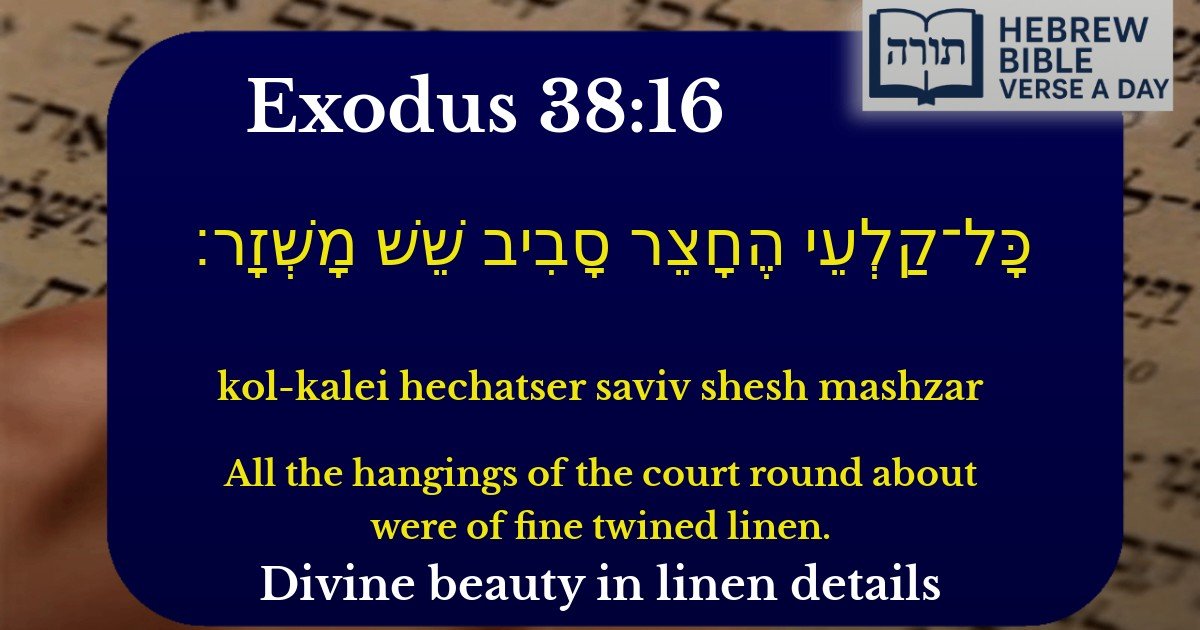

Explanation of the Verse
The verse "כָּל־קַלְעֵי הֶחָצֵר סָבִיב שֵׁשׁ מָשְׁזָר" (Exodus 38:16) describes the hangings (קַלְעֵי) surrounding the courtyard of the Mishkan (Tabernacle), emphasizing that they were made of "שֵׁשׁ מָשְׁזָר"—fine twined linen. This material was chosen for its durability and purity, reflecting the sanctity of the Mishkan's surroundings.
Insights from Rashi
Rashi (Exodus 38:16) explains that the term "שֵׁשׁ מָשְׁזָר" refers to linen threads that were tightly twisted ("מָשְׁזָר"), making them strong and suitable for the outer courtyard. He notes that this material was distinct from the finer fabrics used in the inner curtains of the Mishkan, highlighting a gradation in holiness from the outer courtyard to the innermost sanctum.
Symbolism of the Linen Hangings
According to the Midrash (Shemot Rabbah 50:2), the linen hangings symbolize the separation between the sacred and the mundane. The courtyard served as a transitional space where the people could approach holiness, and the linen acted as a barrier, teaching that entry into divine service requires preparation and reverence.
Halachic Perspective from Rambam
Rambam (Hilchot Beit HaBechirah 1:15) derives from this verse that materials used in sacred structures must be of the highest quality, as they reflect the honor due to the Divine Presence. The use of "שֵׁשׁ מָשְׁזָר" sets a precedent for the construction of future holy sites, including the Beit HaMikdash (Temple).
Additional Teachings from the Talmud