

Join Our Newsletter To Be Informed When New Videos Are Posted
Hebrew Text
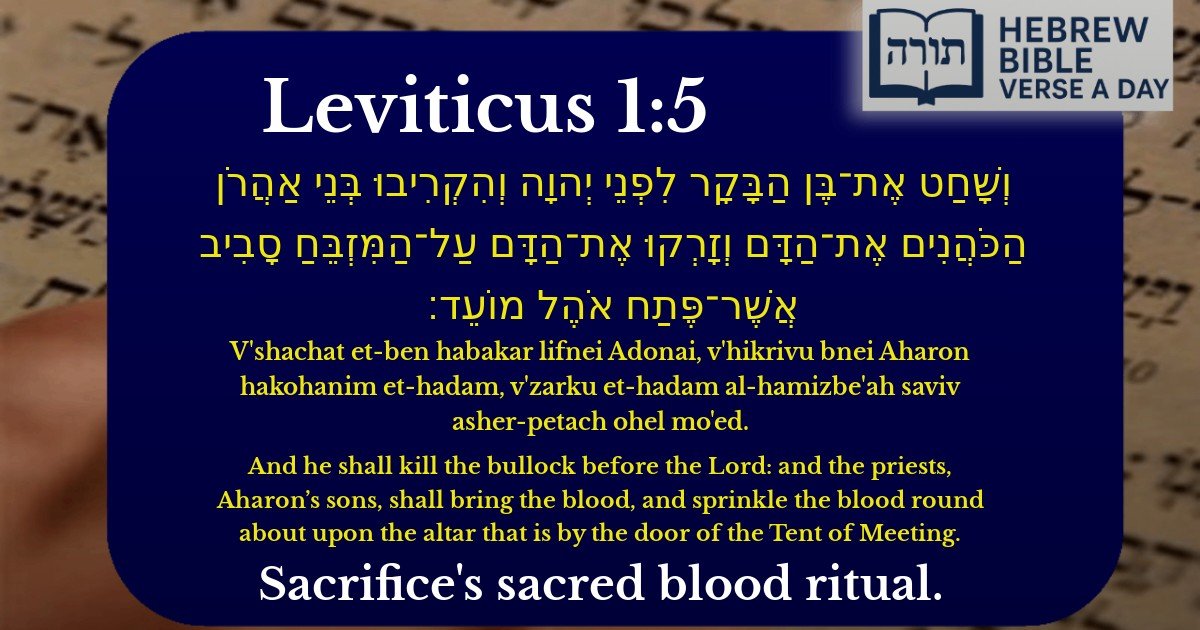
וְשָׁחַט אֶת־בֶּן הַבָּקָר לִפְנֵי יְהוָה וְהִקְרִיבוּ בְּנֵי אַהֲרֹן הַכֹּהֲנִים אֶת־הַדָּם וְזָרְקוּ אֶת־הַדָּם עַל־הַמִּזְבֵּחַ סָבִיב אֲשֶׁר־פֶּתַח אֹהֶל מוֹעֵד׃
English Translation
And he shall kill the bullock before the Lord: and the priests, Aharon’s sons, shall bring the blood, and sprinkle the blood round about upon the altar that is by the door of the Tent of Meeting.
Transliteration
V'shachat et-ben habakar lifnei Adonai, v'hikrivu bnei Aharon hakohanim et-hadam, v'zarku et-hadam al-hamizbe'ah saviv asher-petach ohel mo'ed.
Hebrew Leining Text
וְשָׁחַ֛ט אֶת־בֶּ֥ן הַבָּקָ֖ר לִפְנֵ֣י יְהֹוָ֑ה וְ֠הִקְרִ֠יבוּ בְּנֵ֨י אַהֲרֹ֤ן הַכֹּֽהֲנִים֙ אֶת־הַדָּ֔ם וְזָרְק֨וּ אֶת־הַדָּ֤ם עַל־הַמִּזְבֵּ֙חַ֙ סָבִ֔יב אֲשֶׁר־פֶּ֖תַח אֹ֥הֶל מוֹעֵֽד׃
🎵 Listen to leining
Parasha Commentary
📚 Talmud Citations
This verse is quoted in the Talmud.
📖 Zevachim 32a
The verse is discussed in the context of the laws regarding the sprinkling of blood from sacrifices, particularly focusing on the proper procedures as outlined in the Torah.
📖 Menachot 93b
Referenced in a discussion about the placement and handling of sacrificial blood, emphasizing the roles of the priests in the sacrificial service.
Context of the Verse
This verse (Vayikra 1:5) describes the initial steps of the korban olah (burnt offering) ritual, specifically the slaughter of the bullock and the handling of its blood by the kohanim (priests). The process is performed "before Hashem," emphasizing the sanctity and divine presence associated with the Mishkan (Tabernacle).
Slaughtering the Bullock ("וְשָׁחַט אֶת־בֶּן הַבָּקָר")
Rashi explains that the slaughter must be performed specifically in the northern part of the courtyard of the Mishkan (tzafon), as derived from later verses (Vayikra 1:11). This area was designated for slaughtering most sacrifices, symbolizing a place of divine judgment and atonement. The Rambam (Hilchos Maaseh HaKorbanos 5:1) elaborates that the slaughter must be done with proper intent (kavanah) for the sake of the sacrifice, otherwise it is invalid.
Role of the Kohanim ("וְהִקְרִיבוּ בְּנֵי אַהֲרֹן הַכֹּהֲנִים")
The verse specifies that only the descendants of Aharon may handle the blood of the sacrifice. The Talmud (Zevachim 32a) teaches that this excludes non-kohanim from participating in this sacred duty. The Rambam (Hilchos Biyas HaMikdash 9:1) further clarifies that any unauthorized handling of the blood invalidates the offering.
Sprinkling the Blood ("וְזָרְקוּ אֶת־הַדָּם עַל־הַמִּזְבֵּחַ סָבִיב")
The Midrash Tanchuma (Tzav 14) explains that the blood is sprinkled in two applications on each of the four corners of the altar, totaling eight sprinklings. This act symbolizes the complete dedication of the offering to Hashem. Rashi notes that the blood must be cast from a vessel (zerikah) rather than poured, as derived from the term v’zarku.
Location of the Altar ("אֲשֶׁר־פֶּתַח אֹהֶל מוֹעֵד")
The altar is positioned at the entrance of the Tent of Meeting, representing the intermediary point between the outer courtyard and the inner sanctum. The Kli Yakar explains that this placement signifies that the altar serves as a bridge between the physical and spiritual realms, facilitating atonement and connection to the Divine.
Key Halachic Principles