

Join Our Newsletter To Be Informed When New Videos Are Posted
Hebrew Text
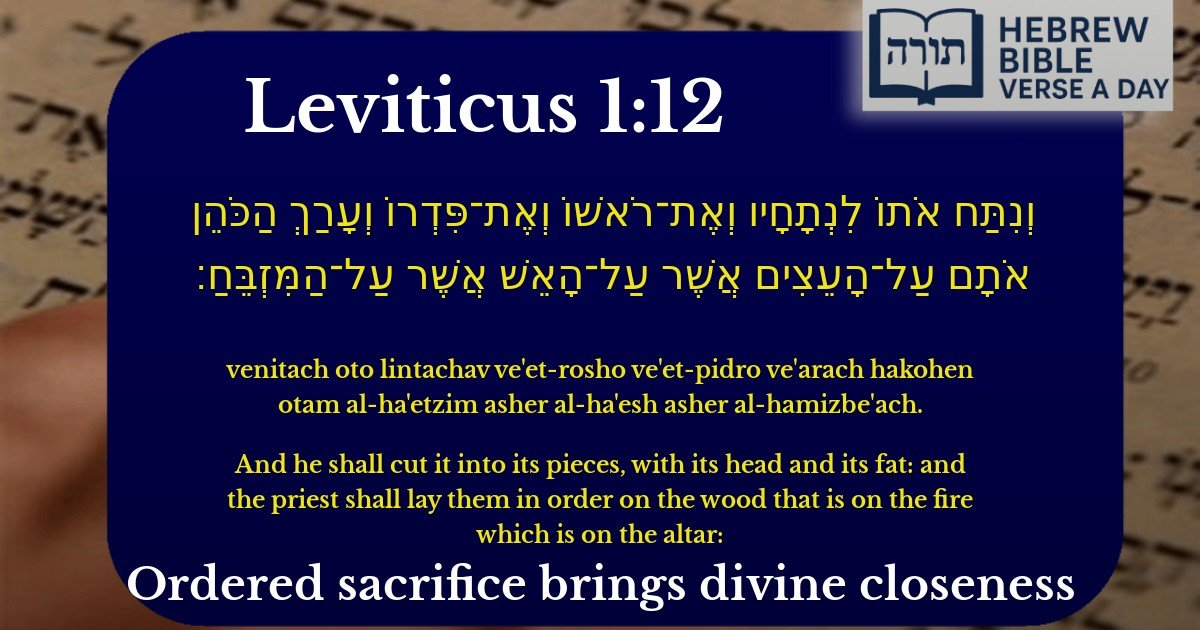
וְנִתַּח אֹתוֹ לִנְתָחָיו וְאֶת־רֹאשׁוֹ וְאֶת־פִּדְרוֹ וְעָרַךְ הַכֹּהֵן אֹתָם עַל־הָעֵצִים אֲשֶׁר עַל־הָאֵשׁ אֲשֶׁר עַל־הַמִּזְבֵּחַ׃
English Translation
And he shall cut it into its pieces, with its head and its fat: and the priest shall lay them in order on the wood that is on the fire which is on the altar:
Transliteration
Venitach oto lintachav ve'et-rosho ve'et-pidro ve'arach hakohen otam al-ha'etzim asher al-ha'esh asher al-hamizbe'ach.
Hebrew Leining Text
וְנִתַּ֤ח אֹתוֹ֙ לִנְתָחָ֔יו וְאֶת־רֹאשׁ֖וֹ וְאֶת־פִּדְר֑וֹ וְעָרַ֤ךְ הַכֹּהֵן֙ אֹתָ֔ם עַל־הָֽעֵצִים֙ אֲשֶׁ֣ר עַל־הָאֵ֔שׁ אֲשֶׁ֖ר עַל־הַמִּזְבֵּֽחַ׃
🎵 Listen to leining
Parasha Commentary
📚 Talmud Citations
This verse is quoted in the Talmud.
📖 Zevachim 35b
The verse is discussed in the context of the proper procedure for sacrificing offerings, specifically how the parts of the sacrifice are to be arranged on the altar.
📖 Menachot 49b
Referenced in a discussion about the order and arrangement of sacrifices, emphasizing the priestly duties in handling the offerings.
Explanation of the Verse
The verse (Vayikra 1:12) describes the procedure for offering an olah (burnt offering) on the altar. The animal is to be cut into its pieces, with its head and fat arranged in a specific manner by the kohen (priest) upon the wood of the altar fire. This process reflects the meticulous order required in divine service.
Rashi's Commentary
Rashi (Vayikra 1:12) explains that the phrase "וְנִתַּח אֹתוֹ לִנְתָחָיו" ("and he shall cut it into its pieces") refers to dividing the animal into its natural sections, not arbitrary cuts. The head and the fat ("פִּדְרוֹ") are singled out because they are significant parts of the offering. The kohen must arrange them in an orderly fashion ("וְעָרַךְ") to ensure the offering is presented properly before Hashem.
Rambam's Perspective
In Hilchos Maaseh HaKorbanos (Laws of Sacrificial Procedure 5:4), the Rambam elaborates that the arrangement of the pieces on the altar symbolizes the completeness and devotion of the offering. The wood must be properly prepared to sustain the fire, ensuring the sacrifice is consumed entirely, reflecting the total commitment of the one bringing the offering.
Midrashic Insight
The Midrash (Vayikra Rabbah 7:3) connects this verse to the idea of unity in service to Hashem. Just as the animal is divided yet arranged as a whole, the Jewish people, though composed of diverse individuals, must unite in their devotion to divine commandments. The kohen's role in arranging the pieces teaches that spiritual leaders must guide the community toward harmony in worship.
Halachic Considerations