

Join Our Newsletter To Be Informed When New Videos Are Posted
Hebrew Text
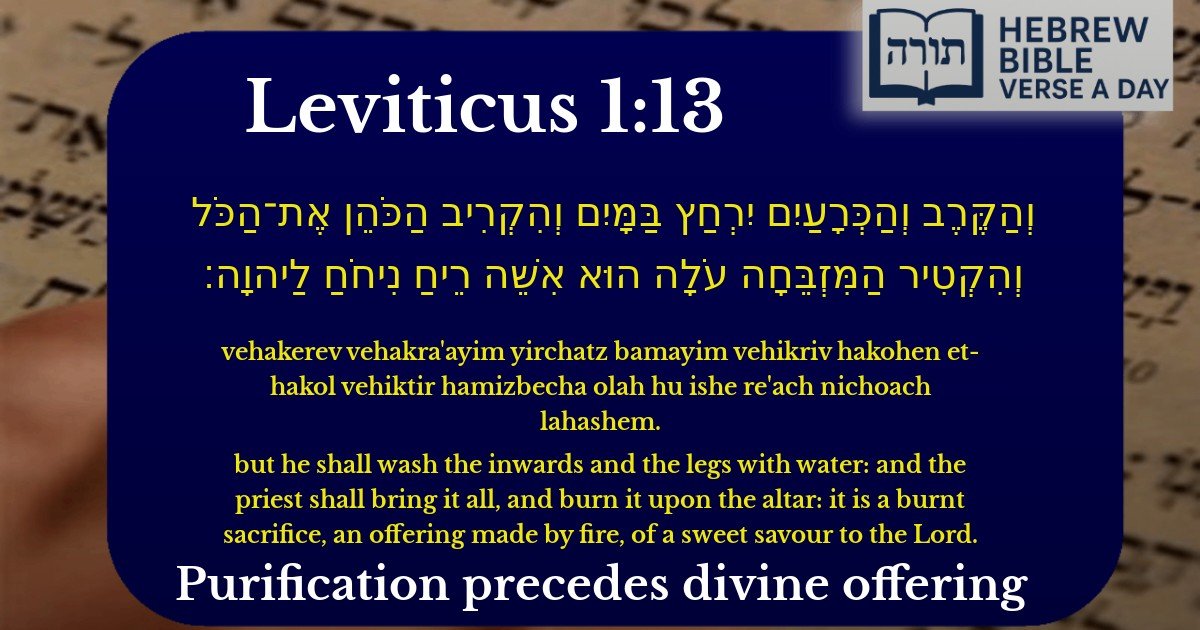
וְהַקֶּרֶב וְהַכְּרָעַיִם יִרְחַץ בַּמָּיִם וְהִקְרִיב הַכֹּהֵן אֶת־הַכֹּל וְהִקְטִיר הַמִּזְבֵּחָה עֹלָה הוּא אִשֵּׁה רֵיחַ נִיחֹחַ לַיהוָה׃
English Translation
but he shall wash the inwards and the legs with water: and the priest shall bring it all, and burn it upon the altar: it is a burnt sacrifice, an offering made by fire, of a sweet savour to the Lord.
Transliteration
Vehakerev vehakra'ayim yirchatz bamayim vehikriv hakohen et-hakol vehiktir hamizbecha olah hu ishe re'ach nichoach lahashem.
Hebrew Leining Text
וְהַקֶּ֥רֶב וְהַכְּרָעַ֖יִם יִרְחַ֣ץ בַּמָּ֑יִם וְהִקְרִ֨יב הַכֹּהֵ֤ן אֶת־הַכֹּל֙ וְהִקְטִ֣יר הַמִּזְבֵּ֔חָה עֹלָ֣ה ה֗וּא אִשֵּׁ֛ה רֵ֥יחַ נִיחֹ֖חַ לַיהֹוָֽה׃ {פ}
🎵 Listen to leining
Parasha Commentary
📚 Talmud Citations
This verse is not quoted in the Talmud.
Explanation of the Verse
The verse describes the procedure for preparing and offering a burnt sacrifice (עֹלָה) on the altar, emphasizing the purification of the animal's innards and legs before the offering is made. This process is part of the broader sacrificial service in the Beit HaMikdash (Temple), which serves as a means of drawing closer to Hashem.
Washing the Inwards and Legs
Rashi (Vayikra 1:9) explains that the washing of the innards (קֶּרֶב) and legs (כְּרָעַיִם) is necessary to remove any filth or impurities before the offering is burned on the altar. The Rambam (Hilchot Ma'aseh HaKorbanot 5:15) elaborates that this act symbolizes spiritual purification—just as the physical parts of the sacrifice must be cleansed, so too must a person's inner intentions (כַּוָּנָה) be pure when bringing an offering.
The Role of the Kohen
The verse states that the Kohen (priest) brings the entire offering to the altar. The Talmud (Zevachim 14a) teaches that the Kohanim serve as intermediaries in the sacrificial process, ensuring that the mitzvah is performed according to halachah. The Kli Yakar (Vayikra 1:9) adds that the Kohen's involvement underscores the importance of proper leadership in avodat Hashem (service of G-d).
The Nature of the Olah Sacrifice
The verse concludes by describing the offering as an "אִשֵּׁה רֵיחַ נִיחֹחַ לַיהוָה" (a fire-offering, a pleasing aroma to Hashem). The Midrash (Vayikra Rabbah 3:3) explains that the term "רֵיחַ נִיחֹחַ" does not imply that Hashem needs physical satisfaction, but rather that He accepts the sincere devotion behind the offering. The Ramban (Vayikra 1:9) further notes that the Olah sacrifice, being entirely consumed on the altar, represents total submission to Hashem's will.
Key Lessons from the Verse