Frequently Asked Questions
Q: What does Leviticus 1:16 mean in the context of sacrifices?
A: Leviticus 1:16 describes part of the process for offering a bird as a sacrifice (korban). The kohen (priest) removes the bird's crop (a part of its digestive system) along with its feathers and disposes of them near the altar. This teaches us that even in sacred rituals, cleanliness and proper disposal of waste are important, as explained by Rashi and other commentaries.
Q: Why does the Torah specify removing the crop and feathers in Leviticus 1:16?
A: The Torah specifies removing the crop and feathers because they are inedible and considered waste. The Mishnah (Zevachim 6:5) explains that only the pure and fitting parts of the sacrifice are offered on the altar. This teaches us the importance of separating what is holy from what is mundane, a principle that applies in many areas of Jewish life.
Q: What is the significance of placing the waste 'east of the altar' in Leviticus 1:16?
A: The east side of the altar was designated as the place for ashes and waste (as mentioned in Leviticus 6:3). The Talmud (Yoma 45b) explains that this area was specifically prepared for this purpose, teaching us about the importance of order and designated spaces in the Temple service. This concept carries over to how we organize our own spaces for holiness today.
Q: How does Leviticus 1:16 apply to us today without the Temple?
A: While we don't bring sacrifices today, the principle of separating the valuable from the worthless applies in our daily lives. The Rambam (Hilchos Me'ilah 8:8) derives from such verses that we must treat holy objects with respect. Similarly, we learn to distinguish between what's truly important in life and what's merely superficial, just as the kohen separated the bird's edible parts from its waste.
Q: What lesson can we learn from the detailed instructions in Leviticus 1:16?
A: The detailed instructions teach us that every aspect of serving Hashem matters. As the Midrash (Sifra) explains, even the disposal of waste had its proper place and procedure. This teaches us that in Judaism, how we perform mitzvot is as important as performing them - with attention to detail and respect for the process, whether in prayer, kindness, or other commandments.

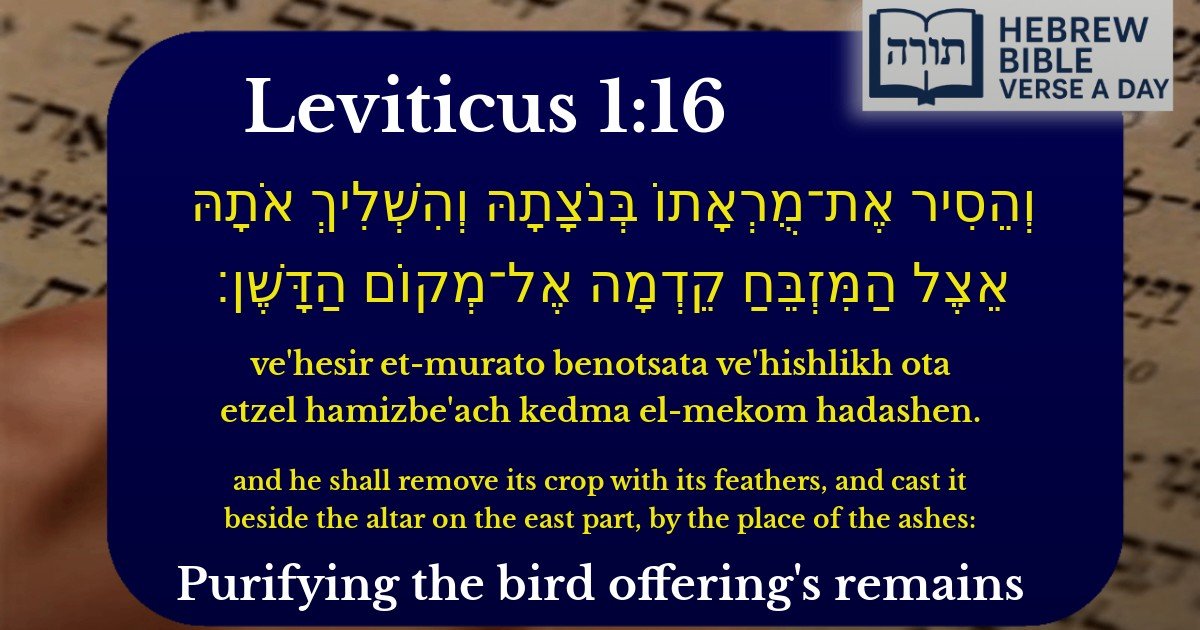

Explanation of the Verse (Vayikra 1:16)
The verse describes the procedure for offering a bird as a korban olah (burnt offering) in the Mishkan or Beit HaMikdash. Specifically, it details the removal of the crop (murah) and feathers (notzah) and their disposal near the altar.
Key Interpretations from Traditional Sources
Halachic Significance
The Gemara (Zevachim 65a) discusses the precise location of disposal—"east of the altar, by the place of the ashes"—teaching that this area was designated for parts of korbanot that were not burned. This highlights the importance of maintaining the sanctity of the altar by ensuring only appropriate elements are offered upon it.
Practical Implications
According to Shulchan Aruch (Yoreh De'ah), the principles derived from this verse influence later halachot regarding proper preparation of food (e.g., checking for forbidden parts in slaughtered birds). The meticulous care in handling the korban reflects the broader Jewish value of hiddur mitzvah (beautifying commandments) through attention to detail.