
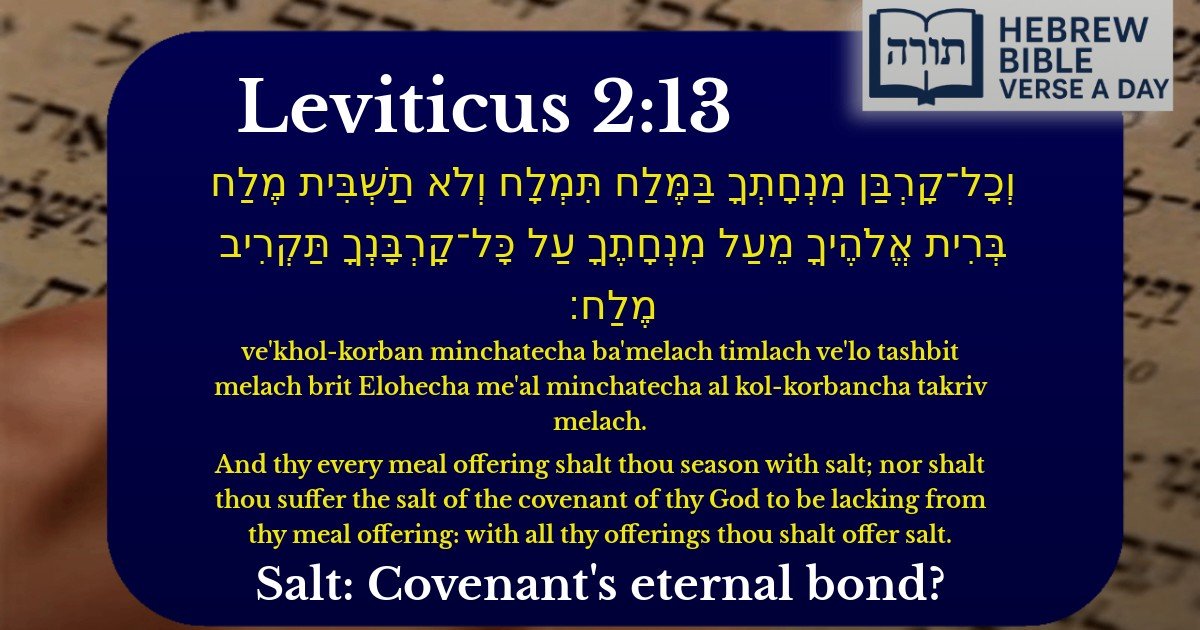

Leviticus 2:13 - Salt: Covenant's eternal bond?

Leviticus 2:13 - ויקרא 2:13

Hebrew Text

וְכָל־קָרְבַּן מִנְחָתְךָ בַּמֶּלַח תִּמְלָח וְלֹא תַשְׁבִּית מֶלַח בְּרִית אֱלֹהֶיךָ מֵעַל מִנְחָתֶךָ עַל כָּל־קָרְבָּנְךָ תַּקְרִיב מֶלַח׃

English Translation

And thy every meal offering shalt thou season with salt; nor shalt thou suffer the salt of the covenant of thy God to be lacking from thy meal offering: with all thy offerings thou shalt offer salt.

Transliteration

Ve'khol-korban minchatecha ba'melach timlach ve'lo tashbit melach brit Elohecha me'al minchatecha al kol-korbancha takriv melach.

Hebrew Leining Text

וְכׇל־קׇרְבַּ֣ן מִנְחָתְךָ֮ בַּמֶּ֣לַח תִּמְלָח֒ וְלֹ֣א תַשְׁבִּ֗ית מֶ֚לַח בְּרִ֣ית אֱלֹהֶ֔יךָ מֵעַ֖ל מִנְחָתֶ֑ךָ עַ֥ל כׇּל־קׇרְבָּנְךָ֖ תַּקְרִ֥יב מֶֽלַח׃ {ס}        

🎵 Listen to leining

Parasha Commentary

The Commandment of Salt on Offerings

The verse (Vayikra 2:13) commands that all meal offerings (מִנְחָה) must be salted, emphasizing that the "salt of the covenant of your God" must never be omitted. This mitzvah applies to all korbanot (offerings) brought in the Beit HaMikdash.

Rashi's Explanation

Rashi explains that the term "בְּרִית מֶלַח" (covenant of salt) alludes to the eternal nature of the covenant between Hashem and the Jewish people, just as salt preserves food from spoilage. He cites Bamidbar 18:19, where salt symbolizes the everlasting nature of the priesthood (כְּהֻנָּה) and Temple service.

Rambam's Halachic Perspective

In Hilchot Ma'aseh HaKorbanot (5:11), the Rambam rules that any offering lacking salt is invalid (פָּסוּל). The salt must be applied to the offering after its placement on the altar, demonstrating that this is an essential component of the sacrificial service.

Symbolic Meaning in Midrash

The Midrash (Torat Kohanim) connects salt to divine justice and mercy:

  • Salt represents din (strict judgment), as it destroys unfit meat.
  • Yet it also represents chesed (kindness), as it enhances flavor and preserves food.
  • This duality reflects the balanced relationship between Hashem and Israel.

Talmudic Insights

In Menachot 21a, the Talmud derives that salt must be added to:

  • All meal offerings (even those not placed on the altar)
  • Burnt offerings (עוֹלוֹת)
  • Peace offerings (שְׁלָמִים)
  • But not to wine libations or wood offerings

The Covenant Aspect

Malbim explains that salt - which never spoils - symbolizes the eternal covenant between Hashem and Israel regarding:

  • The permanence of the Torah
  • The enduring nature of the Temple service
  • The everlasting bond between God and His people

📚 Talmud Citations

This verse is quoted in the Talmud.

📖 Menachot 20a
The verse is discussed in the context of the requirement to salt all meal offerings, emphasizing the importance of salt in sacrifices as part of the covenant with God.
📖 Keritot 6a
The verse is referenced in a discussion about the laws of sacrifices, particularly the obligation to include salt in offerings.

Frequently Asked Questions

Q: Why does the Torah command us to add salt to sacrifices?
A: The Torah commands adding salt to sacrifices (Leviticus 2:13) because salt represents the eternal covenant between Hashem and the Jewish people (Rashi on Leviticus 2:13). Just as salt preserves food, the covenant with Hashem is everlasting. The Talmud (Menachos 20a) explains that salt also symbolizes the purifying aspect of sacrifices.
Q: What is the 'salt of the covenant' mentioned in Leviticus 2:13?
A: The 'salt of the covenant' refers to the eternal bond between Hashem and Israel. Rashi explains that just as salt preserves food from spoiling, the covenant with Hashem endures forever. This concept originates from when Hashem made a 'covenant of salt' with King David and his descendants (see II Chronicles 13:5), symbolizing permanence.
Q: Does the commandment about salt apply to Jewish practice today?
A: While we no longer bring sacrifices, we maintain the concept of salt in several ways: 1) We dip bread in salt at meals, recalling the Temple service (Talmud Berachos 55a). 2) Some have the custom to put salt on the table during Shabbos meals. 3) The Shulchan Aruch (Orach Chaim 167:5) mentions placing salt on the table when making Hamotzi, continuing this symbolic connection to the Temple offerings.
Q: What spiritual lesson can we learn from the salt requirement?
A: The Midrash (Vayikra Rabbah 4:6) teaches that salt represents two important qualities: 1) Just as salt enhances flavor, our service of Hashem should enhance the world. 2) Just as salt preserves, our commitment to Torah must endure through all circumstances. The Rambam (Moreh Nevuchim 3:46) also notes that salt prevents corruption, symbolizing how mitzvos preserve us from spiritual decay.
Q: Why is salt specifically mentioned with meal offerings (mincha)?
A: Rashi (Leviticus 2:13) explains that salt is especially emphasized with meal offerings because unlike animal sacrifices which naturally contain blood (which already has a covenant significance), the grain offerings needed salt to represent the covenant. The Talmud (Menachos 21a) also discusses how the salt had to be added at specific stages of the meal offering preparation.