Frequently Asked Questions
Q: What does Leviticus 2:16 mean in simple terms?
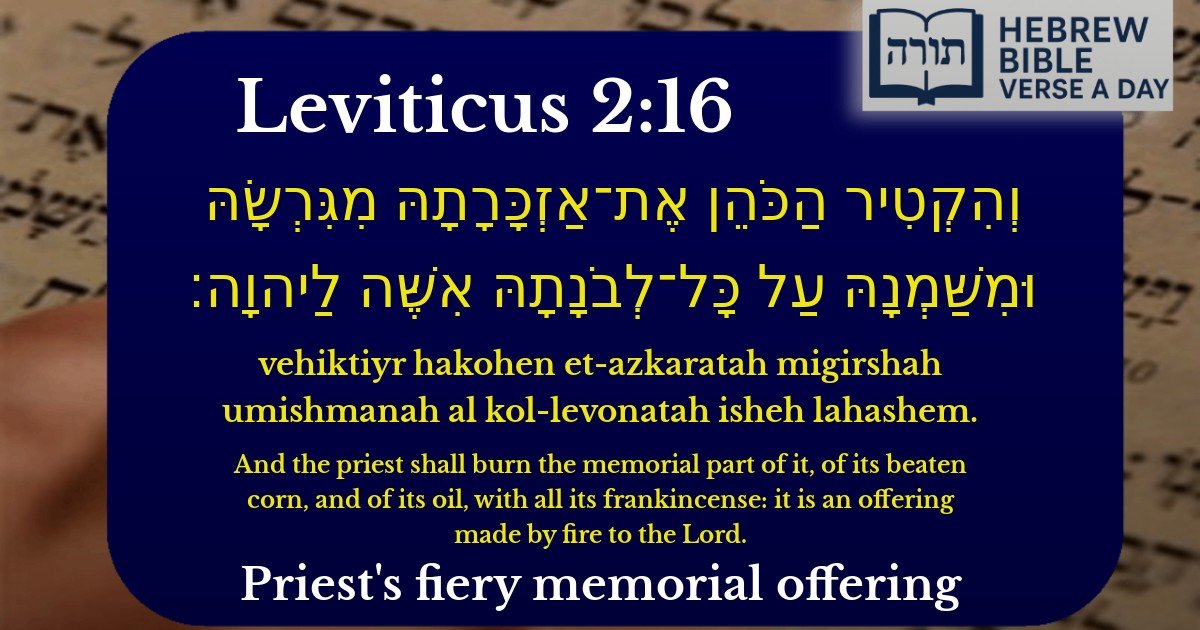
A: Leviticus 2:16 describes the process of offering a grain offering (mincha) to Hashem. The priest burns a portion of the fine flour, oil, and frankincense as a 'memorial' (azkarah) on the altar. This symbolizes the dedication of the offering to G-d, as explained by Rashi and the Talmud (Menachot 62a).
Q: Why is the 'memorial portion' (azkarah) important in this verse?
A: The 'memorial portion' (azkarah) represents the part of the offering that ascends to Heaven as a 'pleasing aroma' to Hashem (Rambam, Hilchot Maaseh HaKorbanot 12:2). It serves as a reminder of the worshiper's devotion and gratitude, as taught in the Midrash (Vayikra Rabbah 3:1).
Q: What can we learn from the grain offering (mincha) in Leviticus 2:16?
A: The grain offering teaches humility and simplicity in serving Hashem. Unlike animal sacrifices, it requires only basic ingredients (flour, oil, frankincense), showing that even small, sincere acts of devotion are precious to G-d (Talmud, Menachot 104b; Rashi on Leviticus 2:1).
Q: How does Leviticus 2:16 apply to us today without the Temple?
A: While we cannot bring physical offerings today, our Sages teach that prayer (tefillah) replaces sacrifices (Berachot 26b). The grain offering reminds us to approach Hashem with sincerity, just as we dedicate our words and deeds to Him in daily life (Rambam, Hilchot Tefillah 1:4).
Q: Why does the verse mention frankincense in the grain offering?
A: Frankincense (levonah) adds a pleasant fragrance, symbolizing the sweetness of mitzvot and Torah study (Talmud, Keritot 6a). Rashi (on Leviticus 2:1) explains that it elevates the offering, just as good deeds elevate a person's spiritual standing before Hashem.


Context in the Torah
This verse (Vayikra 2:2) describes the procedure for bringing a minchah (meal offering) in the Beit HaMikdash. Unlike animal sacrifices, the minchah consists of fine flour, oil, and frankincense, representing a different form of divine service.
Explanation of the Components
Symbolism of the Minchah
The Midrash (Vayikra Rabbah 3:1) teaches that the minchah represents those who humbly serve Hashem through simple devotion, as opposed to grand gestures. The act of burning a portion—while the kohanim consume the remainder—demonstrates partnership between the divine and human realms.
Halachic Significance
The Talmud (Menachot 21a) derives from this verse that every minchah requires three actions: removal of the azkarah, adding oil, and placing frankincense. Missing any step invalidates the offering, underscoring the precision required in avodat Hashem.