Frequently Asked Questions
Q: What does Leviticus 3:10 mean in the context of sacrifices?
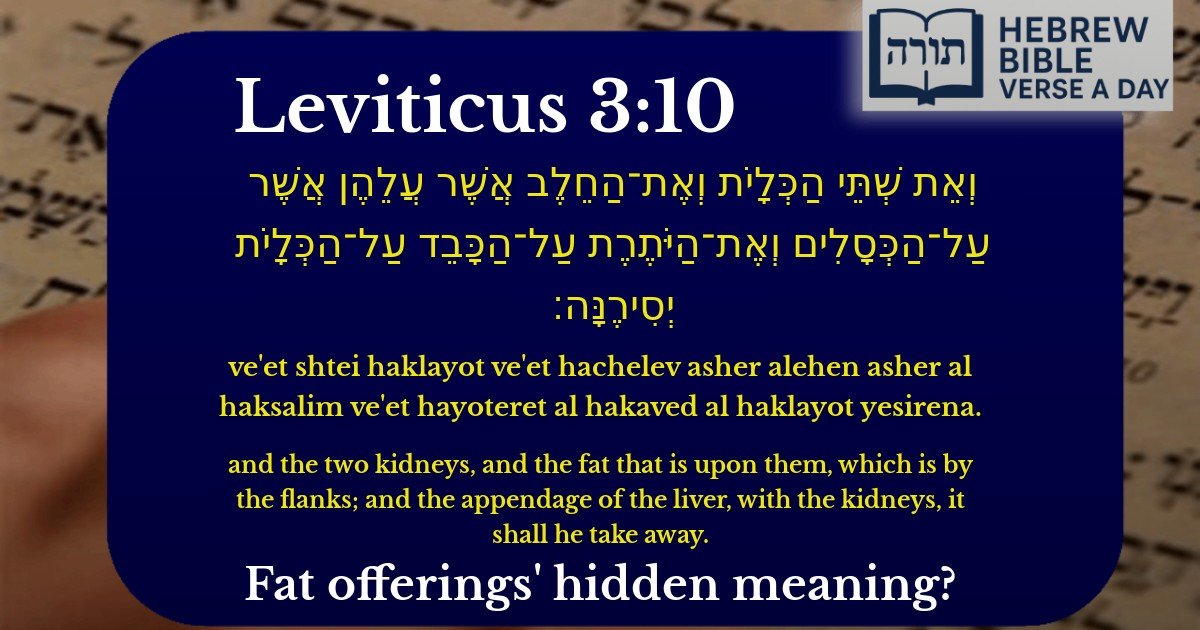
A: Leviticus 3:10 describes the parts of an animal that are to be removed and offered on the altar during a peace offering (שלמים). According to Rashi, these specific parts—the kidneys, the fat around them, and the lobe of the liver—were considered choice portions and were designated for Hashem as part of the sacrificial service.
Q: Why are the kidneys and liver fat specifically mentioned in Leviticus 3:10?
A: The kidneys and the fat surrounding them, along with the lobe of the liver, are mentioned because they were considered the finest and most select parts of the animal. The Talmud (Chullin 49a) explains that these parts were seen as vital organs, and offering them symbolized giving the best to Hashem. The Rambam (Guide for the Perplexed 3:46) also notes that these fats were prohibited for consumption, reinforcing their sanctity.
Q: What lesson can we learn from Leviticus 3:10 about giving to Hashem?
A: This verse teaches the principle of giving the best of what we have to Hashem. Just as the choicest fats and organs were set aside for the altar, we should strive to offer our finest efforts in serving Hashem—whether in prayer, charity, or mitzvot. The Midrash (Vayikra Rabbah 3:5) emphasizes that true devotion means giving with generosity and sincerity.
Q: Does Leviticus 3:10 have any relevance today without the Temple?
A: While we no longer bring animal sacrifices, the underlying message of dedicating our best to Hashem remains relevant. The Rambam (Hilchos Ma'aseh HaKorbanos) explains that prayer replaced sacrifices in exile, teaching us to approach tefillah with the same reverence as the offerings. Additionally, the prohibition against eating these fats (חלב) still applies today, reminding us of the sanctity of Torah laws.
Q: What is the 'yoteret' (appendage) of the liver mentioned in Leviticus 3:10?
A: The 'yoteret' refers to a small lobe attached to the liver, which was removed and burned on the altar. Rashi clarifies that this was a distinct part separate from the main liver. The Talmud (Zevachim 63b) discusses its precise location and how it was handled during the sacrificial process, highlighting the meticulous care taken in fulfilling the mitzvah.


Context in Sacrificial Law
This verse (Vayikra 3:4) details the parts of an animal sacrifice (korban shelamim) that are designated for burning on the altar. The kidneys, their fat, the fat around the flanks, and the lobe of the liver are all removed and offered to Hashem. Rashi explains that these specific organs were chosen because they are associated with human desires and impulses—the kidneys advise, the liver incites anger, and the fat represents indulgence. By offering these, the worshipper symbolically dedicates their inner drives to divine service.
Symbolism of the Organs
Halachic Implications
The Rambam (Hilchos Ma’aseh HaKorbanos 5:13) rules that these parts must be removed with precision, reflecting the care required in refining one’s character. The Chatam Sofer adds that the phrase "יסירנה" ("he shall take it away") implies active removal of negative traits, paralleling the physical act of separating these organs during the sacrifice.
Ethical Lesson
Rabbi Samson Raphael Hirsch teaches that this ritual underscores Judaism’s demand for holistic sanctity: just as these internal parts—hidden yet vital—are consecrated, so must a person’s private thoughts and inclinations be directed toward holiness. The outer act of sacrifice mirrors the inner work of avodat hamiddot (refining one’s traits).