Frequently Asked Questions
Q: What does 'the priest that is anointed' refer to in Leviticus 4:5?
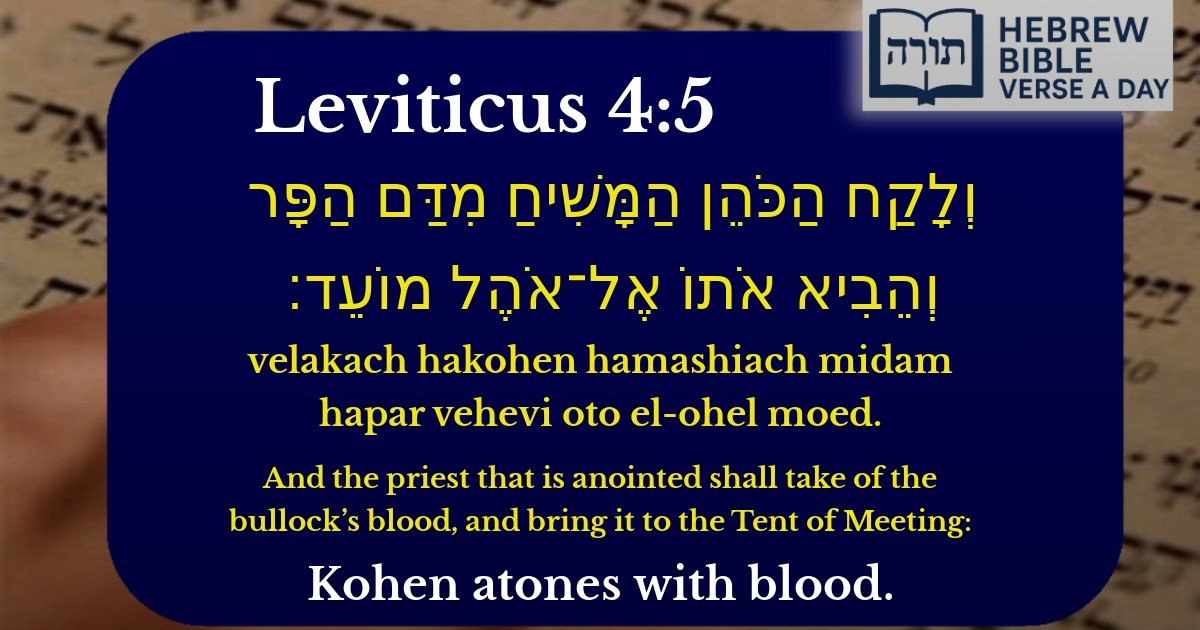
A: In Leviticus 4:5, 'the priest that is anointed' refers to the Kohen Gadol (High Priest), who was specially anointed with sacred oil during his inauguration (Rashi on Leviticus 4:3). This verse describes his role in bringing the blood of the sin offering into the Tent of Meeting.
Q: Why does the High Priest bring the bull's blood into the Tent of Meeting?
A: The High Priest brings the bull's blood into the Tent of Meeting as part of the sin offering (chatat) for unintentional sins (Vayikra 4:1-3). According to Rashi and the Talmud (Zevachim 53a), this act atones for the community or the Kohen Gadol himself, depending on the context.
Q: What is the significance of the blood in this verse?
A: Blood represents life (Leviticus 17:11), and in this context, it serves as the means of atonement. The Rambam (Hilchot Ma'aseh HaKorbanot 5:1) explains that the sprinkling of blood on the altar symbolizes the sinner's renewed commitment to holiness.
Q: Does this verse have any relevance today without the Temple?
A: While we no longer have the Temple or sacrifices, the principle of repentance (teshuvah) remains central. The Talmud (Berachot 32b) teaches that sincere prayer and repentance can achieve atonement in place of sacrifices. The verse reminds us of the seriousness of sin and the need for spiritual correction.
Q: What can we learn from the High Priest's role in this verse?
A: The High Priest's meticulous handling of the sin offering teaches the importance of responsibility, especially for leaders. The Midrash (Vayikra Rabbah 4:6) emphasizes that spiritual leaders must set an example in seeking atonement and guiding others toward repentance.


Context in the Torah
This verse (Vayikra 4:5) appears in the context of the parashah discussing the sin offering (korban chatat) brought by the Kohen Gadol (High Priest) for unintentional sins. The procedure emphasizes the role of the anointed priest in atoning for communal missteps.
Rashi's Explanation
Rashi (Vayikra 4:5) clarifies that "the priest that is anointed" refers specifically to the Kohen Gadol, who was anointed with the sacred anointing oil (shemen hamishchah). He notes that this distinguishes his service from that of ordinary priests. The blood of the bullock symbolizes the gravity of the atonement process, as the Kohen Gadol must personally handle the blood and bring it into the sacred space of the Ohel Moed (Tent of Meeting).
Rambam's Perspective
In Hilchot Ma'aseh HaKorbanot (Laws of Sacrificial Procedure 5:1), the Rambam (Maimonides) elaborates that the Kohen Gadol's role in this ritual underscores his unique responsibility for the spiritual purity of the nation. The act of bringing the blood into the Ohel Moed signifies that atonement must be sought in the holiest proximity to the Divine Presence.
Midrashic Insights
Symbolism of the Blood
The Talmud (Yoma 5a) explains that the blood represents the essence of life ("ha-dam hu ha-nefesh"), and its handling by the Kohen Gadol signifies the restoration of spiritual vitality after transgression. The entry into the Ohel Moed demonstrates that true atonement requires drawing closer to the Divine presence.