Frequently Asked Questions
Q: What does Leviticus 4:10 mean in simple terms?
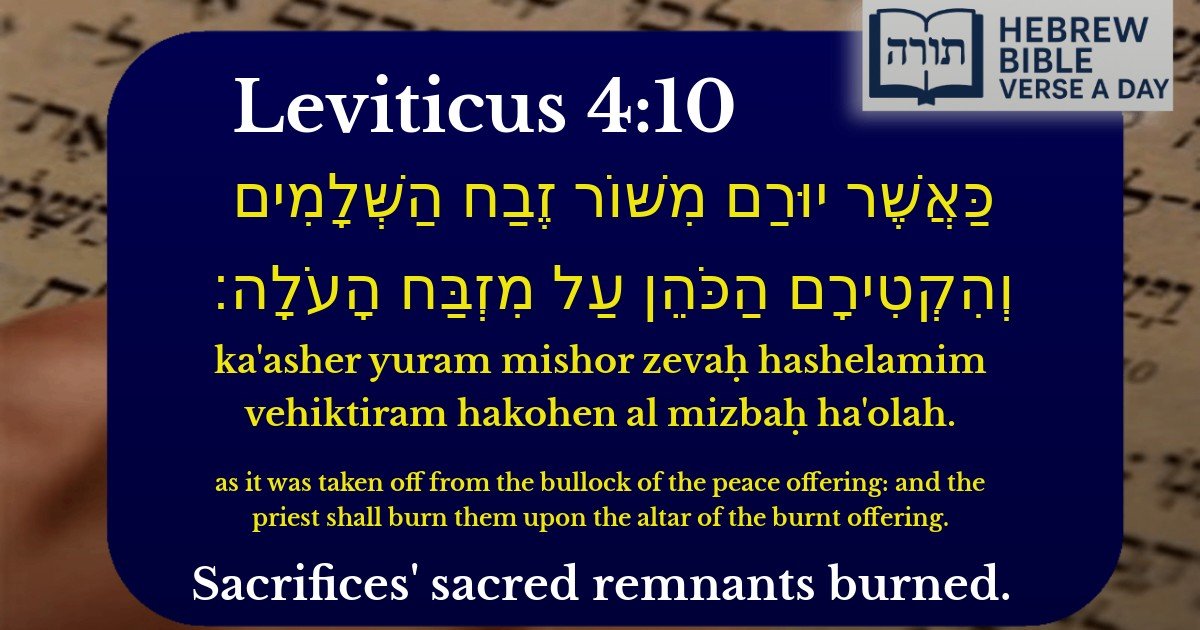
A: Leviticus 4:10 describes the process of offering a peace offering (שלמים) in the Temple. The verse explains that certain fats from the bullock (similar to parts removed during kosher slaughter today) are to be burned on the altar by the kohen (priest). This was part of the atonement process for certain sins, showing dedication to Hashem through sacrifice.
Q: Why is the peace offering (שלמים) mentioned in Leviticus 4:10 important?
A: The peace offering (שלמים) was unique because it symbolized harmony between the person bringing it, Hashem, and the community. Unlike other offerings, parts were shared among the kohen, the altar, and the person bringing it (as explained in Talmud Zevachim). This teaches the importance of gratitude, connection with Hashem, and communal unity.
Q: What can we learn today from Leviticus 4:10 about sacrifices?
A: While we no longer bring physical sacrifices, the Rambam (Hilchot Teshuva) teaches that prayer, repentance, and acts of kindness now take their place. This verse reminds us to 'offer' our best to Hashem—whether through sincere prayer (like the fats ascending on the altar) or by sharing with others (like the communal aspect of the שלמים offering).
Q: Why were specific fats burned on the altar in Leviticus 4:10?
A: Rashi explains that these fats (חלב) were considered the richest and choicest parts of the animal. Burning them on the altar symbolized giving the very best to Hashem. This idea carries forward today in mitzvot like giving tzedakah from our finest earnings or dedicating our highest efforts to Torah study.
Q: How does the 'altar of burnt offering' in Leviticus 4:10 differ from other altars?
A: The 'altar of burnt offering' (מזבח העולה) was the main outdoor altar in the Temple courtyard used for most sacrifices. The Talmud (Zevachim) distinguishes it from the inner golden altar used for incense. This teaches that different spiritual 'levels' exist—some mitzvot are more visible (like public kindness), while others are private (like personal prayer).


Context in Vayikra (Leviticus)
The verse (Vayikra 4:10) discusses the procedure for the zevach shelamim (peace offering) and parallels the handling of certain fats and organs to the olah (burnt offering). This reflects the Torah's detailed laws of korbanot (sacrifices), emphasizing proper service in the Mishkan (Tabernacle) and later the Beit HaMikdash (Temple).
Rashi's Explanation
Rashi (Vayikra 4:10) clarifies that the verse refers to the fats and organs that must be removed from the shelamim bullock—specifically the chelev (forbidden fats) and the ketoret (parts burned on the altar). He notes that the procedure mirrors that of the olah, teaching that the same care and sanctity apply to both offerings.
Rambam's Halachic Perspective
In Hilchot Ma'aseh HaKorbanot (Laws of Sacrificial Procedure), the Rambam (Maimonides) elaborates that the burning of these fats on the mizbeach ha'olah (altar of burnt offering) is a mandatory step, underscoring that the shelamim—though partly consumed by the owner—retains a sacred dimension requiring priestly service (5:1-3).
Symbolism in Midrash
The Midrash (Vayikra Rabbah 7:3) connects the shelamim to the concept of shalom (peace), as it fosters harmony between the individual, the community, and Hashem. The burning of fats—representing material abundance—teaches that one must elevate physical blessings toward spiritual ends.
Practical Implications