Frequently Asked Questions
Q: What does 'the priest that is anointed' refer to in Leviticus 4:16?
A: In Leviticus 4:16, 'the priest that is anointed' refers to the Kohen Gadol (High Priest). Rashi explains that this is the High Priest who was anointed with special oil (shemen hamishcha) as part of his consecration for service in the Mishkan (Tabernacle) or later in the Beit Hamikdash (Temple).
Q: Why does the High Priest bring the bullock's blood into the Tent of Meeting?
A: According to the Talmud (Yoma 44a), the High Priest brings the bullock's blood into the Tent of Meeting as part of the atonement process for certain communal sins. The Rambam (Hilchot Maaseh Hakorbanot 1:4) explains that this was a crucial step in the sacrificial service to achieve kaparah (atonement) when the community erred unintentionally.
Q: What is the significance of the blood in this verse?
A: The Torah teaches (Vayikra 17:11) that 'the life of the flesh is in the blood,' and the Midrash (Torat Kohanim) explains that blood represents life force. In the sacrificial service, bringing the blood before Hashem symbolizes offering up life itself in sincere repentance. The blood of this particular bullock atones for the community's unintentional sins when properly offered by the High Priest.
Q: How does this verse apply to Jews today without a Temple?
A: While we cannot bring sacrifices today without the Beit Hamikdash, the Talmud (Berachot 32b) teaches that prayer and sincere repentance now stand in place of sacrifices. The Rambam (Hilchot Teshuvah 1:3) emphasizes that the principles behind these rituals - recognizing mistakes, seeking atonement, and drawing closer to Hashem - remain eternally relevant through Torah study, prayer, and mitzvot.
Q: Why is this verse about the High Priest important in Judaism?
A: This verse is fundamental because it establishes the unique role of the Kohen Gadol in achieving atonement for the community. The Talmud (Horayot 12a) discusses how the High Priest's service maintained the spiritual connection between Israel and Hashem. Even today, we recall these concepts during Yom Kippur prayers when describing the ancient Temple service, keeping alive the hope for the restoration of the Beit Hamikdash.

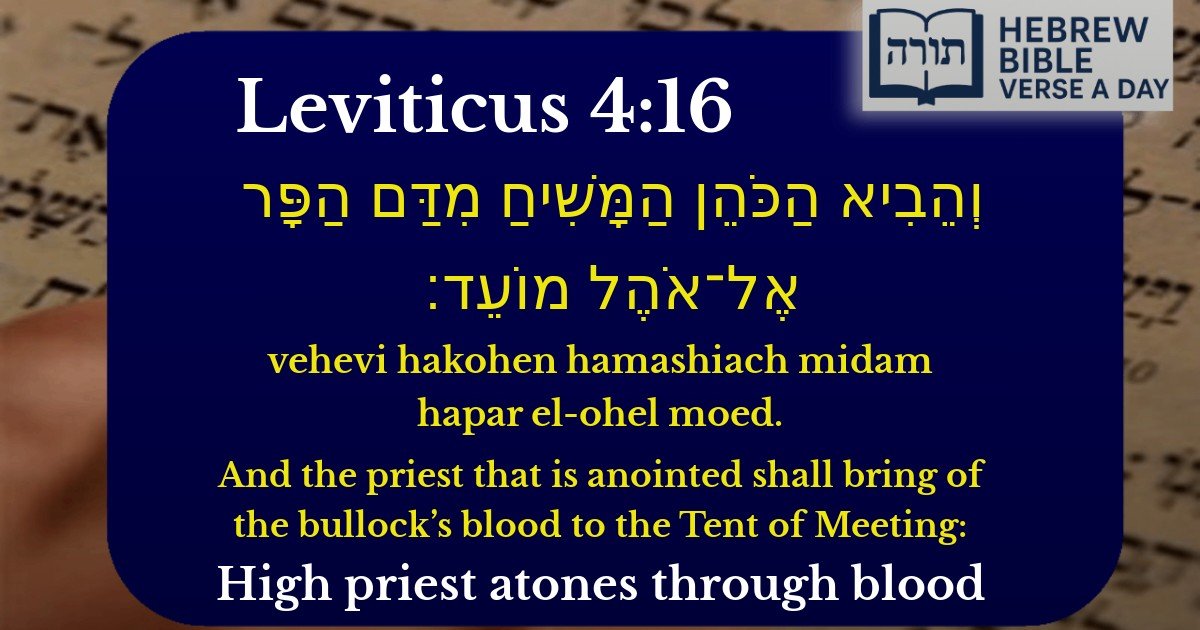

The Role of the Anointed Priest (Kohen HaMashiach)
The verse describes the duty of the Kohen HaMashiach (anointed priest) to bring the blood of the bull into the Tent of Meeting. Rashi (Vayikra 4:16) explains that this refers specifically to the Kohen Gadol (High Priest), who is anointed with the sacred anointing oil (shemen hamishcha). The term mashiach here denotes his consecrated status, setting him apart for divine service in the Mishkan (Tabernacle).
The Significance of the Bull’s Blood
The bullock (par) in this context is the sin-offering brought by the Kohen Gadol for his own unintentional transgression (Vayikra 4:3-12). The Rambam (Hilchot Shegagot 15:1) emphasizes that the blood represents atonement, and its entry into the Ohel Moed (Tent of Meeting) signifies the purification of the sacred space. The Sifra (Torat Kohanim) elaborates that the blood must be brought inside to achieve kaparah (atonement) properly.
The Location: The Tent of Meeting (Ohel Moed)
The Ohel Moed is the inner sanctum where the Kohen Gadol performs the most sacred rites. The Talmud (Yoma 5b) discusses how this act of bringing the blood inside parallels the Yom Kippur service, where the High Priest enters the Holy of Holies. The Midrash Tanchuma (Tzav 10) adds that the sanctity of the Ohel Moed requires the highest level of purity and intentionality in the sacrificial process.
Key Teachings from Orthodox Jewish Commentators