

Join Our Newsletter To Be Informed When New Videos Are Posted
Hebrew Text
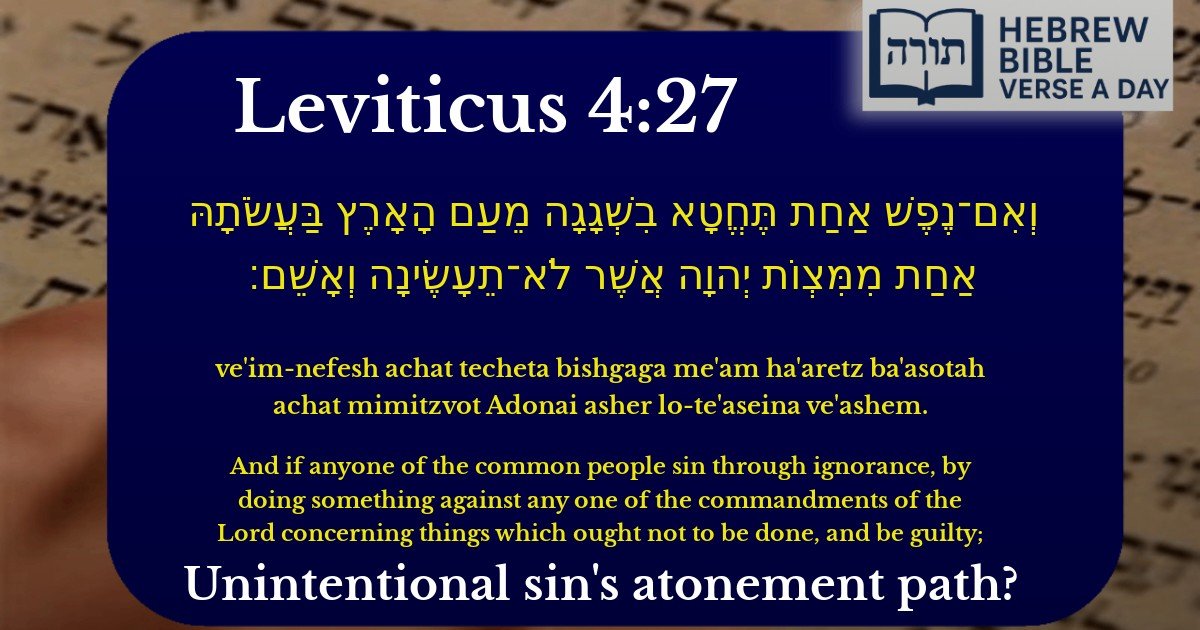
וְאִם־נֶפֶשׁ אַחַת תֶּחֱטָא בִשְׁגָגָה מֵעַם הָאָרֶץ בַּעֲשֹׂתָהּ אַחַת מִמִּצְוֺת יְהוָה אֲשֶׁר לֹא־תֵעָשֶׂינָה וְאָשֵׁם׃
English Translation
And if anyone of the common people sin through ignorance, by doing something against any one of the commandments of the Lord concerning things which ought not to be done, and be guilty;
Transliteration
Ve'im-nefesh achat techeta bishgaga me'am ha'aretz ba'asotah achat mimitzvot Adonai asher lo-te'aseina ve'ashem.
Hebrew Leining Text
וְאִם־נֶ֧פֶשׁ אַחַ֛ת תֶּחֱטָ֥א בִשְׁגָגָ֖ה מֵעַ֣ם הָאָ֑רֶץ בַּ֠עֲשֹׂתָ֠הּ אַחַ֨ת מִמִּצְוֺ֧ת יְהֹוָ֛ה אֲשֶׁ֥ר לֹא־תֵעָשֶׂ֖ינָה וְאָשֵֽׁם׃
🎵 Listen to leining
Parasha Commentary
📚 Talmud Citations
This verse is quoted in the Talmud.
📖 Horayot 8b
The verse is discussed in the context of communal sin offerings and the distinction between intentional and unintentional sins.
📖 Keritot 26b
The verse is referenced in a discussion about the atonement process for unintentional sins committed by individuals.
Context of the Verse
This verse (Vayikra 4:27) discusses the case of an individual from am ha'aretz (the common people) who unintentionally violates a negative commandment. The Torah outlines the requirement for a chatas (sin offering) to atone for this transgression. The term bishegagah (through ignorance) is key, as it distinguishes this from intentional sin, which carries different consequences.
Rashi's Explanation
Rashi clarifies that "מֵעַם הָאָרֶץ" refers to an ordinary Israelite, as opposed to a king or kohen gadol (high priest), who are discussed in preceding verses. He emphasizes that the phrase "אַחַת מִמִּצְוֺת ה'" ("one of the commandments of the Lord") includes all negative commandments, whether they involve action or speech.
Rambam's Perspective
In Hilchos Shegagos (Laws of Unintentional Transgressions), the Rambam explains that a sin committed bishegagah requires atonement because even unintentional violations create a spiritual blemish. The chatas offering serves to rectify this, demonstrating that negligence in mitzvah observance—even without malicious intent—demands correction.
Talmudic Insights (Horayos 8a)
The Talmud discusses the phrase "אֲשֶׁר לֹא־תֵעָשֶׂינָה" ("which ought not to be done"), teaching that this specifies lavim (negative commandments) rather than aseh (positive commandments). Only violations of prohibitions necessitate a chatas, not omissions of positive commandments.
Midrashic Interpretation (Toras Kohanim)
The Midrash highlights the term "נֶפֶשׁ אַחַת" ("a single soul") to teach that each individual bears personal responsibility for their actions. Even if the transgression seems minor or unintentional, every soul must strive for spiritual purity and seek atonement when necessary.
Key Lessons