

Join Our Newsletter To Be Informed When New Videos Are Posted
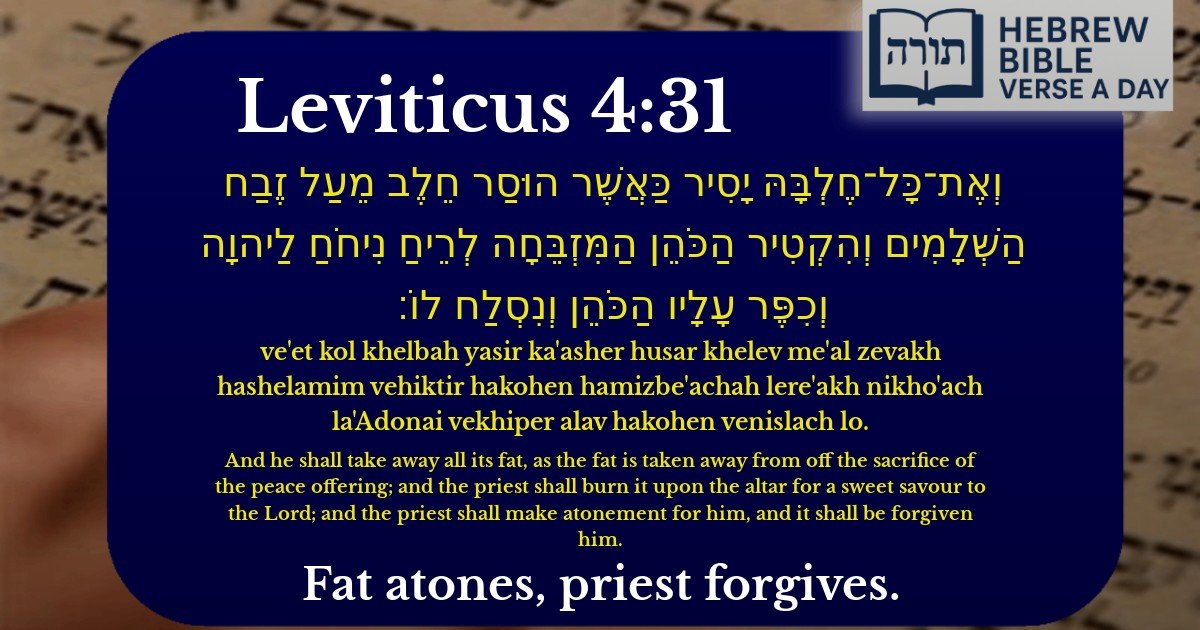
Hebrew Text
וְאֶת־כָּל־חֶלְבָּהּ יָסִיר כַּאֲשֶׁר הוּסַר חֵלֶב מֵעַל זֶבַח הַשְּׁלָמִים וְהִקְטִיר הַכֹּהֵן הַמִּזְבֵּחָה לְרֵיחַ נִיחֹחַ לַיהוָה וְכִפֶּר עָלָיו הַכֹּהֵן וְנִסְלַח לוֹ׃
English Translation
And he shall take away all its fat, as the fat is taken away from off the sacrifice of the peace offering; and the priest shall burn it upon the altar for a sweet savour to the Lord; and the priest shall make atonement for him, and it shall be forgiven him.
Transliteration
Ve'et kol khelbah yasir ka'asher husar khelev me'al zevakh hashelamim vehiktir hakohen hamizbe'achah lere'akh nikho'ach la'Adonai vekhiper alav hakohen venislach lo.
Hebrew Leining Text
וְאֶת־כׇּל־חֶלְבָּ֣הּ יָסִ֗יר כַּאֲשֶׁ֨ר הוּסַ֣ר חֵ֘לֶב֮ מֵעַ֣ל זֶ֣בַח הַשְּׁלָמִים֒ וְהִקְטִ֤יר הַכֹּהֵן֙ הַמִּזְבֵּ֔חָה לְרֵ֥יחַ נִיחֹ֖חַ לַיהֹוָ֑ה וְכִפֶּ֥ר עָלָ֛יו הַכֹּהֵ֖ן וְנִסְלַ֥ח לֽוֹ׃ {פ}
🎵 Listen to leining
Parasha Commentary
📚 Talmud Citations
This verse is quoted in the Talmud.
📖 Zevachim 49b
The verse is referenced in a discussion about the proper procedures for sacrificing peace offerings and the removal of fat.
📖 Menachot 61a
The verse is cited in the context of discussing the laws of sacrifices and the role of the priest in making atonement.
Explanation of the Verse from Vayikra (Leviticus) 4:31
This verse discusses the procedure for the chatat (sin offering) brought by an individual for unintentional sins. The Torah specifies that the fat of the offering must be removed and burned on the altar, similar to the procedure for the zevach shelamim (peace offering). The verse concludes by stating that the kohen (priest) will effect atonement, and the sinner will be forgiven.
Key Elements of the Verse
The Role of the Kohen in Atonement
The verse states that the kohen effects atonement (v'chiper alav ha'kohen). The Rambam (Maimonides) in Hilchot Teshuva (1:1-2) explains that while the korban (sacrifice) facilitates atonement, true forgiveness requires sincere repentance (teshuva). The offering alone does not absolve intentional sins without remorse and commitment to change.
The Promise of Forgiveness
The conclusion of the verse (v'nislach lo) assures that the sinner will be forgiven. The Midrash (Vayikra Rabbah 5:5) teaches that this reflects Hashem's boundless mercy—when a person repents and brings an offering with proper intent, forgiveness is guaranteed. The Sforno adds that this process restores the individual's spiritual standing before Hashem.