
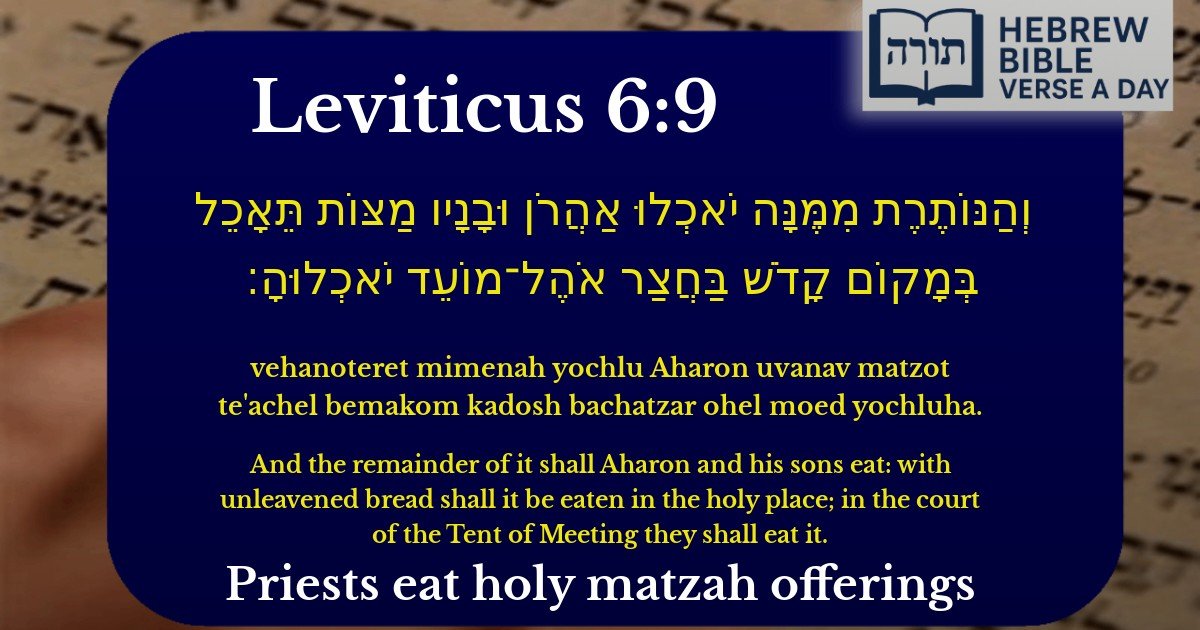

Leviticus 6:9 - Priests eat holy matzah offerings

Leviticus 6:9 - ויקרא 6:9

Hebrew Text

וְהַנּוֹתֶרֶת מִמֶּנָּה יֹאכְלוּ אַהֲרֹן וּבָנָיו מַצּוֹת תֵּאָכֵל בְּמָקוֹם קָדֹשׁ בַּחֲצַר אֹהֶל־מוֹעֵד יֹאכְלוּהָ׃

English Translation

And the remainder of it shall Aharon and his sons eat: with unleavened bread shall it be eaten in the holy place; in the court of the Tent of Meeting they shall eat it.

Transliteration

Vehanoteret mimenah yochlu Aharon uvanav matzot te'achel bemakom kadosh bachatzar ohel moed yochluha.

Hebrew Leining Text

וְהַנּוֹתֶ֣רֶת מִמֶּ֔נָּה יֹאכְל֖וּ אַהֲרֹ֣ן וּבָנָ֑יו מַצּ֤וֹת תֵּֽאָכֵל֙ בְּמָק֣וֹם קָדֹ֔שׁ בַּחֲצַ֥ר אֹֽהֶל־מוֹעֵ֖ד יֹאכְלֽוּהָ׃

🎵 Listen to leining

Parasha Commentary

Context in the Torah

The verse (Vayikra 6:9) is part of the Torah's instructions regarding the Mincha (meal-offering), specifically the portion that is not burned on the altar. It details how the Kohanim (priests) must consume the remaining portion of the offering.

Rashi's Explanation

Rashi (Vayikra 6:9) emphasizes two key points:

  • "With unleavened bread shall it be eaten" – Rashi explains that this teaches that the Mincha must be eaten together with matzah, not chametz, as chametz is forbidden in all meal-offerings (based on Vayikra 2:11).
  • "In the court of the Tent of Meeting" – Rashi clarifies that this refers to the Azara (Temple courtyard), the only permissible place for the Kohanim to eat sanctified offerings.

Rambam's Halachic Perspective

In Hilchot Ma'aseh HaKorbanot (10:12), the Rambam codifies the law based on this verse:

  • The leftover Mincha must be eaten by male Kohanim only (Aharon and his sons).
  • It must be consumed as matzah, in a state of ritual purity, and within the sacred precincts of the Temple courtyard.

Symbolism and Deeper Meaning

The Midrash (Torat Kohanim) connects this verse to the idea of kedusha (holiness) in service:

  • Eating the Mincha in a holy place reinforces that the Kohanim must maintain a state of sanctity while partaking of sacred food.
  • The requirement of matzah symbolizes humility and haste in divine service, as leaven represents arrogance (based on Talmud Bavli, Berachot 17a).

Practical Implications

The Talmud (Zevachim 95b) derives from this verse:

  • The Kohanim must eat the Mincha on the same day it is offered, before midnight.
  • If eaten outside the designated area or with chametz, it invalidates the offering and transgresses a Torah prohibition.

📚 Talmud Citations

This verse is quoted in the Talmud.

📖 Zevachim 95b
The verse is cited in a discussion about the laws of eating sacrificial offerings, specifically regarding where and how the priests should consume the remaining portions of the meal offering.
📖 Menachot 73a
This verse is referenced in the context of discussing the proper way to prepare and consume the meal offerings, emphasizing the requirement for unleavened bread and the sacred location for eating.

Frequently Asked Questions

Q: What does Leviticus 6:9 mean when it says the leftover offering should be eaten by Aharon and his sons?
A: This verse teaches that certain parts of the grain offering (Mincha) not burned on the altar were to be eaten by the Kohanim (priests) in a holy place. Rashi explains that this was a privilege and obligation for the Kohanim, showing their special role in serving Hashem and maintaining the sanctity of the Mishkan (Tabernacle).
Q: Why did the Kohanim have to eat the offering with unleavened bread (matzah)?
A: The Rambam (Hilchos Maaseh HaKorbanos 10:5) explains that leaven (chametz) represents fermentation and 'puffing up,' symbolizing arrogance. Since offerings represent humility before Hashem, they were eaten with matzah, which is simple and flat, reflecting proper spiritual service.
Q: Where exactly was the 'holy place' where the Kohanim ate these offerings?
A: The Talmud (Zevachim 55b) clarifies that this refers to the courtyard of the Mishkan (and later the Temple). It had to be eaten within its boundaries, emphasizing that holy things must be treated with respect in designated sacred spaces.
Q: What lesson can we learn today from this verse about the Kohanim eating the offerings?
A: The Midrash (Toras Kohanim) teaches that just as the Kohanim had to eat holy food in a holy place with proper intent, we too should approach mitzvos with mindfulness and respect. Even mundane acts like eating can be elevated when done with holiness and purpose.
Q: Why were only Aharon and his sons allowed to eat these offerings?
A: As Rashi explains, this privilege was given specifically to the Kohanim because of their sacred role in serving Hashem and atoning for the Jewish people. The Torah (Numbers 18:7) states that the priesthood is an eternal covenant, giving them unique responsibilities and rights regarding Temple service.