

Join Our Newsletter To Be Informed When New Videos Are Posted
Hebrew Text
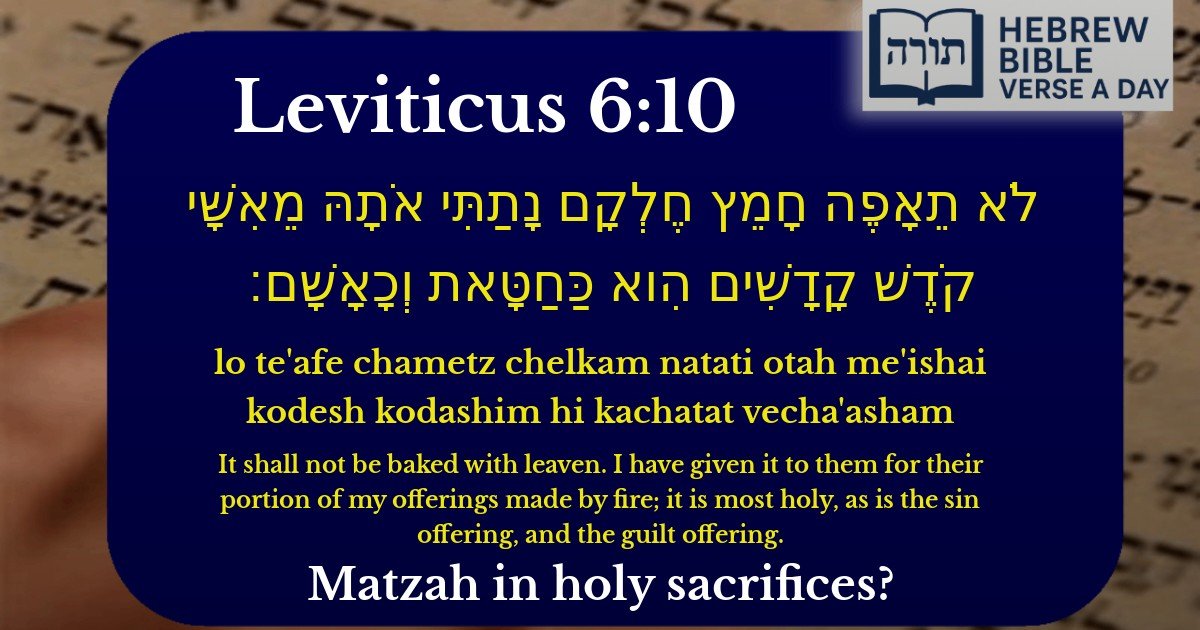
לֹא תֵאָפֶה חָמֵץ חֶלְקָם נָתַתִּי אֹתָהּ מֵאִשָּׁי קֹדֶשׁ קָדָשִׁים הִוא כַּחַטָּאת וְכָאָשָׁם׃
English Translation
It shall not be baked with leaven. I have given it to them for their portion of my offerings made by fire; it is most holy, as is the sin offering, and the guilt offering.
Transliteration
Lo te'afe chametz chelkam natati otah me'ishai kodesh kodashim hi kachatat vecha'asham
Hebrew Leining Text
לֹ֤א תֵאָפֶה֙ חָמֵ֔ץ חֶלְקָ֛ם נָתַ֥תִּי אֹתָ֖הּ מֵאִשָּׁ֑י קֹ֤דֶשׁ קׇֽדָשִׁים֙ הִ֔וא כַּחַטָּ֖את וְכָאָשָֽׁם׃
🎵 Listen to leining
Parasha Commentary
📚 Talmud Citations
This verse is quoted in the Talmud.
📖 Menachot 55a
The verse is discussed in the context of the laws regarding meal offerings and the prohibition of leaven in certain sacrifices.
📖 Zevachim 44b
The verse is referenced in a discussion about the holiness of certain offerings and their comparison to sin and guilt offerings.
Prohibition of Leaven in Offerings
The verse states, "It shall not be baked with leaven" (לֹא תֵאָפֶה חָמֵץ), emphasizing the prohibition against using chametz (leaven) in certain korbanot (offerings). Rashi (Vayikra 6:10) explains that this refers specifically to the minchat kohen (the priest's meal offering), which must be unleavened. This aligns with the broader Torah principle that chametz is forbidden in most offerings, as leaven symbolizes the yetzer hara (evil inclination) due to its fermenting and inflating nature (Talmud Berachot 17a).
Status as Most Holy
The verse continues, "I have given it to them for their portion of my offerings made by fire; it is most holy" (חֶלְקָם נָתַתִּי אֹתָהּ מֵאִשָּׁי קֹדֶשׁ קָדָשִׁים הִוא). Rambam (Hilchot Maaseh HaKorbanot 10:1) teaches that kodshei kodashim (most holy offerings) are eaten exclusively by male kohanim within the Azarah (Temple courtyard). This designation elevates the status of these offerings above other sacrifices, reflecting their unique sanctity.
Comparison to Sin and Guilt Offerings
The verse concludes, "as is the sin offering, and the guilt offering" (כַּחַטָּאת וְכָאָשָׁם). The Talmud (Zevachim 44b) derives from this comparison that just as chatat (sin offering) and asham (guilt offering) must be eaten within one day and night, so too must the priest's meal offering. Additionally, the Midrash (Torat Kohanim) notes that the shared holiness of these offerings underscores their role in atonement and spiritual purification.