

Join Our Newsletter To Be Informed When New Videos Are Posted
Hebrew Text
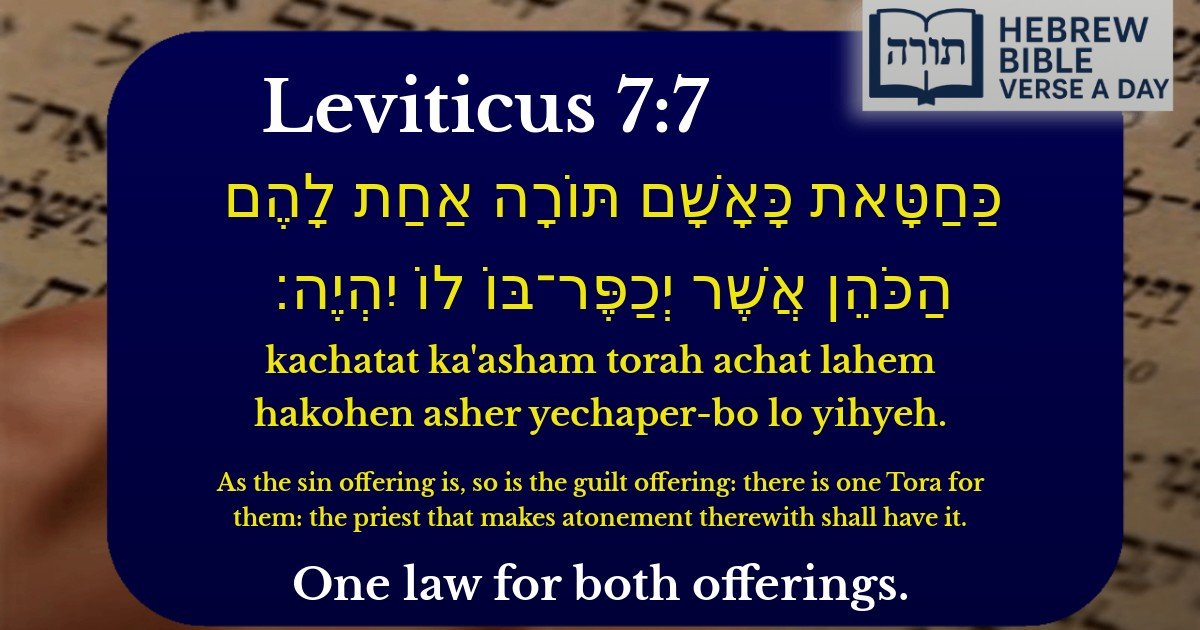
כַּחַטָּאת כָּאָשָׁם תּוֹרָה אַחַת לָהֶם הַכֹּהֵן אֲשֶׁר יְכַפֶּר־בּוֹ לוֹ יִהְיֶה׃
English Translation
As the sin offering is, so is the guilt offering: there is one Tora for them: the priest that makes atonement therewith shall have it.
Transliteration
Kachatat ka'asham torah achat lahem hakohen asher yechaper-bo lo yihyeh.
Hebrew Leining Text
כַּֽחַטָּאת֙ כָּֽאָשָׁ֔ם תּוֹרָ֥ה אַחַ֖ת לָהֶ֑ם הַכֹּהֵ֛ן אֲשֶׁ֥ר יְכַפֶּר־בּ֖וֹ ל֥וֹ יִהְיֶֽה׃
🎵 Listen to leining
Parasha Commentary
📚 Talmud Citations
This verse is quoted in the Talmud.
📖 Zevachim 44b
The verse is cited in a discussion about the laws of sin offerings and guilt offerings, emphasizing their similar treatment in the sacrificial system.
📖 Menachot 4a
Referenced in a broader discussion on the unity of the Torah's laws regarding various types of offerings.
Verse Context (Vayikra 7:7)
The verse appears in the context of discussing the laws of the chatat (sin offering) and asham (guilt offering), detailing the priestly responsibilities and entitlements regarding these sacrifices. The Torah emphasizes that the same set of laws applies to both offerings in certain respects.
Rashi's Commentary
Rashi (Vayikra 7:7) explains that the phrase "Torah achat lahem" (one law for them) teaches that the procedures for the chatat and asham are identical in the following ways:
Rambam's Explanation
In Hilchot Ma'aseh HaKorbanot, the Rambam (Maimonides) elaborates that this verse underscores the principle of uniformity in sacrificial law. Despite their different purposes—chatat for unintentional sins and asham for specific transgressions like misuse of sanctified property—the Torah unifies their procedural laws to emphasize the structured and sacred nature of the Temple service.
Talmudic Insight (Zevachim 44b)
The Talmud discusses this verse in the context of priestly entitlements, deriving that the priest who sprinkles the blood of the offering is the one who receives its portions. This reinforces the principle of zeh kapparah, zeh nichnas lecheilev—"the one who effects atonement is the one who benefits," ensuring that the service remains orderly and free from disputes.
Midrashic Perspective (Torat Kohanim)
The Torat Kohanim (Sifra) highlights that the phrase "lo yiheyeh" ("shall have it") teaches that the priest's right to the offering is absolute once the atonement service begins. This prevents others from claiming a share and reinforces the honor due to the kohanim in their sacred role.