

Join Our Newsletter To Be Informed When New Videos Are Posted
Hebrew Text
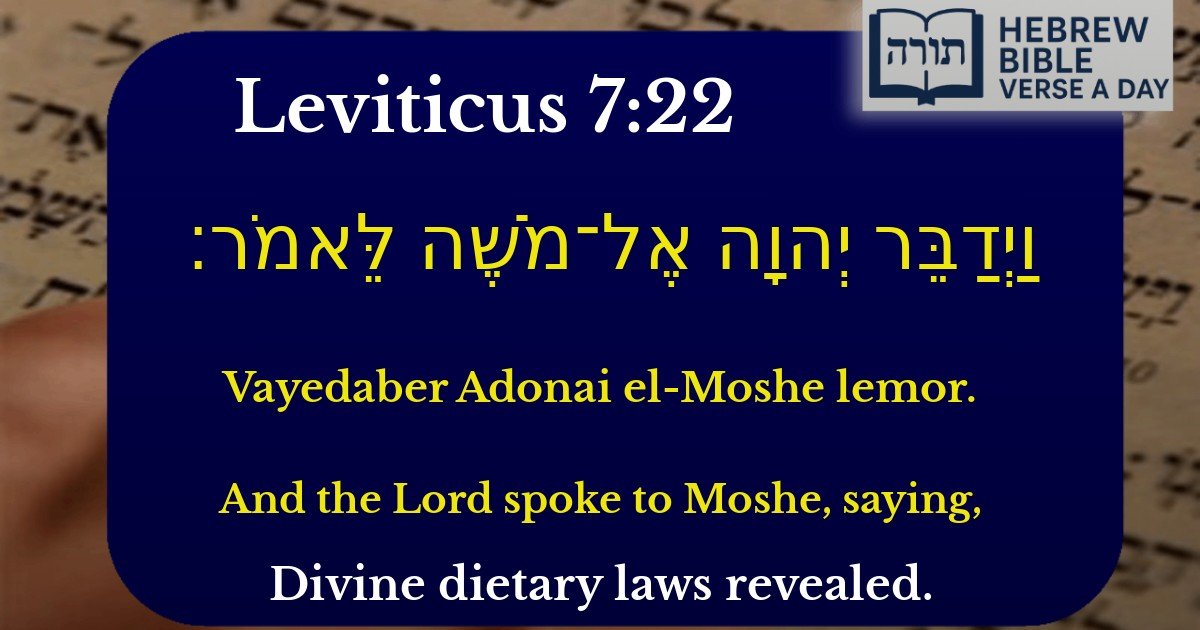
וַיְדַבֵּר יְהוָה אֶל־מֹשֶׁה לֵּאמֹר׃
English Translation
And the Lord spoke to Moshe, saying,
Transliteration
Vayedaber Adonai el-Moshe lemor.
Hebrew Leining Text
וַיְדַבֵּ֥ר יְהֹוָ֖ה אֶל־מֹשֶׁ֥ה לֵּאמֹֽר׃
🎵 Listen to leining
Parasha Commentary
📚 Talmud Citations
This verse is not quoted in the Talmud.
The Divine Communication to Moshe
The phrase "וַיְדַבֵּר יְהוָה אֶל־מֹשֶׁה לֵּאמֹר" ("And the Lord spoke to Moshe, saying") appears frequently in the Torah, marking the transmission of divine commandments and teachings. Rashi (Shemot 6:2) notes that this expression signifies a direct and clear communication from Hashem to Moshe, often introducing mitzvot or prophetic messages intended for Bnei Yisrael.
The Significance of "Vayedaber"
The term "וַיְדַבֵּר" ("spoke") implies a forceful and authoritative transmission, as explained by the Rambam (Hilchos Yesodei HaTorah 7:6). Unlike softer terms like "וַיֹּאמֶר" ("said"), "וַיְדַבֵּר" suggests a structured and deliberate revelation, often associated with legal or ethical instruction.
The Role of Moshe as Intermediary
The verse emphasizes Moshe's unique role as the conduit for divine communication. The Midrash (Shemos Rabbah 28:6) teaches that Moshe was distinguished by his humility and clarity, making him the ideal vessel for transmitting Torah. The Ramban (Bamidbar 12:6) further elaborates that Moshe alone experienced prophecy "face to face," unlike other prophets who received messages through visions or dreams.
Structure of Divine Command
Kabbalistic Insight
The Zohar (Shemot 7b) interprets this phrase as reflecting the continuous flow of divine wisdom from the upper worlds to Moshe, who then brings it into the physical realm. The repetition of this phrase throughout the Torah signifies the ongoing relationship between Hashem and His people through Moshe's leadership.