

Join Our Newsletter To Be Informed When New Videos Are Posted
Hebrew Text
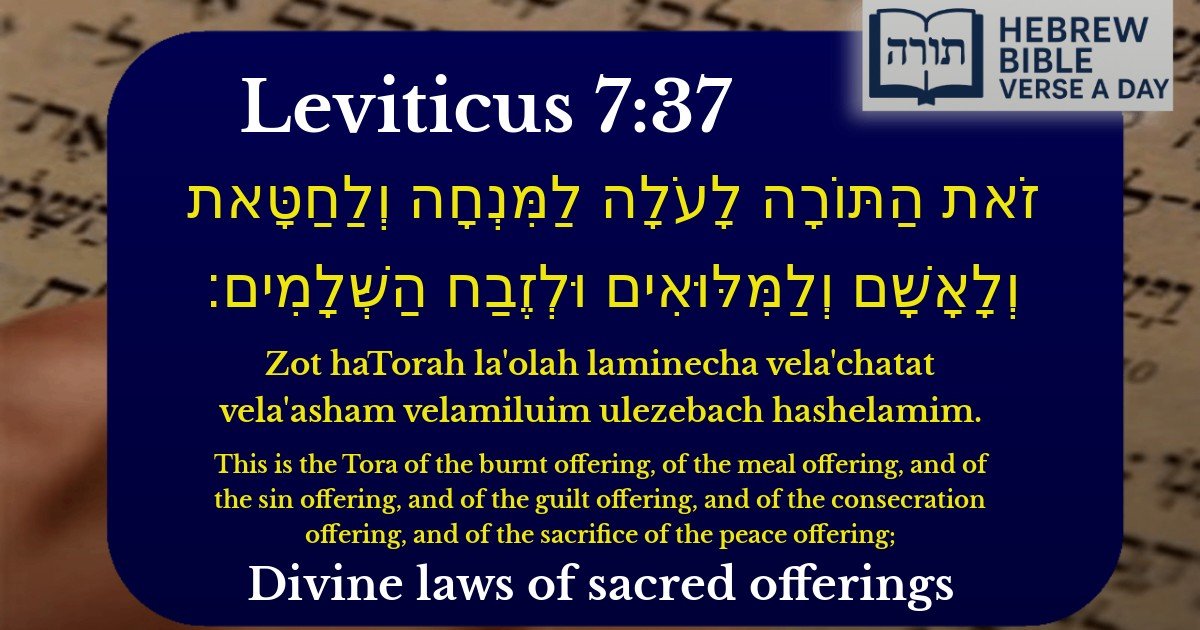
זֹאת הַתּוֹרָה לָעֹלָה לַמִּנְחָה וְלַחַטָּאת וְלָאָשָׁם וְלַמִּלּוּאִים וּלְזֶבַח הַשְּׁלָמִים׃
English Translation
This is the Tora of the burnt offering, of the meal offering, and of the sin offering, and of the guilt offering, and of the consecration offering, and of the sacrifice of the peace offering;
Transliteration
Zot haTorah la'olah laminecha vela'chatat vela'asham velamiluim ulezebach hashelamim.
Hebrew Leining Text
זֹ֣את הַתּוֹרָ֗ה לָֽעֹלָה֙ לַמִּנְחָ֔ה וְלַֽחַטָּ֖את וְלָאָשָׁ֑ם וְלַ֨מִּלּוּאִ֔ים וּלְזֶ֖בַח הַשְּׁלָמִֽים׃
🎵 Listen to leining
Parasha Commentary
📚 Talmud Citations
This verse is quoted in the Talmud.
📖 Menachot 73b
The verse is cited in the discussion about the laws of meal offerings and their preparation, emphasizing the importance of following the Torah's instructions for sacrifices.
📖 Zevachim 5a
The verse is referenced in the context of discussing the various types of sacrifices and their respective laws, highlighting the comprehensive nature of the Torah's sacrificial system.
Overview of the Verse
The verse (Vayikra 7:37) summarizes the various categories of korbanot (sacrifices) detailed in the preceding chapters of Sefer Vayikra. It serves as a concluding statement to the laws of sacrifices, emphasizing that each type has its own unique halachic requirements and spiritual significance.
Explanation of the Korbanot Listed
Spiritual Significance
The Sforno emphasizes that each korban reflects a different aspect of avodat Hashem (divine service). The Olah and Mincha represent devotion, the Chatat and Asham signify repentance, and the Shelamim embodies gratitude and joy in serving Hashem. Together, they encompass the full spectrum of a Jew's relationship with the Divine.
Halachic Context
The Rambam (Hilchot Maaseh HaKorbanot) organizes these laws systematically, noting that each korban has precise requirements for its offering, slaughter, and consumption. The verse serves as a reminder that Torah law governs every detail of sacrificial worship, ensuring it is performed with kedusha (holiness) and tahara (purity).