

Join Our Newsletter To Be Informed When New Videos Are Posted
Hebrew Text
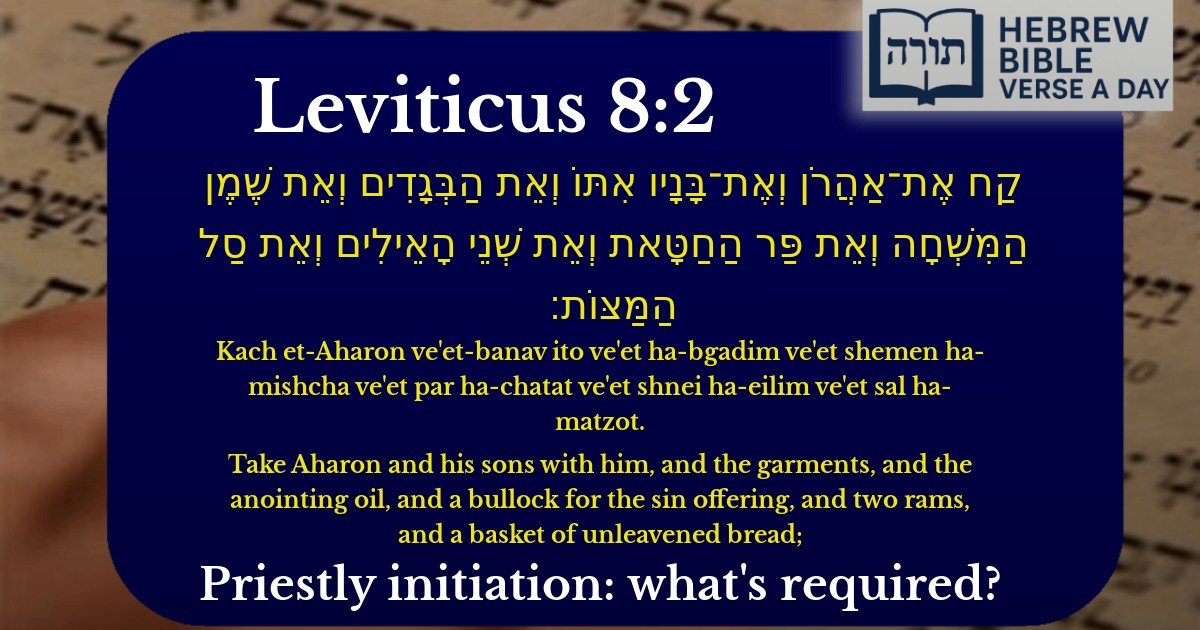
קַח אֶת־אַהֲרֹן וְאֶת־בָּנָיו אִתּוֹ וְאֵת הַבְּגָדִים וְאֵת שֶׁמֶן הַמִּשְׁחָה וְאֵת פַּר הַחַטָּאת וְאֵת שְׁנֵי הָאֵילִים וְאֵת סַל הַמַּצּוֹת׃
English Translation
Take Aharon and his sons with him, and the garments, and the anointing oil, and a bullock for the sin offering, and two rams, and a basket of unleavened bread;
Transliteration
Kach et-Aharon ve'et-banav ito ve'et ha-bgadim ve'et shemen ha-mishcha ve'et par ha-chatat ve'et shnei ha-eilim ve'et sal ha-matzot.
Hebrew Leining Text
קַ֤ח אֶֽת־אַהֲרֹן֙ וְאֶת־בָּנָ֣יו אִתּ֔וֹ וְאֵת֙ הַבְּגָדִ֔ים וְאֵ֖ת שֶׁ֣מֶן הַמִּשְׁחָ֑ה וְאֵ֣ת ׀ פַּ֣ר הַֽחַטָּ֗את וְאֵת֙ שְׁנֵ֣י הָֽאֵילִ֔ים וְאֵ֖ת סַ֥ל הַמַּצּֽוֹת׃
🎵 Listen to leining
Parasha Commentary
📚 Talmud Citations
This verse is quoted in the Talmud.
The verse is referenced in the discussion about the anointing oil and the consecration of Aaron and his sons as priests.
📖 Zevachim 19b
The verse is cited in the context of discussing the requirements for the sin offering and the consecration process.
📖 Menachot 51b
The verse is mentioned in relation to the basket of unleavened bread and its role in the consecration ceremony.
Context of the Verse
This verse (Shemot 29:1-2) is part of the Torah's instructions for the consecration of Aharon and his sons as Kohanim (priests) to serve in the Mishkan (Tabernacle). The process involves specific garments, offerings, and rituals to sanctify them for their sacred duties.
Explanation of the Components
Significance of the Consecration Process
The Ibn Ezra (Shemot 29:1) emphasizes that this entire process was designed to elevate the Kohanim to a state of kedushah (holiness) befitting their role. The Kli Yakar (Shemot 29:1) adds that each element—garments, oil, offerings—served to remove any barriers between the Kohanim and their divine service, ensuring they could properly represent the nation before Hashem.