

Join Our Newsletter To Be Informed When New Videos Are Posted
Hebrew Text
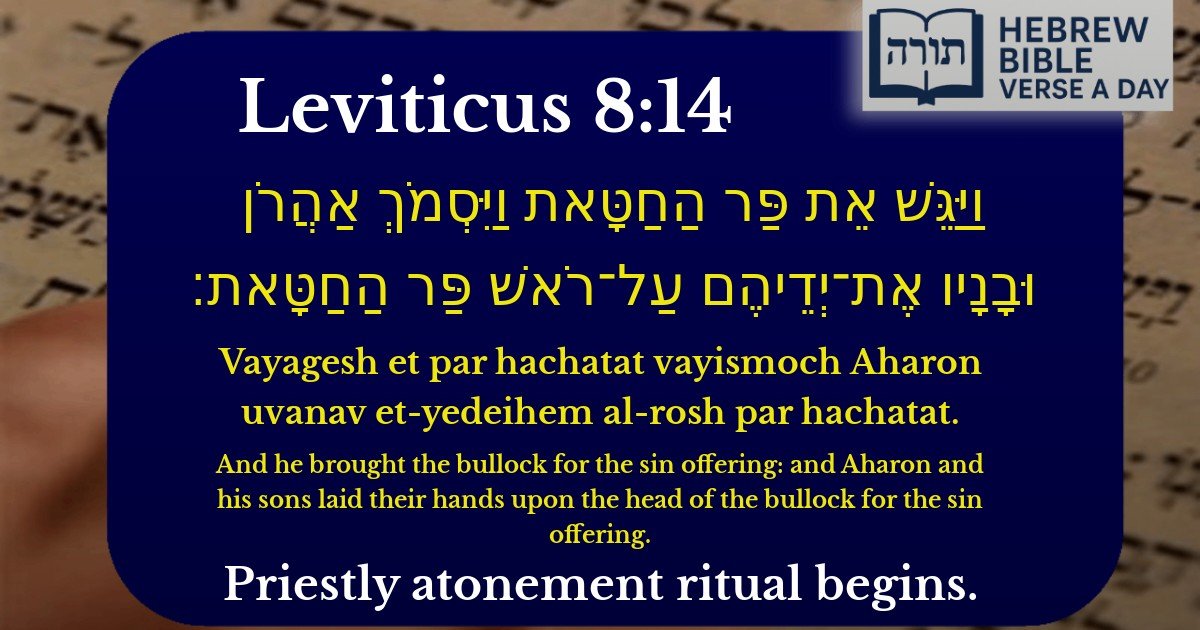
וַיַּגֵּשׁ אֵת פַּר הַחַטָּאת וַיִּסְמֹךְ אַהֲרֹן וּבָנָיו אֶת־יְדֵיהֶם עַל־רֹאשׁ פַּר הַחַטָּאת׃
English Translation
And he brought the bullock for the sin offering: and Aharon and his sons laid their hands upon the head of the bullock for the sin offering.
Transliteration
Vayagesh et par hachatat vayismoch Aharon uvanav et-yedeihem al-rosh par hachatat.
Hebrew Leining Text
וַיַּגֵּ֕שׁ אֵ֖ת פַּ֣ר הַֽחַטָּ֑את וַיִּסְמֹ֨ךְ אַהֲרֹ֤ן וּבָנָיו֙ אֶת־יְדֵיהֶ֔ם עַל־רֹ֖אשׁ פַּ֥ר הַֽחַטָּֽאת׃
🎵 Listen to leining
Parasha Commentary
📚 Talmud Citations
This verse is quoted in the Talmud.
📖 Yoma 36b
The verse is referenced in the discussion about the High Priest's confession over the bullock for the sin offering on Yom Kippur, illustrating the procedure of laying hands on the sacrifice.
📖 Menachot 93b
Cited in the context of discussing the laws of sacrifices, particularly the requirement for the priests to lay their hands on the head of the sin offering.
The Act of Semicha (Laying of Hands)
The verse describes the mitzvah of semicha, where Aharon and his sons placed their hands on the head of the bullock for the sin offering. Rashi (Vayikra 1:4) explains that this act symbolizes transferring one's sins onto the sacrificial animal, as if to say, "This animal shall atone for my sins in my stead." The Rambam (Hilchos Maaseh HaKorbanos 3:14) adds that semicha must be performed with full force, leaning heavily on the animal, to demonstrate sincerity and acceptance of the atonement process.
The Significance of the Bullock as a Sin Offering
The bullock (par hachatas) was specifically chosen for this offering. The Talmud (Horayos 10b) teaches that a bullock is brought for communal sins or for the sins of the Kohen Gadol, emphasizing the gravity of leadership responsibilities. The Midrash (Vayikra Rabbah 2:10) further notes that the bullock's strength symbolizes the need to overpower one's evil inclination when seeking repentance.
Aharon and His Sons as Participants
The inclusion of Aharon and his sons in performing semicha carries deep meaning. The Kli Yakar (Vayikra 8:14) explains that this act unified the Kohanim in their service, teaching that spiritual leadership requires collective responsibility. Additionally, the Sforno (Vayikra 8:14) highlights that their participation demonstrated humility, as even the High Priest must atone for his shortcomings.
Lessons for Repentance