Frequently Asked Questions
Q: What does it mean that Moshe sprinkled the blood on the altar?
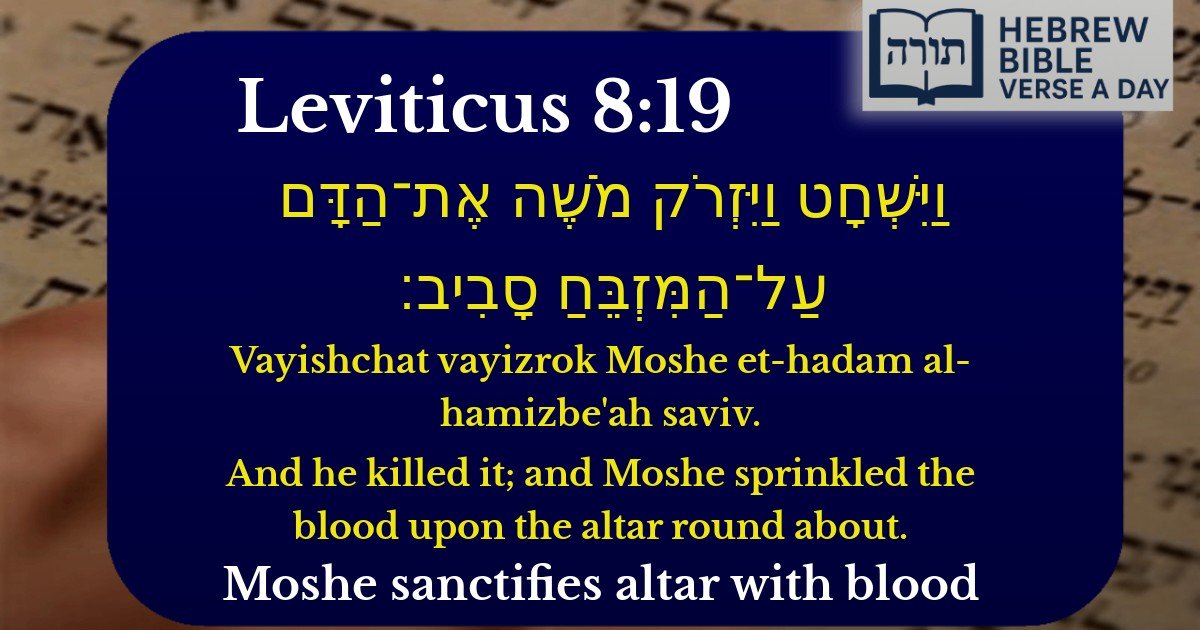
A: In Leviticus 8:19, Moshe sprinkles the blood of a ram around the altar as part of the consecration ceremony for the Kohanim (priests). According to Rashi, this act symbolizes purification and dedication of the altar for divine service. The sprinkling of blood was a key part of many korbanot (offerings) in the Mishkan (Tabernacle) and later in the Beit HaMikdash (Temple).
Q: Why was blood used in the consecration of the altar?
A: The Torah teaches that blood represents life (Leviticus 17:11), and its sprinkling on the altar signifies the sacred bond between Hashem and the Jewish people. The Rambam explains in Moreh Nevuchim that this physical act represents spiritual concepts - just as blood sustains the body, our service to Hashem sustains our spiritual connection. The Midrash Tanchuma adds that the altar's dedication with blood parallels how the Torah was given with blood (Exodus 24:8), showing the deep connection between Torah, service, and Jewish life.
Q: Does this verse have any relevance today without the Temple?
A: While we cannot perform sacrificial service today without the Beit HaMikdash, the Talmud (Berachos 26b) teaches that our prayers stand in place of the korbanot. The act of sprinkling blood teaches us about the importance of dedicating our whole selves to serving Hashem. The Kitzur Shulchan Aruch (1:1) explains that just as the altar was purified for holy service, we should begin our day with purity of intention in serving Hashem through prayer and mitzvos.
Q: Why did Moshe perform this service instead of Aharon?
A: Rashi explains that Moshe served as the Kohen Gadol (High Priest) during the seven days of inauguration before Aharon and his sons officially took over the priestly duties. The Sforno adds that this temporary role showed Moshe's unique position as the transmitter of Torah - just as he brought the Torah to Israel, he also initiated the priestly service that would maintain the people's connection to Hashem.
Q: What can we learn from the detail that the blood was sprinkled 'round about' the altar?
A: The Talmud (Zevachim 37a) discusses how the sprinkling surrounded the altar on all sides. The Kli Yakar explains this teaches that our service to Hashem must be complete and encompass all aspects of life. Just as the blood encircled the altar, our commitment to Torah and mitzvos should surround and permeate everything we do, leaving no area of life untouched by holiness.


Verse Context (Shemot 29:16)
This verse describes part of the consecration ceremony for the Kohanim (priests) during the inauguration of the Mishkan (Tabernacle). Moshe performs the sacrificial service, acting as a temporary Kohen before the formal priesthood is transferred to Aharon and his sons.
Rashi's Explanation
Rashi (Shemot 29:16) clarifies that the phrase "וַיִּשְׁחָט" ("and he killed it") refers to the slaughter of the ram of consecration. He notes that Moshe performed all the sacrificial services during this inauguration period, including:
Rambam's Halachic Perspective
In Mishneh Torah (Hilchot Maaseh HaKorbanot 5:13), the Rambam explains that sprinkling blood "round about" the altar refers to the zerikah (throwing) of blood on two opposite corners of the altar in a manner that creates a continuous line around it, fulfilling the requirement of "saviv" (round about).
Symbolism of the Blood Service
The Kli Yakar (Shemot 29:16) explains that the sprinkling of blood around the altar symbolizes:
Talmudic Reference
The Talmud (Zevachim 37a) discusses the technical requirements of blood sprinkling, noting that the "saviv" (round about) application creates a "blood belt" around the altar, representing the complete connection between the Jewish people and Hashem through the sacrificial service.