
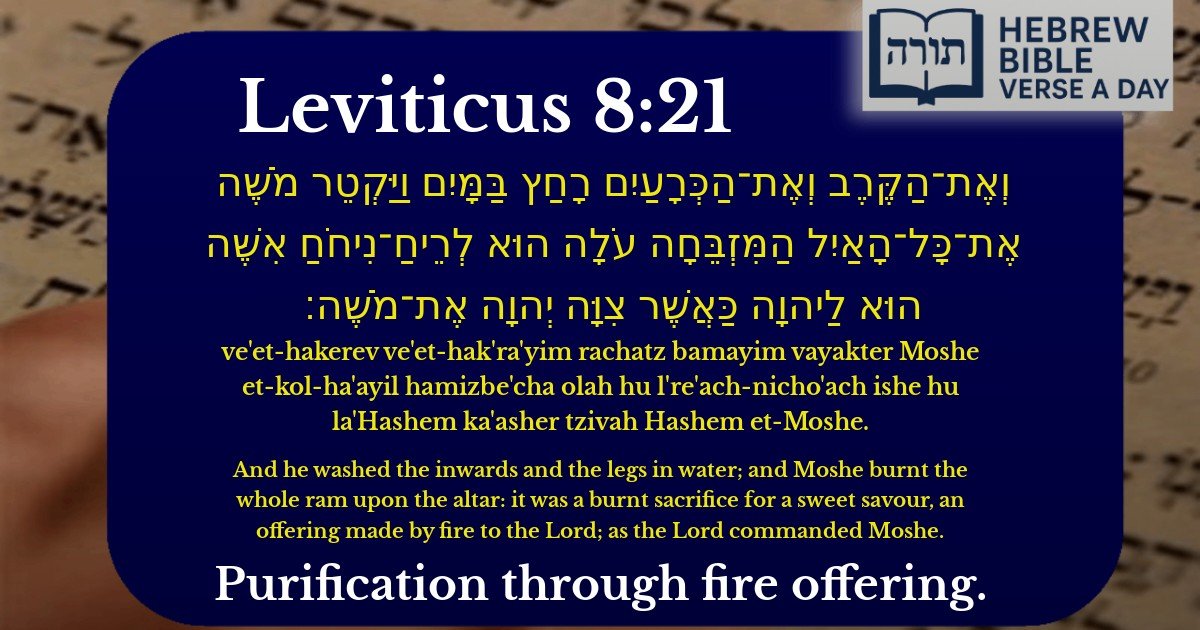

Leviticus 8:21 - Purification through fire offering.

Leviticus 8:21 - ויקרא 8:21

Hebrew Text

וְאֶת־הַקֶּרֶב וְאֶת־הַכְּרָעַיִם רָחַץ בַּמָּיִם וַיַּקְטֵר מֹשֶׁה אֶת־כָּל־הָאַיִל הַמִּזְבֵּחָה עֹלָה הוּא לְרֵיחַ־נִיחֹחַ אִשֶּׁה הוּא לַיהוָה כַּאֲשֶׁר צִוָּה יְהוָה אֶת־מֹשֶׁה׃

English Translation

And he washed the inwards and the legs in water; and Moshe burnt the whole ram upon the altar: it was a burnt sacrifice for a sweet savour, an offering made by fire to the Lord; as the Lord commanded Moshe.

Transliteration

Ve'et-hakerev ve'et-hak'ra'yim rachatz bamayim vayakter Moshe et-kol-ha'ayil hamizbe'cha olah hu l're'ach-nicho'ach ishe hu la'Hashem ka'asher tzivah Hashem et-Moshe.

Hebrew Leining Text

וְאֶת־הַקֶּ֥רֶב וְאֶת־הַכְּרָעַ֖יִם רָחַ֣ץ בַּמָּ֑יִם וַיַּקְטֵר֩ מֹשֶׁ֨ה אֶת־כׇּל־הָאַ֜יִל הַמִּזְבֵּ֗חָה עֹלָ֨ה ה֤וּא לְרֵֽיחַ־נִיחֹ֙חַ֙ אִשֶּׁ֥ה הוּא֙ לַיהֹוָ֔ה כַּאֲשֶׁ֛ר צִוָּ֥ה יְהֹוָ֖ה אֶת־מֹשֶֽׁה׃

🎵 Listen to leining

Parasha Commentary

Explanation of the Verse

The verse describes Moshe's actions during the offering of the ram as a burnt sacrifice (olah) in accordance with Hashem's command. This act was part of the consecration of the Kohanim (priests) and the inauguration of the Mishkan (Tabernacle). The verse emphasizes meticulous adherence to the divine instructions, highlighting the importance of proper preparation and execution of sacrificial service.

Key Elements of the Sacrifice

  • Washing the Inwards and Legs: Rashi (Vayikra 1:9) explains that washing the innards (kerev) and legs (kera'ayim) in water symbolizes the purification of the offering, removing any residual impurities. This teaches that offerings must be free from physical and spiritual blemishes.
  • Burning the Whole Ram: The Rambam (Hilchos Maaseh HaKorbanos 6:1) notes that an olah is entirely consumed on the altar, unlike other sacrifices where parts are eaten. This represents complete devotion to Hashem.
  • A Sweet Savour (rei'ach nichoach): The Midrash (Vayikra Rabbah 3:2) interprets this phrase as an expression of divine pleasure when the Jewish people fulfill His commandments with sincerity.

Spiritual Significance

The Sforno (Vayikra 1:9) teaches that the olah symbolizes total submission to Hashem's will, as the entire animal is offered. The washing of the innards and legs further signifies inner and outer purity—aligning one's thoughts (kerev) and actions (kera'ayim) with divine service.

Connection to Divine Command

The concluding phrase, "as the Lord commanded Moshe," underscores the principle of keviyas ha'mitzvos—strict adherence to Torah law without deviation. The Talmud (Zevachim 35a) derives from this that sacrifices must follow exact halachic protocols to be valid.

📚 Talmud Citations

This verse is not quoted in the Talmud.

Frequently Asked Questions

Q: What does it mean that Moshe washed the inwards and legs of the ram before offering it?
A: According to Rashi and the Talmud (Zevachim 19b), washing the inner parts and legs of the animal symbolizes purification and removing any impurities before offering it to Hashem. This teaches us the importance of preparing ourselves properly before performing mitzvot (commandments).
Q: Why was the ram called a 'burnt offering for a sweet savour'?
A: The term 'sweet savour' (רֵיחַ־נִיחֹחַ) refers to the idea that the offering was pleasing to Hashem when done with proper intention (kavanah). The Rambam explains in Moreh Nevuchim that this language is metaphorical, representing the acceptance of the service when performed according to Hashem's will.
Q: What is the significance of the phrase 'as the Lord commanded Moshe' at the end of the verse?
A: This phrase emphasizes that Moshe followed every detail exactly as Hashem instructed. The Midrash (Sifra) notes that this teaches us the importance of precision in fulfilling mitzvot, especially in the Temple service. Even small deviations could invalidate the offering.
Q: Why did Moshe burn the entire ram on the altar?
A: The Olah (burnt offering) was unique in that it was entirely consumed by fire on the altar, unlike other sacrifices where parts were eaten. Rashi explains this complete burning symbolizes total dedication to Hashem. The Rambam (Hilchos Maaseh Hakorbanos) adds that the Olah represents atonement for improper thoughts.
Q: How does this verse about sacrifices apply to us today without the Temple?
A: The Talmud (Berachos 17a) teaches that today, our prayers replace the sacrifices. Just as the offerings required proper preparation and intention, so too our tefillot (prayers) should be said with focus and sincerity. The 'sweet savour' is achieved through sincere service of the heart.