

Join Our Newsletter To Be Informed When New Videos Are Posted
Hebrew Text
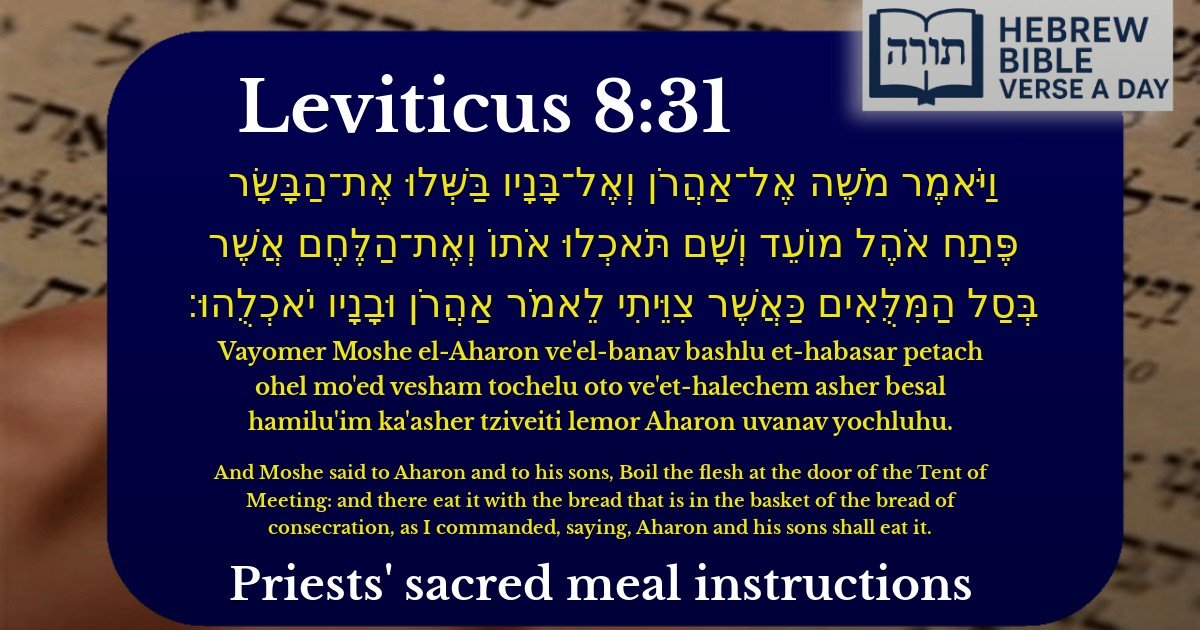
וַיֹּאמֶר מֹשֶׁה אֶל־אַהֲרֹן וְאֶל־בָּנָיו בַּשְּׁלוּ אֶת־הַבָּשָׂר פֶּתַח אֹהֶל מוֹעֵד וְשָׁם תֹּאכְלוּ אֹתוֹ וְאֶת־הַלֶּחֶם אֲשֶׁר בְּסַל הַמִּלֻּאִים כַּאֲשֶׁר צִוֵּיתִי לֵאמֹר אַהֲרֹן וּבָנָיו יֹאכְלֻהוּ׃
English Translation
And Moshe said to Aharon and to his sons, Boil the flesh at the door of the Tent of Meeting: and there eat it with the bread that is in the basket of the bread of consecration, as I commanded, saying, Aharon and his sons shall eat it.
Transliteration
Vayomer Moshe el-Aharon ve'el-banav bashlu et-habasar petach ohel mo'ed vesham tochelu oto ve'et-halechem asher besal hamilu'im ka'asher tziveiti lemor Aharon uvanav yochluhu.
Hebrew Leining Text
וַיֹּ֨אמֶר מֹשֶׁ֜ה אֶל־אַהֲרֹ֣ן וְאֶל־בָּנָ֗יו בַּשְּׁל֣וּ אֶת־הַבָּשָׂר֮ פֶּ֣תַח אֹ֣הֶל מוֹעֵד֒ וְשָׁם֙ תֹּאכְל֣וּ אֹת֔וֹ וְאֶ֨ת־הַלֶּ֔חֶם אֲשֶׁ֖ר בְּסַ֣ל הַמִּלֻּאִ֑ים כַּאֲשֶׁ֤ר צִוֵּ֙יתִי֙ לֵאמֹ֔ר אַהֲרֹ֥ן וּבָנָ֖יו יֹאכְלֻֽהוּ׃
🎵 Listen to leining
Parasha Commentary
📚 Talmud Citations
This verse is quoted in the Talmud.
📖 Zevachim 96a
The verse is discussed in the context of the laws regarding the consumption of sacrificial meat by the priests, specifically the requirement to boil the flesh and eat it at the entrance of the Tent of Meeting.
📖 Menachot 75a
The verse is referenced in a discussion about the bread of consecration and the proper way it should be eaten by Aaron and his sons as part of the consecration process.
Context of the Verse
This verse (Vayikra 8:31) appears during the inauguration of Aharon and his sons as Kohanim (priests) in the Mishkan (Tabernacle). Moshe instructs them regarding the consumption of the sacrificial meat and the bread of consecration (לֶחֶם הַמִּלֻּאִים), which were part of the korban miluim (inauguration offering).
Rashi's Explanation
Rashi (Vayikra 8:31) clarifies that the phrase "בַּשְּׁלוּ אֶת־הַבָּשָׂר" ("boil the flesh") refers to cooking the meat of the ram of consecration (אַיִל הַמִּלֻּאִים) mentioned earlier (Shemot 29:31-32). He notes that this was to be done at the entrance of the Ohel Moed (Tent of Meeting) rather than inside the courtyard, distinguishing it from other sacrifices that were cooked in the Azarah (Temple courtyard).
Rambam's Perspective
In Hilchos Maaseh HaKorbanos (9:7), the Rambam explains that the consumption of the sacrificial meat and the bread of consecration was a mitzvah specifically for Aharon and his sons during their seven-day inauguration period. This act symbolized their complete dedication to the divine service and their acceptance of the Kehunah (priesthood).
Symbolism of Eating at the Entrance
The Bread of Consecration (לֶחֶם הַמִּלֻּאִים)
The Midrash Tanchuma (Tzav 14) teaches that the bread symbolized the spiritual sustenance of the Kehunah. Just as bread nourishes the body, the priestly role would sustain the spiritual needs of Klal Yisrael. The Malbim adds that the combination of meat (representing physical strength) and bread (representing sustenance) emphasized the holistic dedication required of the Kohanim—both physical and spiritual.
Halachic Implications
The Sefer HaChinuch (Mitzvah 134) derives from this verse the principle that Kohanim must eat certain sacrifices in a state of purity and within designated sacred areas. The Gemara (Zevachim 56b) further discusses the unique status of the korban miluim, noting that its laws differ from other sacrifices due to its inaugural nature.