
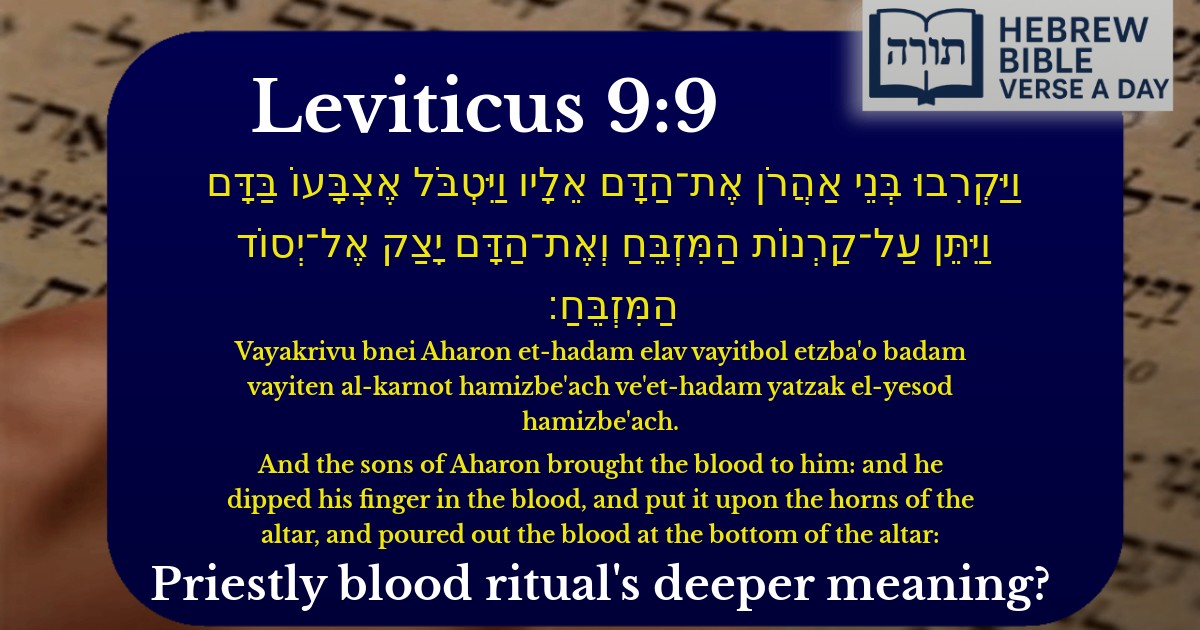

Leviticus 9:9 - Priestly blood ritual's deeper meaning?

Leviticus 9:9 - ויקרא 9:9

Hebrew Text

וַיַּקְרִבוּ בְּנֵי אַהֲרֹן אֶת־הַדָּם אֵלָיו וַיִּטְבֹּל אֶצְבָּעוֹ בַּדָּם וַיִּתֵּן עַל־קַרְנוֹת הַמִּזְבֵּחַ וְאֶת־הַדָּם יָצַק אֶל־יְסוֹד הַמִּזְבֵּחַ׃

English Translation

And the sons of Aharon brought the blood to him: and he dipped his finger in the blood, and put it upon the horns of the altar, and poured out the blood at the bottom of the altar:

Transliteration

Vayakrivu bnei Aharon et-hadam elav vayitbol etzba'o badam vayiten al-karnot hamizbe'ach ve'et-hadam yatzak el-yesod hamizbe'ach.

Hebrew Leining Text

וַ֠יַּקְרִ֠בוּ בְּנֵ֨י אַהֲרֹ֣ן אֶת־הַדָּם֮ אֵלָיו֒ וַיִּטְבֹּ֤ל אֶצְבָּעוֹ֙ בַּדָּ֔ם וַיִּתֵּ֖ן עַל־קַרְנ֣וֹת הַמִּזְבֵּ֑חַ וְאֶת־הַדָּ֣ם יָצַ֔ק אֶל־יְס֖וֹד הַמִּזְבֵּֽחַ׃

🎵 Listen to leining

Parasha Commentary

The Service of the Blood in the Korbanot

The verse describes the avodah (service) performed by Aharon and his sons regarding the blood of the korban (sacrifice). According to Rashi (Vayikra 9:9), this refers specifically to the chatat (sin offering) brought on the day of the inauguration of the Mishkan. The blood service had two parts:

  • Placing blood on the horns of the altar: The kohen would dip his finger in the blood and place it on the four corners (horns) of the Mizbeach. The Rambam (Hilchot Maaseh HaKorbanot 5:12) explains this as a critical part of the atonement process.
  • Pouring the blood at the base: The remaining blood was poured at the yesod (foundation) of the altar. The Talmud (Zevachim 53b) teaches that this act symbolizes the complete dedication of the offering to Hashem.

Symbolism of the Blood Service

The Midrash (Torat Kohanim) notes that the blood represents the nefesh (life force) of the animal (Vayikra 17:11), and its handling teaches profound lessons:

  • Finger application: The use of the kohen's finger (rather than a vessel) signifies personal involvement in the atonement process, as the Ramban (Vayikra 9:9) explains—the kohen must internalize the gravity of the service.
  • Horns of the altar: The horns symbolize power and elevation (Rashi, Shemot 27:2). Placing blood there elevates the penitent's intentions toward spiritual growth.

Halachic Precision in the Avodah

The Kli Yakar (Vayikra 9:9) emphasizes that every detail—the dipping, placing, and pouring—follows precise halachic requirements derived from the Torah's language. The Mishnah (Zevachim 5:3) elaborates that improper performance invalidates the korban, underscoring the seriousness of Divine service.

📚 Talmud Citations

This verse is quoted in the Talmud.

📖 Zevachim 37b
The verse is discussed in the context of the proper procedures for offering sacrifices, specifically regarding the handling of blood on the altar.
📖 Menachot 93b
Referenced in a discussion about the placement of blood on the altar's horns and its significance in sacrificial rites.

Frequently Asked Questions

Q: What does it mean that Aharon's sons brought the blood to him in Leviticus 9:9?
A: This verse describes part of the sacrificial service in the Mishkan (Tabernacle). Aharon's sons, the Kohanim (priests), would bring the blood of the sacrifice to Aharon the Kohen Gadol (High Priest), who would then perform specific rituals with it. Rashi explains that this shows the proper order of the service, where junior Kohanim assist the Kohen Gadol in the sacred duties.
Q: Why did Aharon put blood on the horns of the altar in Leviticus 9:9?
A: The horns of the altar were specially designated places where blood was applied during certain sacrifices. According to the Talmud (Zevachim 53b), putting blood on the horns represented atonement and sanctification. The Rambam (Hilchos Ma'aseh HaKorbanos 5:12) explains this as part of the detailed Torah laws about how sacrifices must be offered properly.
Q: What is the significance of pouring blood at the base of the altar in Leviticus 9:9?
A: The Torah teaches that after applying blood to the altar's horns, the remaining blood was poured at the base. The Midrash (Toras Kohanim) explains this symbolizes complete dedication to Hashem, as every part of the service - from the highest point (horns) to the foundation (base) - is involved in the sacred act. This teaches us about the importance of thoroughness in serving G-d.
Q: How does Leviticus 9:9 apply to us today without the Temple?
A: While we cannot bring sacrifices today, our Sages teach that prayer (tefillah) replaces the sacrificial service. Just as the Kohanim carefully performed each step with intention, we must pray with proper focus and order. The Mishnah Berurah (Orach Chaim 98:1) explains that our prayers ascend like the sacrifices when done properly, maintaining the connection to these Temple rituals.
Q: Why does the Torah give such detailed instructions about sacrifices in Leviticus 9:9?
A: The detailed laws teach us that serving Hashem requires precision and reverence. As the Ramban explains, every action in the Mishkan had deep spiritual significance. The specific instructions about handling blood show that even what seems mundane is holy when done for Divine service. This teaches us to approach mitzvos with care and attention to detail.