Frequently Asked Questions
Q: What is the significance of the meal offering (mincha) in Leviticus 9:17?
A: The meal offering (mincha) in Leviticus 9:17 represents a voluntary gift to Hashem, often made from fine flour, oil, and frankincense. According to Rashi, it symbolizes humility and gratitude, as it is a simple offering compared to animal sacrifices. The Kohen (priest) takes a handful to burn on the altar, showing that even small acts of devotion are precious to Hashem.
Q: Why does the verse mention burning the meal offering 'beside the burnt sacrifice of the morning'?
A: The Torah specifies that the meal offering was burned alongside the daily morning burnt offering (Tamid) to teach that additional offerings do not replace the consistent, daily service of Hashem (Rambam, Hilchot Temidin u'Musafin 1:3). This emphasizes the importance of regular, unwavering commitment to divine service, even when bringing special offerings.
Q: What can we learn today from the act of taking a 'handful' of the meal offering?
A: The act of taking a handful (kometz) teaches that quality matters more than quantity in serving Hashem. The Midrash (Vayikra Rabbah 3:1) explains that the handful represents a person's focused intention (kavanah). Even a small act done with sincerity is more valuable than a large one without proper devotion.
Q: Why was the meal offering burned on the altar if it wasn't an animal sacrifice?
A: The Torah teaches that offerings to Hashem are not limited to animals. Grain offerings like the mincha were burned to show that all aspects of creation—vegetable, mineral (salt was added), and human effort (preparing the flour)—can be elevated in divine service (Talmud Menachot 21a). This reflects the holistic nature of avodat Hashem (service of G-d).
Q: How does this verse relate to the inauguration of the Mishkan (Tabernacle)?
A: Leviticus 9 describes the first sacrifices after the Mishkan's inauguration. The meal offering here, brought by Aharon, symbolizes the dedication of the priests to their new role. Rashi notes that Aharon followed the mitzvah precisely ('as commanded') to teach that even leaders must serve Hashem with exactness and humility, setting an example for all Israel.


Context of the Verse
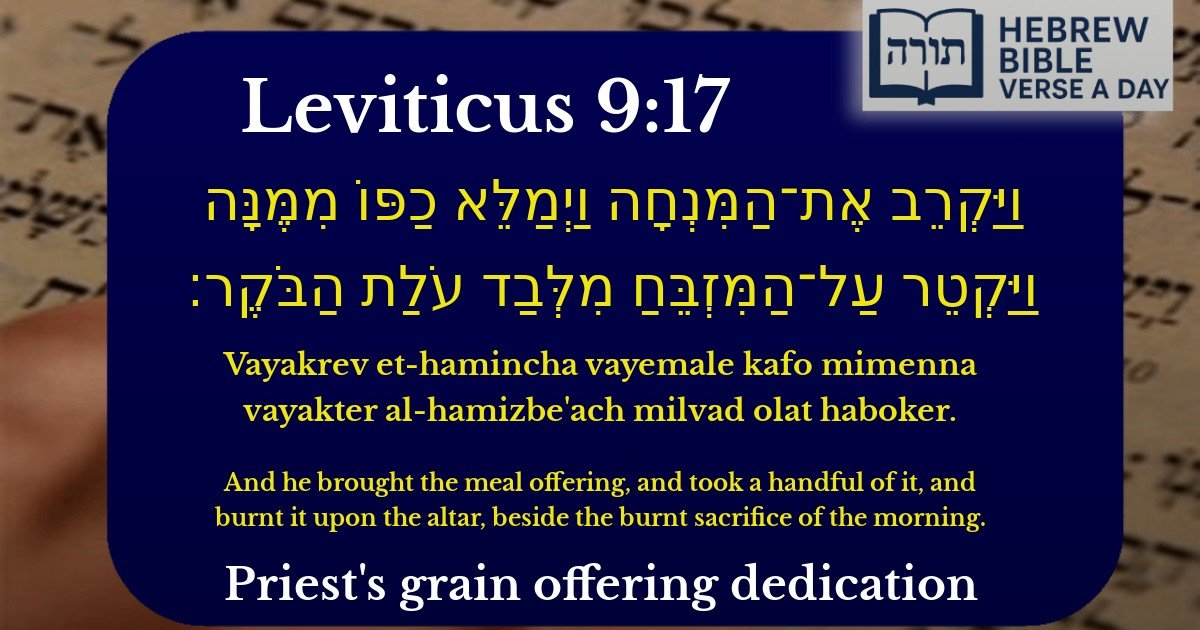
The verse (Vayikra 9:17) describes part of the inauguration ceremony of the Mishkan (Tabernacle), where Aharon the Kohen Gadol brings a mincha (meal offering) as part of the sacrificial service. This follows the olat ha'boker (morning burnt offering), establishing the order of the avodah (Temple service).
Explanation of the Mincha Offering
Rashi explains that this mincha was the minchat chavitin, the daily meal offering of the Kohen Gadol, consisting of fine flour mixed with oil. The Torah emphasizes that Aharon took a kometz (handful) of the offering, as required by halacha (Menachot 11a), and burned it on the mizbe'ach (altar).
Symbolism of the Kometz
Relationship to the Olat HaBoker
The phrase "milvad olat ha'boker" (beside the morning burnt offering) teaches, as the Sifra explains, that the mincha was offered after the tamid (daily sacrifice), establishing the proper sequence of korbanot. The Kli Yakar adds that this highlights the hierarchy of sacrifices, with communal offerings taking precedence.
Practical Halachic Insights
The Mishneh Torah (Hilchot Ma'aseh HaKorbanot 13:3) derives from this verse that the mincha must be brought after the tamid, not before. This reflects the principle of tadir v'she'aino tadir, tadir kodem (the more frequent mitzvah takes precedence).