

Join Our Newsletter To Be Informed When New Videos Are Posted
Hebrew Text
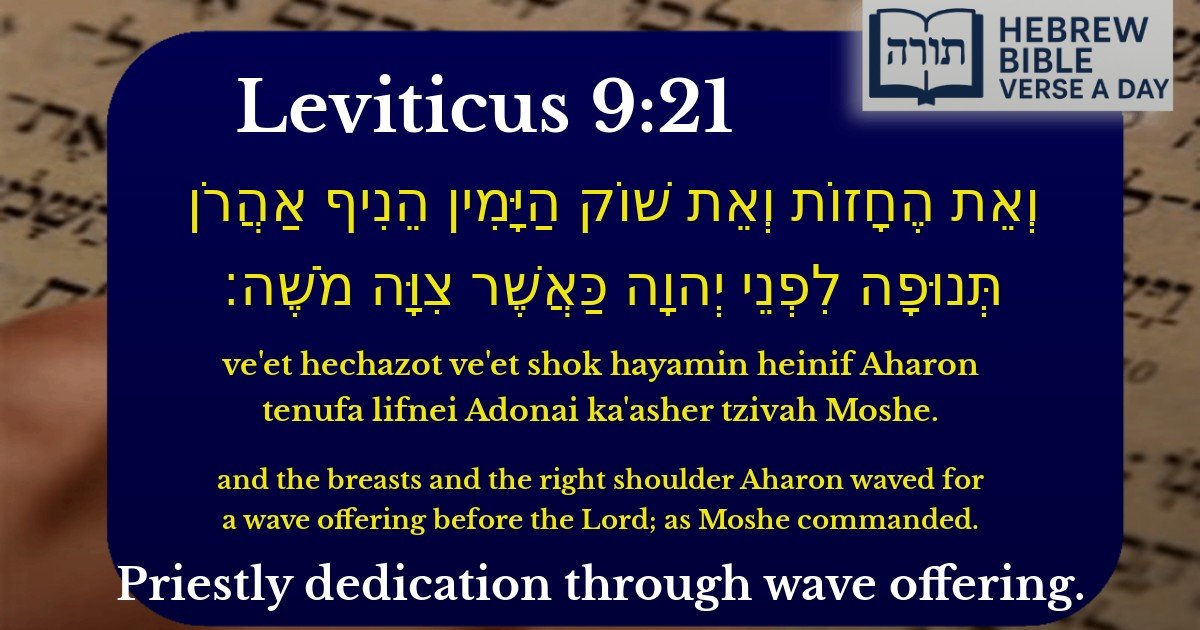
וְאֵת הֶחָזוֹת וְאֵת שׁוֹק הַיָּמִין הֵנִיף אַהֲרֹן תְּנוּפָה לִפְנֵי יְהוָה כַּאֲשֶׁר צִוָּה מֹשֶׁה׃
English Translation
and the breasts and the right shoulder Aharon waved for a wave offering before the Lord; as Moshe commanded.
Transliteration
Ve'et hechazot ve'et shok hayamin heinif Aharon tenufa lifnei Adonai ka'asher tzivah Moshe.
Hebrew Leining Text
וְאֵ֣ת הֶחָז֗וֹת וְאֵת֙ שׁ֣וֹק הַיָּמִ֔ין הֵנִ֧יף אַהֲרֹ֛ן תְּנוּפָ֖ה לִפְנֵ֣י יְהֹוָ֑ה כַּאֲשֶׁ֖ר צִוָּ֥ה מֹשֶֽׁה׃
🎵 Listen to leining
Parasha Commentary
📚 Talmud Citations
This verse is quoted in the Talmud.
📖 Menachot 61b
The verse is discussed in the context of the wave offering (tenufah) performed by Aaron, as part of the broader discussion on sacrificial procedures.
📖 Zevachim 97a
The verse is referenced in a discussion about the proper handling and waving of sacrificial offerings, particularly the breast and shoulder portions.
The Tenufah (Wave Offering) of the Breasts and Right Shoulder
The verse describes Aharon performing the tenufah (wave offering) of the chazeh (breast) and shok hayamin (right shoulder) before Hashem, as commanded by Moshe. This act was part of the inauguration ceremony of the Mishkan (Tabernacle) and the Kohanim (Leviticus 8:25-29).
Rashi's Explanation
Rashi (on Leviticus 7:30) explains that the tenufah involved moving the offering forward and backward, as well as upward and downward, symbolizing acknowledgment of Hashem's dominion over the four directions and the heavens and earth. The breast and right shoulder were specifically designated as portions for the Kohanim (Exodus 29:27-28).
Symbolism of the Breasts and Shoulder
The chazeh (breast) and shok (shoulder) represent different aspects of divine service:
The Commandment of Moshe
The verse emphasizes that Aharon acted "ka'asher tzivah Moshe" (as Moshe commanded), highlighting the importance of precise adherence to divine instruction. The Sforno notes that this phrase underscores the Kohen Gadol's obligation to follow every detail of halachah (Jewish law) in the avodah (Temple service).
Halachic Significance
The tenufah was a critical part of the sacrificial process, as it sanctified the portions before they were eaten by the Kohanim (Talmud, Menachot 61b). The waving also served as a public declaration that the offering was dedicated to Hashem (Ramban on Leviticus 7:30).