

Join Our Newsletter To Be Informed When New Videos Are Posted
Hebrew Text
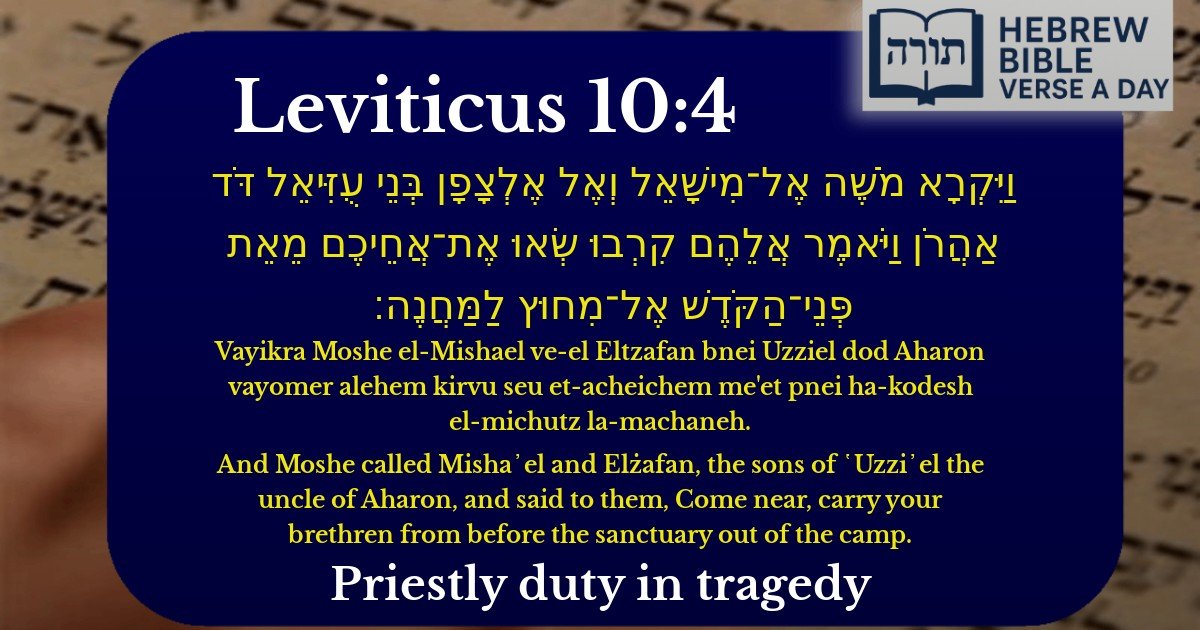
וַיִּקְרָא מֹשֶׁה אֶל־מִישָׁאֵל וְאֶל אֶלְצָפָן בְּנֵי עֻזִּיאֵל דֹּד אַהֲרֹן וַיֹּאמֶר אֲלֵהֶם קִרְבוּ שְׂאוּ אֶת־אֲחֵיכֶם מֵאֵת פְּנֵי־הַקֹּדֶשׁ אֶל־מִחוּץ לַמַּחֲנֶה׃
English Translation
And Moshe called Misha᾽el and Elżafan, the sons of ῾Uzzi᾽el the uncle of Aharon, and said to them, Come near, carry your brethren from before the sanctuary out of the camp.
Transliteration
Vayikra Moshe el-Mishael ve-el Eltzafan bnei Uzziel dod Aharon vayomer alehem kirvu seu et-acheichem me'et pnei ha-kodesh el-michutz la-machaneh.
Hebrew Leining Text
וַיִּקְרָ֣א מֹשֶׁ֗ה אֶל־מִֽישָׁאֵל֙ וְאֶ֣ל אֶלְצָפָ֔ן בְּנֵ֥י עֻזִּיאֵ֖ל דֹּ֣ד אַהֲרֹ֑ן וַיֹּ֣אמֶר אֲלֵהֶ֗ם קִ֞֠רְב֞֠וּ שְׂא֤וּ אֶת־אֲחֵיכֶם֙ מֵאֵ֣ת פְּנֵי־הַקֹּ֔דֶשׁ אֶל־מִח֖וּץ לַֽמַּחֲנֶֽה׃
🎵 Listen to leining
Parasha Commentary
📚 Talmud Citations
This verse is not quoted in the Talmud.
Context of the Verse
This verse (Vayikra 10:4) appears in the aftermath of the tragic death of Nadav and Avihu, the sons of Aharon, who brought an unauthorized fire offering ("eish zarah") before Hashem. Moshe instructs their cousins, Misha'el and Eltzafan, to remove the bodies from the Mishkan.
Selection of Misha'el and Eltzafan
Rashi (based on Toras Kohanim) explains that Moshe specifically called upon these relatives because they were from the tribe of Levi, not Kohanim. Since Aharon and his remaining sons, Elazar and Isamar, were in a state of mourning (onenim), they were prohibited from engaging in the handling of the deceased (Vayikra 21:1-3). Misha'el and Eltzafan, as Levites, were permitted to perform this duty.
Why "Korvu" (Come Near)?
The Ramban questions why Moshe needed to say "Korvu" (come near) if they were already present. He suggests that this was a call to overcome their natural hesitation to approach the sacred space where the tragedy occurred. The Sforno adds that this was a test of their commitment to fulfilling Hashem's will even in difficult circumstances.
Halachic Implications
Midrashic Insights
The Midrash (Vayikra Rabbah 12:2) notes that Moshe addressed them respectfully as "bnei Uziel dod Aharon" (sons of Uziel, uncle of Aharon) to honor both the deceased and the living. This teaches the importance of maintaining dignity even in difficult situations.
Removal "from before the Sanctuary"
The Kli Yakar emphasizes that the bodies needed to be removed specifically from before the Sanctuary to maintain the kedusha (holiness) of the Mishkan. This demonstrates that while death is a natural part of life, it must not defile the sacred space designated for Divine service.