

Join Our Newsletter To Be Informed When New Videos Are Posted
Hebrew Text
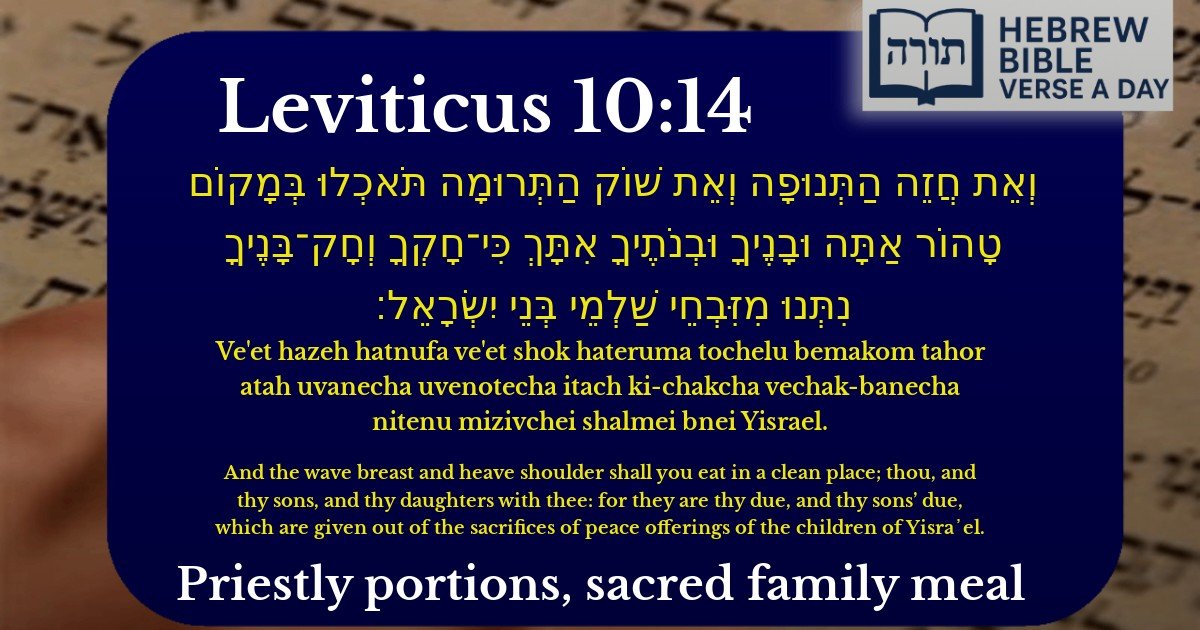
וְאֵת חֲזֵה הַתְּנוּפָה וְאֵת שׁוֹק הַתְּרוּמָה תֹּאכְלוּ בְּמָקוֹם טָהוֹר אַתָּה וּבָנֶיךָ וּבְנֹתֶיךָ אִתָּךְ כִּי־חָקְךָ וְחָק־בָּנֶיךָ נִתְּנוּ מִזִּבְחֵי שַׁלְמֵי בְּנֵי יִשְׂרָאֵל׃
English Translation
And the wave breast and heave shoulder shall you eat in a clean place; thou, and thy sons, and thy daughters with thee: for they are thy due, and thy sons’ due, which are given out of the sacrifices of peace offerings of the children of Yisra᾽el.
Transliteration
Ve'et hazeh hatnufa ve'et shok hateruma tochelu bemakom tahor atah uvanecha uvenotecha itach ki-chakcha vechak-banecha nitenu mizivchei shalmei bnei Yisrael.
Hebrew Leining Text
וְאֵת֩ חֲזֵ֨ה הַתְּנוּפָ֜ה וְאֵ֣ת ׀ שׁ֣וֹק הַתְּרוּמָ֗ה תֹּֽאכְלוּ֙ בְּמָק֣וֹם טָה֔וֹר אַתָּ֕ה וּבָנֶ֥יךָ וּבְנֹתֶ֖יךָ אִתָּ֑ךְ כִּֽי־חׇקְךָ֤ וְחׇק־בָּנֶ֙יךָ֙ נִתְּנ֔וּ מִזִּבְחֵ֥י שַׁלְמֵ֖י בְּנֵ֥י יִשְׂרָאֵֽל׃
🎵 Listen to leining
Parasha Commentary
📚 Talmud Citations
This verse is quoted in the Talmud.
📖 Chullin 132b
The verse is discussed in the context of the laws regarding the portions of sacrifices that are given to the priests, specifically the wave breast and heave shoulder.
📖 Zevachim 58b
The verse is referenced in a discussion about the proper place and manner of eating the priestly portions of the sacrifices.
Verse Context (Vayikra 10:14)
This verse appears in the context of the consecration of the Kohanim (priests) and the laws pertaining to their portions from the sacrifices. Specifically, it discusses the distribution of the chazeh hatenuphah (wave breast) and shok haterumah (heave shoulder) from the shelamim (peace offerings) brought by Bnei Yisrael.
Explanation of the Portions
Rashi (on Vayikra 10:14) explains that the chazeh (breast) and shok (thigh) are designated as portions for the Kohanim. These parts are separated from the animal during the sacrificial process:
Eating in a Clean Place
The verse emphasizes that these portions must be eaten b’makom tahor (in a clean place). Rambam (Hilchos Ma’aseh HaKorbanos 10:3) clarifies that this means within the boundaries of the Mishkan or Beis HaMikdash, or in the case of later generations, within the walls of Yerushalayim when the Temple stood. This requirement underscores the sanctity of these portions, which are considered kodashim kalim (lesser sanctified items).
Inclusion of Family
The Torah specifies that the Kohen’s sons and daughters may partake of these portions. The Talmud (Chullin 132a) derives from this that the Kohen’s wife is also permitted to eat from them, as the term banayich u’benosecha (your sons and daughters) implies the entire household. This reflects the Torah’s consideration for the sustenance of the Kohen’s family, as their service in the Mikdash precludes them from earning a livelihood in conventional ways.
Legal Entitlement
The phrase ki chukcha v’chok banayich nitnu (for they are your due and your sons’ due) establishes that these portions are a permanent right of the Kohanim. The Sifra (Torat Kohanim) emphasizes that this is an eternal statute, not subject to revocation. Ramban (on Vayikra 10:14) adds that this entitlement is a form of compensation for the Kohanim’s service and their role in facilitating atonement for the people.
Connection to Shelamim Offerings
The verse specifies that these portions come from the zivchei shelamim (peace offerings). The Midrash (Vayikra Rabbah 10:4) notes that the shelamim symbolize harmony (shalom) between Hashem, the Kohanim, and the people. By partaking of these portions, the Kohanim share in the joy and gratitude expressed by the bringer of the sacrifice.