

Join Our Newsletter To Be Informed When New Videos Are Posted
Hebrew Text
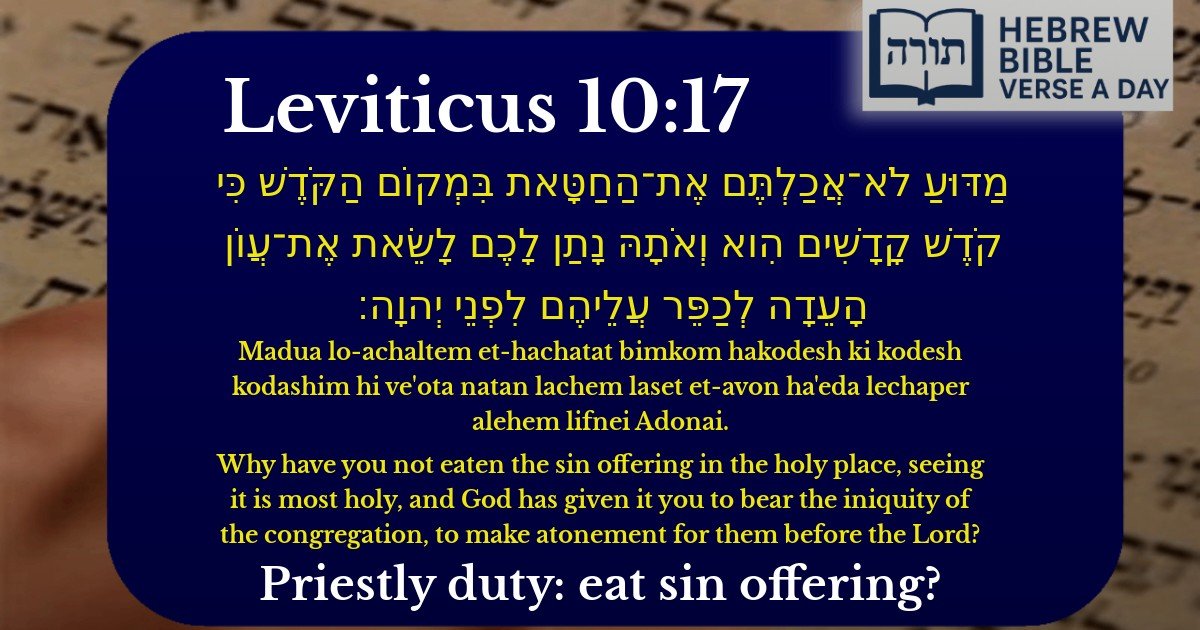
מַדּוּעַ לֹא־אֲכַלְתֶּם אֶת־הַחַטָּאת בִּמְקוֹם הַקֹּדֶשׁ כִּי קֹדֶשׁ קָדָשִׁים הִוא וְאֹתָהּ נָתַן לָכֶם לָשֵׂאת אֶת־עֲוֺן הָעֵדָה לְכַפֵּר עֲלֵיהֶם לִפְנֵי יְהוָה׃
English Translation
Why have you not eaten the sin offering in the holy place, seeing it is most holy, and God has given it you to bear the iniquity of the congregation, to make atonement for them before the Lord?
Transliteration
Madua lo-achaltem et-hachatat bimkom hakodesh ki kodesh kodashim hi ve'ota natan lachem laset et-avon ha'eda lechaper alehem lifnei Adonai.
Hebrew Leining Text
מַדּ֗וּעַ לֹֽא־אֲכַלְתֶּ֤ם אֶת־הַחַטָּאת֙ בִּמְק֣וֹם הַקֹּ֔דֶשׁ כִּ֛י קֹ֥דֶשׁ קׇֽדָשִׁ֖ים הִ֑וא וְאֹתָ֣הּ ׀ נָתַ֣ן לָכֶ֗ם לָשֵׂאת֙ אֶת־עֲוֺ֣ן הָעֵדָ֔ה לְכַפֵּ֥ר עֲלֵיהֶ֖ם לִפְנֵ֥י יְהֹוָֽה׃
🎵 Listen to leining
Parasha Commentary
📚 Talmud Citations
This verse is quoted in the Talmud.
📖 Zevachim 90b
The verse is discussed in the context of the laws regarding the consumption of sin offerings and the proper place for their consumption.
📖 Menachot 73b
Referenced in a discussion about the sanctity of offerings and the responsibilities of the priests in handling them.
Context of the Verse
This verse (Vayikra 10:17) is part of the narrative following the tragic deaths of Nadav and Avihu, Aharon's sons, who brought an unauthorized fire offering. Moshe then instructs Aharon and his remaining sons, Elazar and Itamar, regarding the proper handling of the sin offering (חַטָּאת). The verse questions why they did not eat the offering in the holy place, as commanded.
Rashi's Explanation
Rashi (Vayikra 10:17) explains that Moshe was questioning why the remaining kohanim (Elazar and Itamar) did not consume the sin offering in the courtyard of the Mishkan, as required. He emphasizes that the offering was designated as "קֹדֶשׁ קָדָשִׁים" (most holy) and was given to them to "bear the iniquity of the congregation"—meaning that by eating it, they would complete the atonement process for the people.
Purpose of Eating the Sin Offering
Aharon's Response
In the following verses (Vayikra 10:19-20), Aharon responds that given the tragedy that had just occurred, it was inappropriate for them to eat the offering. The Talmud (Zevachim 101a) discusses this exchange, noting that Moshe ultimately conceded to Aharon's reasoning, demonstrating that even great leaders must sometimes adjust their understanding based on circumstances.
Halachic Implications
The Mishnah (Zevachim 10:1) and Gemara (Zevachim 97b) elaborate on the laws of where and how the sin offering must be eaten. It must be consumed within the courtyard of the Mishkan (or later, the Beis HaMikdash) by male kohanim in a state of ritual purity. Failure to do so invalidates the atonement process.