

Join Our Newsletter To Be Informed When New Videos Are Posted
Hebrew Text
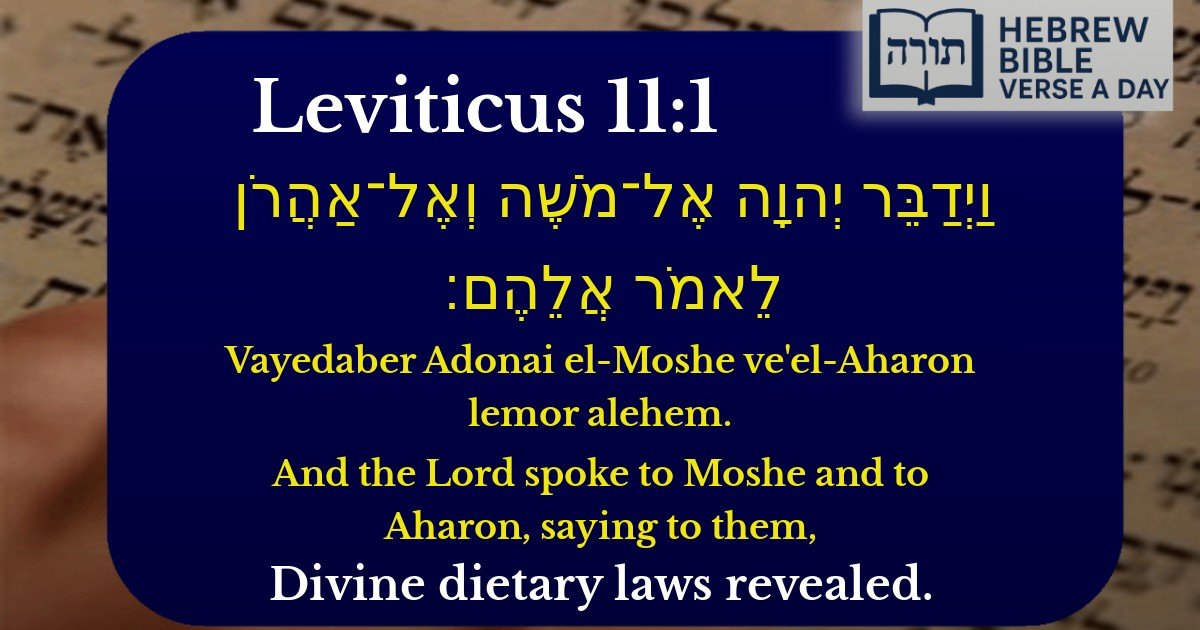
וַיְדַבֵּר יְהוָה אֶל־מֹשֶׁה וְאֶל־אַהֲרֹן לֵאמֹר אֲלֵהֶם׃
English Translation
And the Lord spoke to Moshe and to Aharon, saying to them,
Transliteration
Vayedaber Adonai el-Moshe ve'el-Aharon lemor alehem.
Hebrew Leining Text
וַיְדַבֵּ֧ר יְהֹוָ֛ה אֶל־מֹשֶׁ֥ה וְאֶֽל־אַהֲרֹ֖ן לֵאמֹ֥ר אֲלֵהֶֽם׃
🎵 Listen to leining
Parasha Commentary
📚 Talmud Citations
This verse is not quoted in the Talmud.
The Dual Address to Moshe and Aharon
The verse (Shemot 12:1) states: "וַיְדַבֵּר יְהוָה אֶל־מֹשֶׁה וְאֶל־אַהֲרֹן לֵאמֹר אֲלֵהֶם" ("And the Lord spoke to Moshe and to Aharon, saying to them"). Rashi notes that this phrasing indicates that Hashem spoke to both Moshe and Aharon simultaneously, emphasizing their shared role in conveying the commandments regarding the Exodus and the laws of Pesach. This is significant because while Moshe was the primary prophet, Aharon's inclusion here highlights his elevated status as a partner in leadership.
Aharon's Unique Role in This Communication
The Ramban (Nachmanides) explains that Aharon's inclusion in this divine communication is exceptional, as most commandments were given exclusively to Moshe. Here, Aharon is addressed directly alongside Moshe because the mitzvot of Pesach and the Exodus required both brothers to instruct the people—Moshe as the lawgiver and Aharon as the Kohen Gadol, who would later oversee the Korban Pesach in the Mishkan and Beit HaMikdash.
The Midrashic Perspective on Leadership
The Midrash (Shemot Rabbah 15:3) elaborates that Hashem spoke to both Moshe and Aharon to model harmonious leadership. By addressing them together, the Torah teaches that true leadership requires unity and mutual respect, especially when guiding Klal Yisrael through pivotal moments like the redemption from Egypt.
Key Teachings from This Verse