

Join Our Newsletter To Be Informed When New Videos Are Posted
Hebrew Text
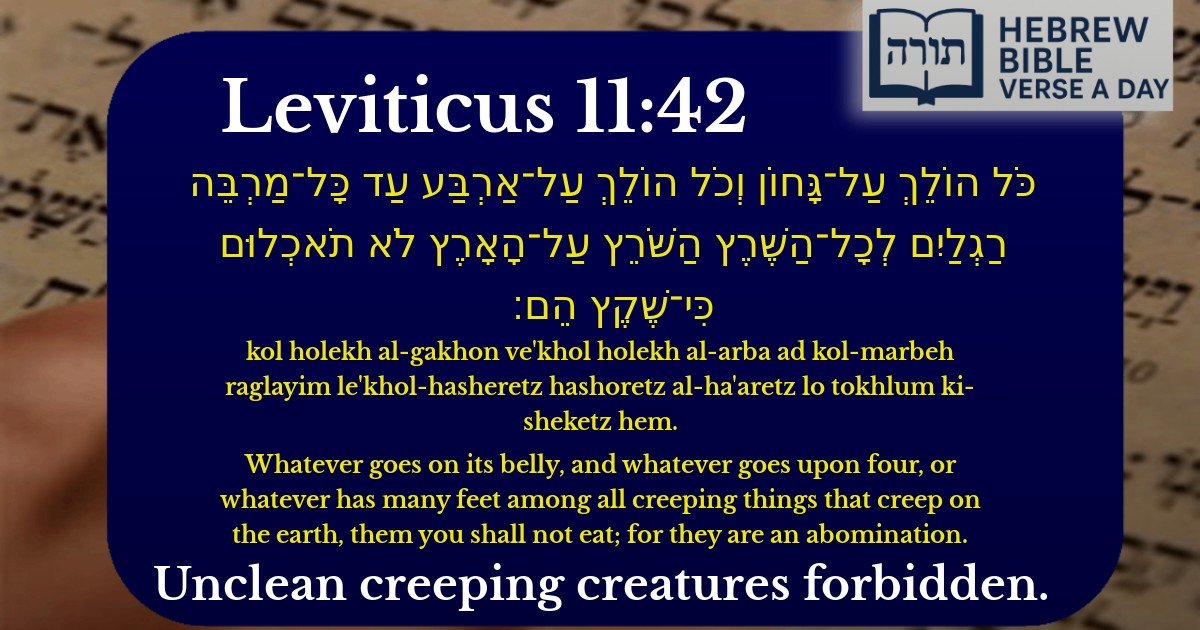
כֹּל הוֹלֵךְ עַל־גָּחוֹן וְכֹל הוֹלֵךְ עַל־אַרְבַּע עַד כָּל־מַרְבֵּה רַגְלַיִם לְכָל־הַשֶּׁרֶץ הַשֹּׁרֵץ עַל־הָאָרֶץ לֹא תֹאכְלוּם כִּי־שֶׁקֶץ הֵם׃
English Translation
Whatever goes on its belly, and whatever goes upon four, or whatever has many feet among all creeping things that creep on the earth, them you shall not eat; for they are an abomination.
Transliteration
Kol holekh al-gakhon ve'khol holekh al-arba ad kol-marbeh raglayim le'khol-hasheretz hashoretz al-ha'aretz lo tokhlum ki-sheketz hem.
Hebrew Leining Text
כֹּל֩ הוֹלֵ֨ךְ עַל־גָּח֜וֹן וְכֹ֣ל ׀ הוֹלֵ֣ךְ עַל־אַרְבַּ֗ע עַ֚ד כׇּל־מַרְבֵּ֣ה רַגְלַ֔יִם לְכׇל־הַשֶּׁ֖רֶץ הַשֹּׁרֵ֣ץ עַל־הָאָ֑רֶץ לֹ֥א תֹאכְל֖וּם כִּי־שֶׁ֥קֶץ הֵֽם׃
🎵 Listen to leining
Parasha Commentary
📚 Talmud Citations
This verse is quoted in the Talmud.
📖 Chullin 67b
The verse is discussed in the context of the laws regarding forbidden creeping creatures, particularly focusing on the definition of creatures that 'go on their belly' and those with 'many feet'.
📖 Niddah 51b
The verse is referenced in a discussion about the characteristics of creeping creatures that render them unclean and forbidden for consumption.
Source and Context
The verse (Vayikra 11:42) appears in the Torah's discussion of forbidden animals, specifically those classified as sheratzim (creeping creatures). This section delineates the laws of kashrut, emphasizing the prohibition against consuming certain creatures that crawl on the ground.
Explanation of the Prohibition
Rashi explains that this verse refers to creatures that move close to the ground, whether slithering on their bellies (like snakes), walking on four legs (like certain insects), or having numerous legs (like centipedes). The Torah categorizes them as sheketz (an abomination), rendering them unfit for consumption.
Spiritual and Moral Implications
The Sefer HaChinuch (Mitzvah 163) explains that consuming such creatures dulls the soul, as their physical characteristics symbolize negative traits—such as lowliness (crawling on the ground) or excessive aggression (many legs). The Torah elevates the Jewish people by distancing them from these spiritually harmful influences.
Halachic Application
The Shulchan Aruch (Yoreh De'ah 84) codifies these laws, emphasizing that any creature fitting these descriptions is forbidden unless explicitly permitted elsewhere in the Torah (e.g., certain locusts). The Rema adds that even touching such creatures may impart ritual impurity, reinforcing their spiritually harmful nature.