

Join Our Newsletter To Be Informed When New Videos Are Posted
Hebrew Text
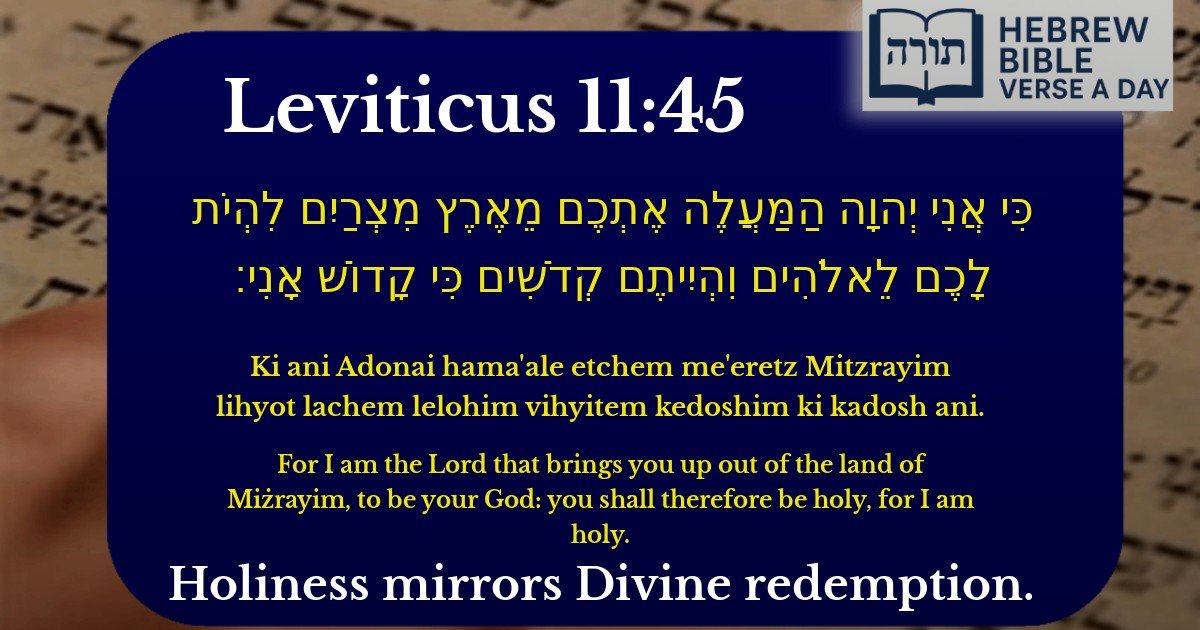
כִּי אֲנִי יְהוָה הַמַּעֲלֶה אֶתְכֶם מֵאֶרֶץ מִצְרַיִם לִהְיֹת לָכֶם לֵאלֹהִים וִהְיִיתֶם קְדֹשִׁים כִּי קָדוֹשׁ אָנִי׃
English Translation
For I am the Lord that brings you up out of the land of Miżrayim, to be your God: you shall therefore be holy, for I am holy.
Transliteration
Ki ani Adonai hama'ale etchem me'eretz Mitzrayim lihyot lachem lelohim vihyitem kedoshim ki kadosh ani.
Hebrew Leining Text
כִּ֣י ׀ אֲנִ֣י יְהֹוָ֗ה הַֽמַּעֲלֶ֤ה אֶתְכֶם֙ מֵאֶ֣רֶץ מִצְרַ֔יִם לִהְיֹ֥ת לָכֶ֖ם לֵאלֹהִ֑ים וִהְיִיתֶ֣ם קְדֹשִׁ֔ים כִּ֥י קָד֖וֹשׁ אָֽנִי׃
🎵 Listen to leining
Parasha Commentary
📚 Talmud Citations
This verse is quoted in the Talmud.
📖 Yoma 39a
The verse is referenced in a discussion about the holiness of the Jewish people and their obligation to emulate God's holiness.
📖 Sifra Kedoshim
The verse is cited in the context of explaining the commandment to be holy as God is holy, emphasizing the ethical and spiritual obligations derived from this principle.
The Divine Source of Redemption
The verse emphasizes that it is Hashem Himself who redeemed the Jewish people from Egypt, as stated: "כִּי אֲנִי יְהוָה הַמַּעֲלֶה אֶתְכֶם" ("For I am the Lord that brings you up"). Rashi (Vayikra 11:45) explains that this phrasing underscores that the Exodus was not accomplished through an intermediary (like an angel), but through direct Divine intervention. This establishes a unique covenantal relationship between Hashem and Israel.
The Purpose of Redemption
The verse continues: "לִהְיֹת לָכֶם לֵאלֹהִים" ("to be your God"). The Rambam (Hilchot Yesodei HaTorah 1:1) teaches that this phrase signifies the exclusive bond formed at Har Sinai, where Bnei Yisrael accepted Hashem's sovereignty. The Sforno adds that the Exodus was not merely physical liberation, but a spiritual elevation to enable Israel to serve as a "ממלכת כהנים וגוי קדוש" (a kingdom of priests and a holy nation - Shemot 19:6).
The Call to Holiness
The imperative "וִהְיִיתֶם קְדֹשִׁים" ("you shall therefore be holy") is explained by the Ramban (Vayikra 19:2) as a charge to practice perishut (abstinence) even from permitted pleasures when indulged excessively. The Kli Yakar notes that this holiness must emulate Divine attributes - just as Hashem is separate from physicality ("כִּי קָדוֹשׁ אָנִי"), so too must Israel sanctify themselves through mitzvah observance.
Key Lessons from Traditional Sources