

Join Our Newsletter To Be Informed When New Videos Are Posted
Hebrew Text
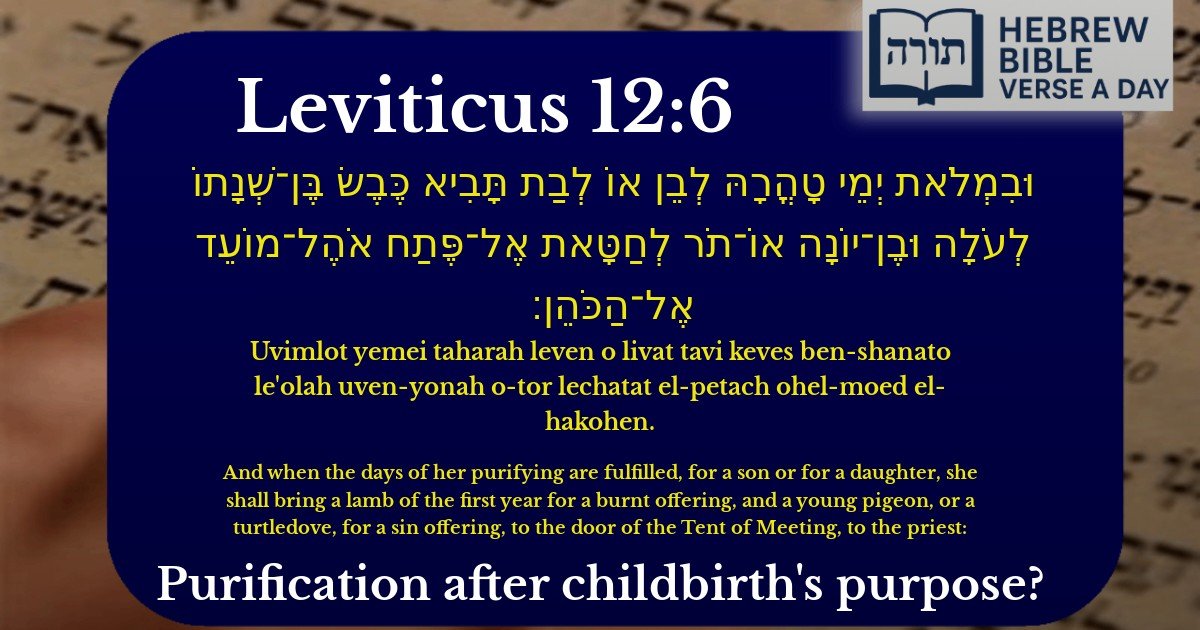
וּבִמְלֹאת יְמֵי טָהֳרָהּ לְבֵן אוֹ לְבַת תָּבִיא כֶּבֶשׂ בֶּן־שְׁנָתוֹ לְעֹלָה וּבֶן־יוֹנָה אוֹ־תֹר לְחַטָּאת אֶל־פֶּתַח אֹהֶל־מוֹעֵד אֶל־הַכֹּהֵן׃
English Translation
And when the days of her purifying are fulfilled, for a son or for a daughter, she shall bring a lamb of the first year for a burnt offering, and a young pigeon, or a turtledove, for a sin offering, to the door of the Tent of Meeting, to the priest:
Transliteration
Uvimlot yemei taharah leven o livat tavi keves ben-shanato le'olah uven-yonah o-tor lechatat el-petach ohel-moed el-hakohen.
Hebrew Leining Text
וּבִמְלֹ֣את ׀ יְמֵ֣י טׇהֳרָ֗הּ לְבֵן֮ א֣וֹ לְבַת֒ תָּבִ֞יא כֶּ֤בֶשׂ בֶּן־שְׁנָתוֹ֙ לְעֹלָ֔ה וּבֶן־יוֹנָ֥ה אוֹ־תֹ֖ר לְחַטָּ֑את אֶל־פֶּ֥תַח אֹֽהֶל־מוֹעֵ֖ד אֶל־הַכֹּהֵֽן׃
🎵 Listen to leining
Parasha Commentary
📚 Talmud Citations
This verse is quoted in the Talmud.
📖 Keritot 8b
The verse is cited in a discussion about the sacrifices required after childbirth, specifically addressing the types of offerings to be brought.
📖 Niddah 31b
The verse is referenced in a broader discussion about the laws of purity and the obligations of a woman after childbirth.
The Obligation of Korbanot After Childbirth
The verse (Vayikra 12:6) describes the requirement for a woman to bring korbanot (sacrifices) after the completion of her taharah (purification) period following childbirth. This mitzvah applies whether she gave birth to a son or daughter, though the duration of tum'ah (ritual impurity) differs between them (7 days for a son, 14 for a daughter, as stated in Vayikra 12:2-5).
The Korbanot: Olah and Chatat
The verse specifies two korbanot:
Symbolism and Halachic Insights
The Midrash (Vayikra Rabbah 14:5) explains that the Chatat atones for the mother's possible oath during labor (e.g., vowing never to have children again due to pain). The Olah represents gratitude for surviving childbirth, which carries inherent danger (Talmud Niddah 31b).
The Role of the Kohen
The verse emphasizes bringing the korbanot "to the entrance of the Tent of Meeting, to the Kohen" - highlighting that only the Kohen may perform the sacrificial service. This teaches the importance of proper channels for divine service (Sforno).
Economic Considerations
The Torah later (Vayikra 12:8) allows a poor woman to bring two birds instead of a lamb, demonstrating Hashem's compassion for those of limited means (Chizkuni). This reflects the principle that spiritual obligations are proportionate to one's financial capacity.