

Join Our Newsletter To Be Informed When New Videos Are Posted
Hebrew Text
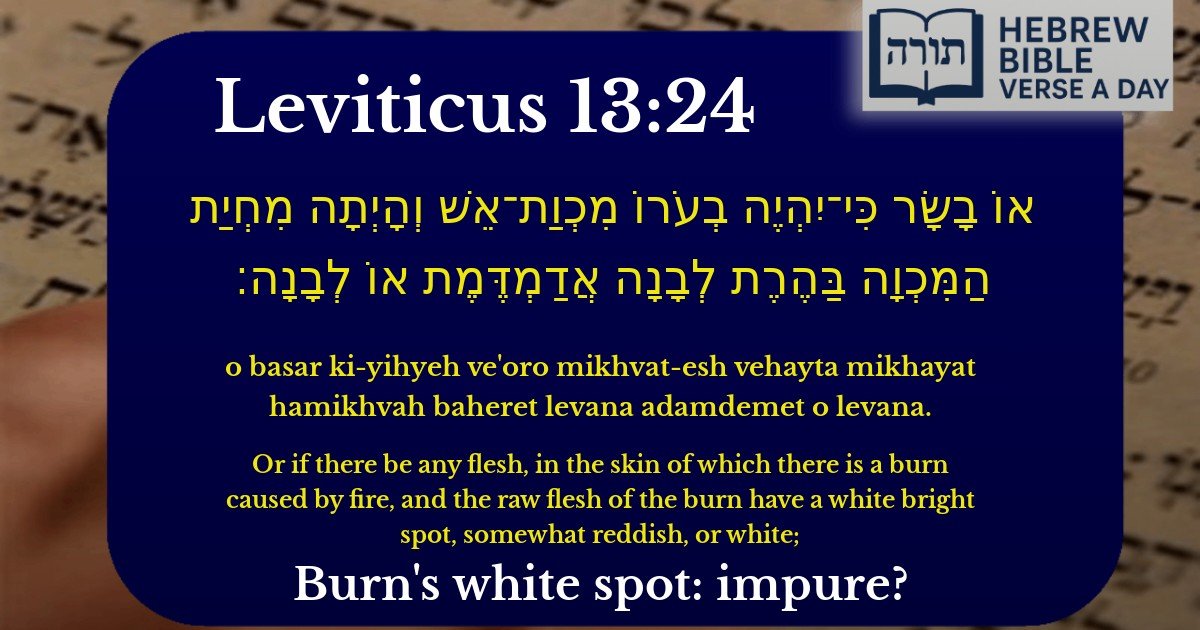
אוֹ בָשָׂר כִּי־יִהְיֶה בְעֹרוֹ מִכְוַת־אֵשׁ וְהָיְתָה מִחְיַת הַמִּכְוָה בַּהֶרֶת לְבָנָה אֲדַמְדֶּמֶת אוֹ לְבָנָה׃
English Translation
Or if there be any flesh, in the skin of which there is a burn caused by fire, and the raw flesh of the burn have a white bright spot, somewhat reddish, or white;
Transliteration
O basar ki-yihyeh ve'oro mikhvat-esh vehayta mikhayat hamikhvah baheret levana adamdemet o levana.
Hebrew Leining Text
א֣וֹ בָשָׂ֔ר כִּֽי־יִהְיֶ֥ה בְעֹר֖וֹ מִכְוַת־אֵ֑שׁ וְֽהָיְתָ֞ה מִֽחְיַ֣ת הַמִּכְוָ֗ה בַּהֶ֛רֶת לְבָנָ֥ה אֲדַמְדֶּ֖מֶת א֥וֹ לְבָנָֽה׃
🎵 Listen to leining
Parasha Commentary
📚 Talmud Citations
This verse is quoted in the Talmud.
📖 Nega'im 6:7
The verse is discussed in the context of the laws concerning skin afflictions (tzara'at), specifically addressing burns and their appearance as potential signs of impurity.
📖 Sifra Negaim, Parashah 3
The verse is referenced in the midrashic interpretation of the laws of tzara'at, elaborating on the distinctions between different types of skin discolorations caused by burns.
Context in Leviticus
This verse appears in Vayikra (Leviticus) 13:24, within the broader discussion of tzara'at (often mistranslated as "leprosy"), which pertains to various skin afflictions that render a person ritually impure. The Torah here addresses a specific case where a burn on the skin develops discoloration, requiring examination by a kohen (priest) to determine impurity.
Rashi's Explanation
Rashi (Vayikra 13:24) explains that this verse deals with a burn that initially heals but then develops a white or reddish-white discoloration. He notes that the term "מִחְיַת הַמִּכְוָה" ("the raw flesh of the burn") refers to the healed area of the burn, which then exhibits signs resembling tzara'at. If the discoloration meets the criteria of tzara'at, the individual is declared impure.
Rambam's Halachic Perspective
In Hilchot Tumat Tzara'at (9:1), the Rambam (Maimonides) rules that burns, like other wounds, can develop signs of impurity if they exhibit the prescribed colors (white, reddish-white) and spread. He emphasizes that only a kohen has the authority to declare such impurity, not a physician or layperson.
Midrashic Insight
The Sifra (a halachic midrash on Leviticus) connects this verse to the broader theme of tzara'at as a spiritual affliction often resulting from lashon hara (evil speech). The discoloration following a burn serves as a metaphor for how external wounds can reveal deeper spiritual flaws that require introspection and repentance.
Key Halachic Considerations
Symbolic Interpretation
The Kli Yakar (R' Shlomo Ephraim Luntschitz) suggests that burns represent damage caused by uncontrolled passion (symbolized by fire). The subsequent discoloration signifies lingering spiritual consequences, teaching that even after physical healing, one must address the root causes of wrongdoing to achieve complete purification.