

Join Our Newsletter To Be Informed When New Videos Are Posted
Hebrew Text
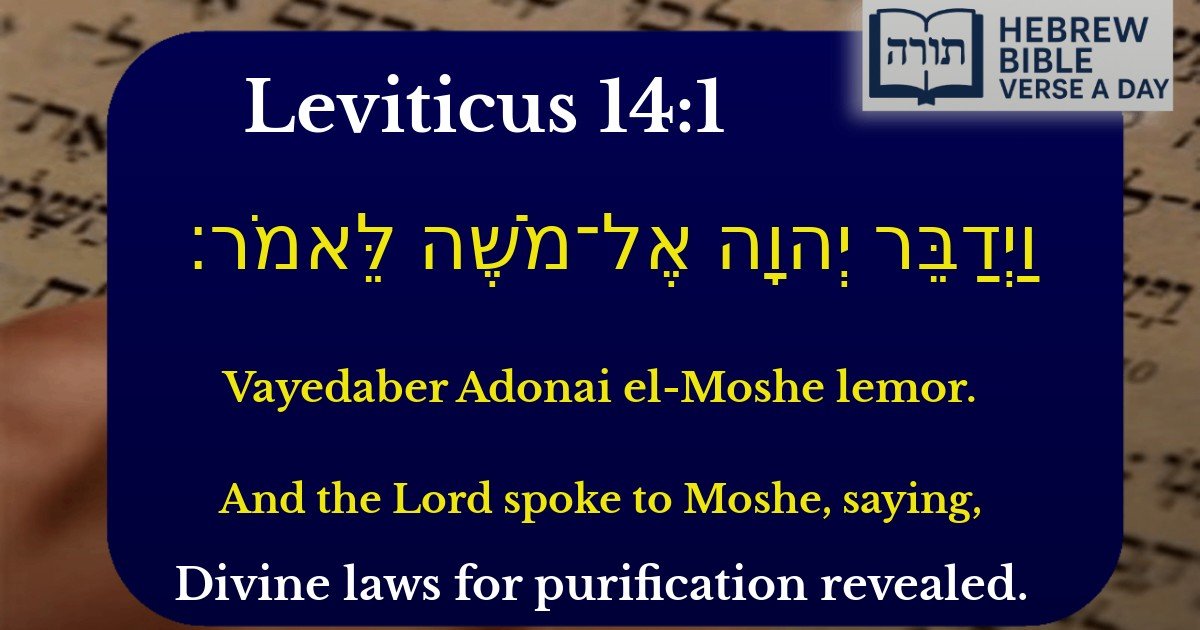
וַיְדַבֵּר יְהוָה אֶל־מֹשֶׁה לֵּאמֹר׃
English Translation
And the Lord spoke to Moshe, saying,
Transliteration
Vayedaber Adonai el-Moshe lemor.
Hebrew Leining Text
וַיְדַבֵּ֥ר יְהֹוָ֖ה אֶל־מֹשֶׁ֥ה לֵּאמֹֽר׃
🎵 Listen to leining
Parasha Commentary
📚 Talmud Citations
This verse is not quoted in the Talmud.
The Divine Communication to Moshe
The phrase "וַיְדַבֵּר יְהוָה אֶל־מֹשֶׁה לֵּאמֹר" ("And the Lord spoke to Moshe, saying") appears frequently throughout the Torah, introducing divine commandments and revelations. Rashi (Shemot 6:2) notes that this expression signifies a direct and clear communication from Hashem to Moshe, often for the purpose of transmitting mitzvot to Bnei Yisrael.
Significance of "Dibbur" (Speaking)
The term "וַיְדַבֵּר" ("and He spoke") implies a stronger and more forceful form of communication than softer terms like "וַיֹּאמֶר" ("and He said"). The Ramban (Bereishit 18:33) explains that "dibbur" is used when conveying weighty matters, particularly mitzvot that require strict adherence.
The Role of Moshe as Intermediary
This verse highlights Moshe Rabbeinu's unique role as the conduit for divine revelation. The Talmud (Yevamot 49b) teaches that Moshe was the only prophet who received communication from Hashem "פֶּה אֶל פֶּה" ("mouth to mouth"), with absolute clarity, unlike other prophets who received visions or allegories.
The Purpose of "לֵּאמֹר" ("Saying")
The inclusion of "לֵּאמֹר" indicates that Moshe was to relay these words to others. The Sforno (Shemot 25:1) explains that this teaches us Moshe's faithfulness in transmitting the divine word exactly as received, without adding or omitting anything.