

Join Our Newsletter To Be Informed When New Videos Are Posted
Hebrew Text
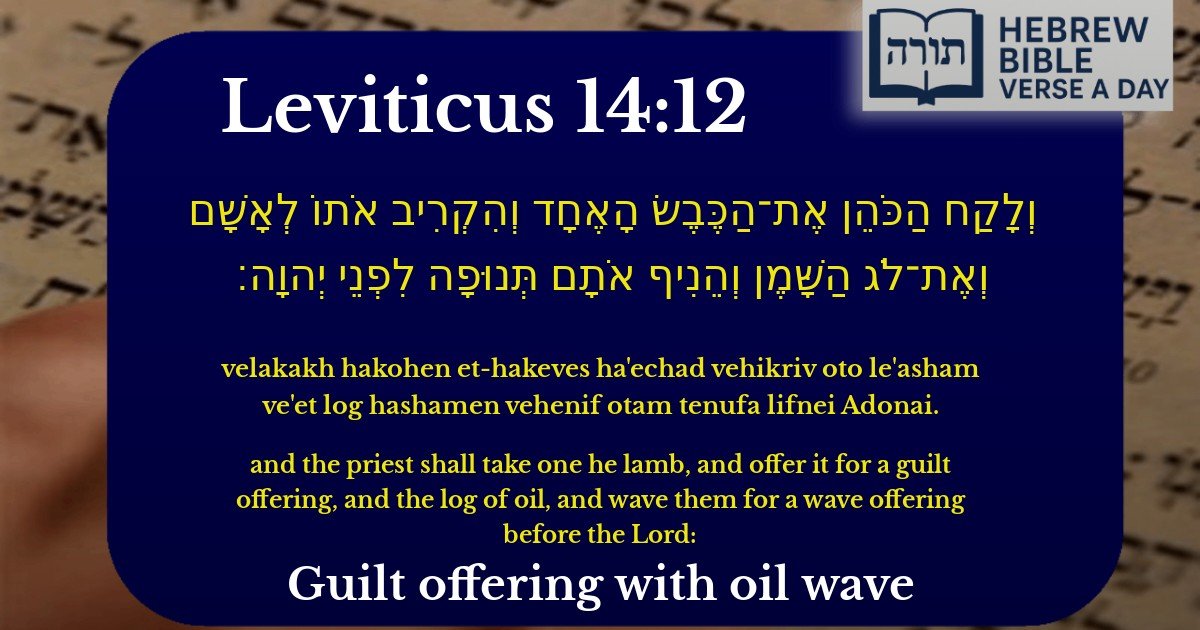
וְלָקַח הַכֹּהֵן אֶת־הַכֶּבֶשׂ הָאֶחָד וְהִקְרִיב אֹתוֹ לְאָשָׁם וְאֶת־לֹג הַשָּׁמֶן וְהֵנִיף אֹתָם תְּנוּפָה לִפְנֵי יְהוָה׃
English Translation
and the priest shall take one he lamb, and offer it for a guilt offering, and the log of oil, and wave them for a wave offering before the Lord:
Transliteration
Velakakh hakohen et-hakeves ha'echad vehikriv oto le'asham ve'et log hashamen vehenif otam tenufa lifnei Adonai.
Hebrew Leining Text
וְלָקַ֨ח הַכֹּהֵ֜ן אֶת־הַכֶּ֣בֶשׂ הָאֶחָ֗ד וְהִקְרִ֥יב אֹת֛וֹ לְאָשָׁ֖ם וְאֶת־לֹ֣ג הַשָּׁ֑מֶן וְהֵנִ֥יף אֹתָ֛ם תְּנוּפָ֖ה לִפְנֵ֥י יְהֹוָֽה׃
🎵 Listen to leining
Parasha Commentary
📚 Talmud Citations
This verse is quoted in the Talmud.
📖 Keritot 9a
The verse is referenced in the discussion about the guilt offering (asham) and the procedure involving the log of oil, highlighting the priestly duties in the sacrificial process.
📖 Menachot 93b
The verse is cited in the context of discussing the waving (tenufah) of offerings, particularly the combination of the lamb and the log of oil as part of the guilt offering procedure.
Context of the Verse
This verse (Vayikra 14:12) is part of the Torah's detailed instructions regarding the purification process for a metzora (a person afflicted with tzara'at, often mistranslated as leprosy). The asham (guilt offering) and the log of oil are key components in the ritual to restore the individual to a state of purity.
The Guilt Offering (Asham)
Rashi explains that the asham in this context is unique—it is brought even when there is no certainty that the metzora committed a sin requiring a guilt offering. The Talmud (Arachin 16a) connects tzara'at to sins such as lashon hara (evil speech), and the asham serves as atonement for possible transgressions. Rambam (Hilchot Mechusrei Kapparah 4:1) notes that this offering is distinct from other guilt offerings, as it is part of the purification process rather than a response to a specific sin.
The Log of Oil
The log of oil is waved together with the asham lamb, symbolizing the individual's renewed connection to Hashem. The Midrash (Vayikra Rabbah 17:3) teaches that oil represents wisdom and refinement, suggesting that the metzora must refine their character. The waving (tenufah) signifies dedication, as the individual recommits to a life of holiness.
The Wave Offering (Tenufah)
The tenufah is performed by the kohen, moving the offering forward and backward, upward and downward. Rashi (on Vayikra 14:12) explains that this act acknowledges Hashem's dominion over all directions—hinting that the metzora must recognize Divine providence in every aspect of life. The Kli Yakar adds that the waving symbolizes the need to elevate one's actions in all areas, correcting the spiritual flaws that led to tzara'at.
Key Lessons