Frequently Asked Questions
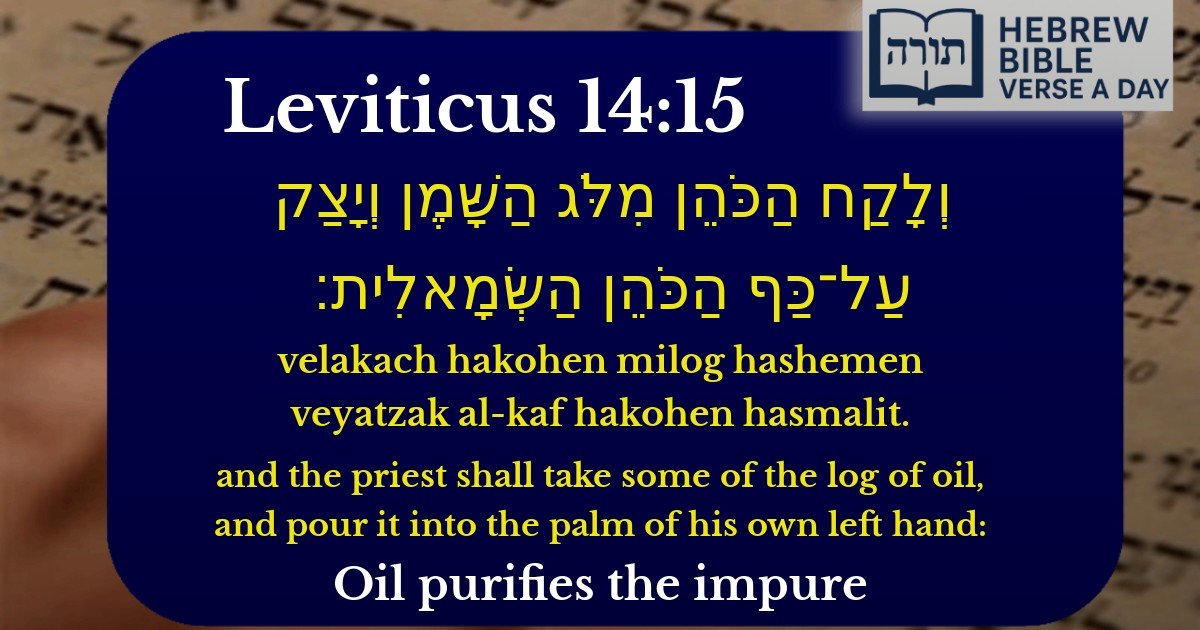
Q: Why does the priest use his left hand to pour the oil in Leviticus 14:15?
A: According to Rashi and the Talmud (Menachot 62b), the priest uses his left hand for this specific action to show that it is a secondary part of the purification process. The main actions, like sprinkling the oil, are done with the right hand, as the right hand is typically used for more significant rituals in the Temple service.
Q: What is the significance of the 'log of oil' mentioned in Leviticus 14:15?
A: The 'log' is a specific measurement (about half a liter) used in Temple rituals. The Midrash (Vayikra Rabbah 17:2) explains that oil symbolizes wisdom and purity. Using a measured amount teaches us that divine service requires precision and mindfulness, not random or excessive actions.
Q: What can we learn from the detailed instructions in Leviticus 14:15?
A: The verse teaches the importance of following precise instructions in serving Hashem. The Rambam (Hilchot Mechusrei Kaparah 2:5) emphasizes that every detail in the purification process has spiritual meaning. This reminds us that even small actions in mitzvot should be done with care and intention.
Q: Does this verse about the priest's oil have any relevance today without the Temple?
A: While we no longer have the Temple service, the Talmud (Sotah 15a) teaches that studying these laws is considered like performing them. The principles of purity, attention to detail, and using physical actions for spiritual elevation (like the oil) still apply in our mitzvot today, such as lighting Shabbat candles with proper intention.
Q: Why is oil used in the purification process in Leviticus 14:15?
A: Oil represents both physical and spiritual purity. Rashi (on this verse) notes that oil's smooth, unifying nature symbolizes the restoration of the person's connection to the community and to Hashem after their impurity. The Talmud (Menachot 85b) also compares Torah wisdom to oil, showing that purity comes through wisdom and mitzvot.


Context of the Verse
The verse (Vayikra 14:15) describes part of the purification process for a metzora (a person afflicted with tzara'at, often mistranslated as leprosy). The kohen (priest) takes oil from a log (a liquid measure) and pours it into the palm of his left hand as part of the ritual.
Symbolism of the Left Hand
Rashi (Vayikra 14:15) explains that the priest uses his left hand because the right hand is typically reserved for more sacred tasks, such as sprinkling the blood of sacrifices. The left hand is used here to emphasize the preparatory nature of this step in the purification process.
The Significance of the Oil
The Rambam (Hilchot Tumat Tzara'at 11:1) notes that oil symbolizes prosperity and divine favor. The use of oil in this ritual signifies the hope for the metzora's restoration to physical and spiritual health. The Midrash (Vayikra Rabbah 17:6) further connects oil to wisdom, suggesting that the affliction of tzara'at comes as a consequence of moral failings, and the oil represents the return to righteous conduct.
Procedure and Halachic Details
Spiritual Lessons
The Talmud (Berachot 5b) teaches that afflictions come as a means of divine correction. The pouring of oil, a substance that rises above other liquids, symbolizes the elevation of the metzora from a state of impurity to one of holiness. The Kli Yakar (Vayikra 14:15) adds that the left hand, being weaker, represents humility—a necessary trait for repentance and spiritual renewal.