
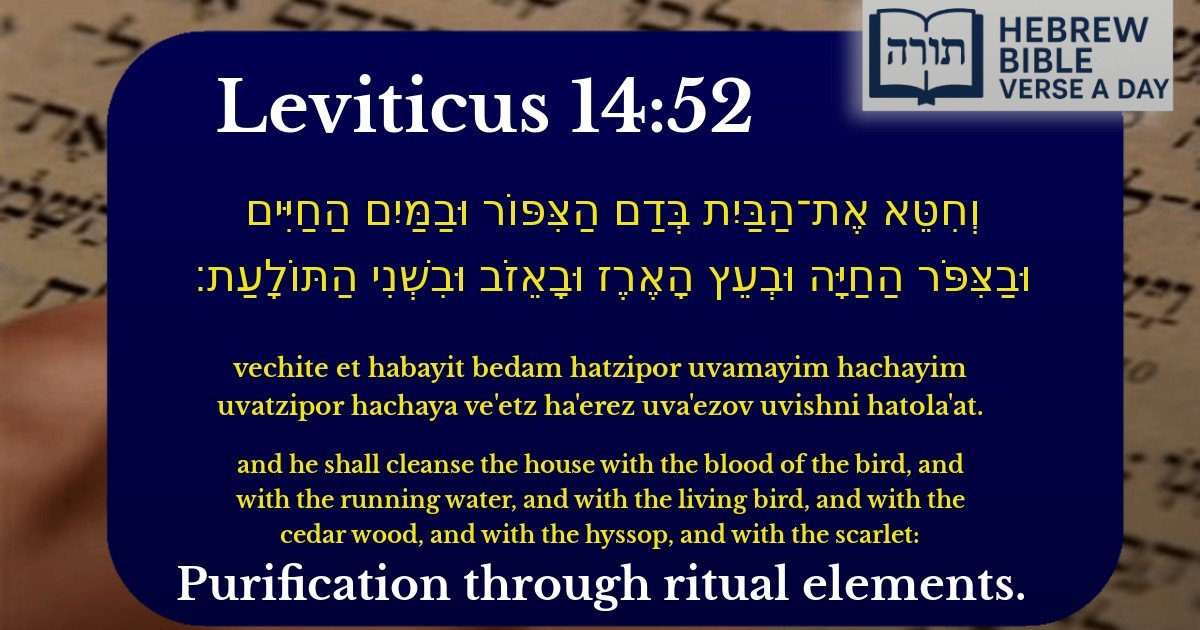

Leviticus 14:52 - Purification through ritual elements.

Leviticus 14:52 - ויקרא 14:52

Hebrew Text

וְחִטֵּא אֶת־הַבַּיִת בְּדַם הַצִּפּוֹר וּבַמַּיִם הַחַיִּים וּבַצִּפֹּר הַחַיָּה וּבְעֵץ הָאֶרֶז וּבָאֵזֹב וּבִשְׁנִי הַתּוֹלָעַת׃

English Translation

and he shall cleanse the house with the blood of the bird, and with the running water, and with the living bird, and with the cedar wood, and with the hyssop, and with the scarlet:

Transliteration

Vechite et habayit bedam hatzipor uvamayim hachayim uvatzipor hachaya ve'etz ha'erez uva'ezov uvishni hatola'at.

Hebrew Leining Text

וְחִטֵּ֣א אֶת־הַבַּ֔יִת בְּדַם֙ הַצִּפּ֔וֹר וּבַמַּ֖יִם הַֽחַיִּ֑ים וּבַצִּפֹּ֣ר הַחַיָּ֗ה וּבְעֵ֥ץ הָאֶ֛רֶז וּבָאֵזֹ֖ב וּבִשְׁנִ֥י הַתּוֹלָֽעַת׃

🎵 Listen to leining

Parasha Commentary

Context of the Verse

This verse (Vayikra 14:52) is part of the Torah's detailed instructions for the purification process of a house afflicted with tzara'at (often mistranslated as "leprosy"), a spiritual malady resulting from sins such as lashon hara (evil speech). The purification ritual involves symbolic elements to atone and restore spiritual purity to the home.

Symbolism of the Ritual Components

  • Blood of the Bird and Living Bird: Rashi (Vayikra 14:52) explains that the bird represents the chattering nature of lashon hara, as birds are known for their constant chirping. One bird is slaughtered, symbolizing the cessation of sinful speech, while the live bird is set free, representing the potential for repentance and renewal.
  • Running Water (Mayim Chayim): The Rambam (Hilchot Tum'at Tzara'at 11:1) notes that fresh, flowing water signifies purification and renewal, as water cleanses and revives.
  • Cedar Wood and Hyssop: The cedar, a tall tree, symbolizes arrogance (a root cause of tzara'at), while the lowly hyssop represents humility. The Midrash (Vayikra Rabbah 16:6) teaches that one must lower themselves from pride to achieve atonement.
  • Scarlet (Shni Tola'at): The scarlet wool, derived from a worm, further emphasizes humility, as the Targum Yonatan explains that even the most vibrant colors come from lowly creatures.

Spiritual Lessons

The Sforno (Vayikra 14:52) highlights that this ritual teaches the homeowner to recognize the consequences of their actions and actively engage in teshuvah (repentance). The combination of these elements serves as a physical and spiritual remedy, reinforcing the Torah's emphasis on humility, speech ethics, and the possibility of spiritual renewal.

Practical Halachic Implications

The Mishnah (Negaim 14:1) and Gemara (Arachin 16a) discuss the detailed procedures for this purification, emphasizing that the Kohen must oversee the process. The Rambam (Hilchot Tum'at Tzara'at 11:2) codifies these laws, noting that the ritual underscores the Kohen's role in guiding the people toward purity and atonement.

📚 Talmud Citations

This verse is quoted in the Talmud.

📖 Negaim 14a
The verse is discussed in the context of the purification process for a house afflicted with leprosy, detailing the use of the bird, cedar wood, hyssop, and scarlet wool as part of the ritual.
📖 Moed Katan 28a
Referenced in a discussion about the timing and procedures for purification rituals, emphasizing the symbolic elements mentioned in the verse.

Frequently Asked Questions

Q: What is the meaning of the purification process described in Leviticus 14:52?
A: This verse describes part of the purification process for a house afflicted with tzara'at (a spiritual impurity often mistranslated as 'leprosy'). According to Rashi and the Talmud (Arachin 16a), this ritual symbolizes humility (represented by the lowly hyssop and cedar wood) and atonement (represented by the blood and scarlet thread). The live bird represents renewal and purification.
Q: Why does the Torah use a bird for this purification ritual?
A: The Midrash (Vayikra Rabbah 16:6) explains that birds constantly chirp, symbolizing how gossip and harmful speech (which tradition connects with tzara'at) spreads. Using a bird teaches that just as the bird's chatter can cause harm, our words must be purified. Rambam (Hilchot Tum'at Tzara'at) also notes this connection between speech and the purification process.
Q: What is the significance of the cedar wood and hyssop in this verse?
A: Rashi (on Leviticus 14:4) explains that cedar wood, being tall, represents arrogance (often a root cause of harmful speech), while hyssop, a low-growing plant, represents humility. Their inclusion teaches that one must move from arrogance to humility to achieve true purification. The Talmud (Arachin 16a) connects this to King Solomon's wisdom about extremes in behavior.
Q: How does this verse about house purification apply to us today?
A: While we no longer have the Temple service, the Talmud (Berachot 5a) teaches that these rituals contain eternal lessons. The scarlet thread reminds us of sin (as red symbolizes wrongdoing), while the living water represents Torah's purifying power. Today, we apply this by examining our homes and speech for negative influences and purifying them through repentance and good deeds.
Q: What does the 'scarlet' (shani tola'at) represent in this purification process?
A: The scarlet wool (shani tola'at) represents both sin (its red color) and repentance (the tola'at/worm source suggests humility, as per Isaiah 1:18). The Midrash (Pesikta Rabbati 20) notes that scarlet was used in both the Temple service and this purification, showing that sincere repentance can transform sin into merit. Rambam connects this to the power of complete teshuvah (repentance).