
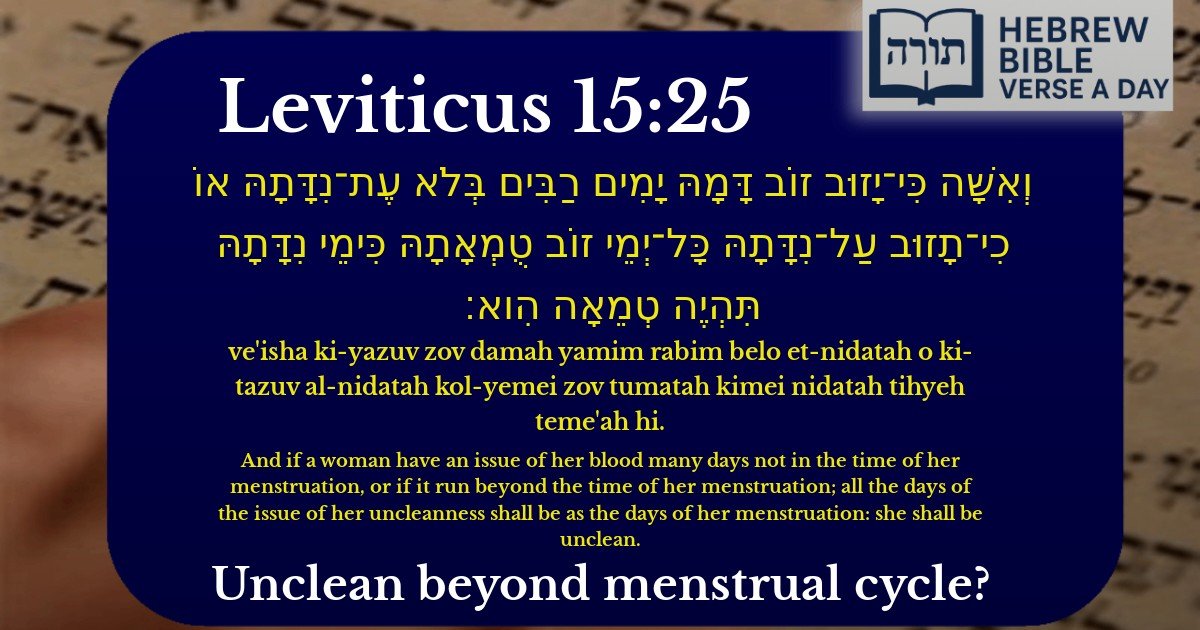

Leviticus 15:25 - Unclean beyond menstrual cycle?

Leviticus 15:25 - ויקרא 15:25

Hebrew Text

וְאִשָּׁה כִּי־יָזוּב זוֹב דָּמָהּ יָמִים רַבִּים בְּלֹא עֶת־נִדָּתָהּ אוֹ כִי־תָזוּב עַל־נִדָּתָהּ כָּל־יְמֵי זוֹב טֻמְאָתָהּ כִּימֵי נִדָּתָהּ תִּהְיֶה טְמֵאָה הִוא׃

English Translation

And if a woman have an issue of her blood many days not in the time of her menstruation, or if it run beyond the time of her menstruation; all the days of the issue of her uncleanness shall be as the days of her menstruation: she shall be unclean.

Transliteration

Ve'isha ki-yazuv zov damah yamim rabim belo et-nidatah o ki-tazuv al-nidatah kol-yemei zov tumatah kimei nidatah tihyeh teme'ah hi.

Hebrew Leining Text

וְאִשָּׁ֡ה כִּֽי־יָזוּב֩ ז֨וֹב דָּמָ֜הּ יָמִ֣ים רַבִּ֗ים בְּלֹא֙ עֶת־נִדָּתָ֔הּ א֥וֹ כִֽי־תָז֖וּב עַל־נִדָּתָ֑הּ כׇּל־יְמֵ֞י ז֣וֹב טֻמְאָתָ֗הּ כִּימֵ֧י נִדָּתָ֛הּ תִּהְיֶ֖ה טְמֵאָ֥ה הִֽוא׃

🎵 Listen to leining

Parasha Commentary

Verse Context and Overview

The verse (Vayikra 15:25) discusses the halachic status of a woman who experiences abnormal uterine bleeding, either outside her regular menstrual cycle (zavah) or extending beyond it. This condition renders her ritually impure (temei'ah) and requires specific purification processes.

Key Terms and Their Meanings

  • זוֹב דָּמָהּ (issue of her blood): Rashi explains this refers to a continuous or irregular flow of blood, distinct from the regular menstrual cycle (niddah).
  • בְּלֹא עֶת־נִדָּתָהּ (not in the time of her menstruation): Rambam (Hilchot Issurei Bi'ah 6:1) clarifies this refers to bleeding occurring outside the expected days of niddah.
  • טֻמְאָתָהּ (her uncleanness): The Talmud (Niddah 72a) states that this impurity affects her ability to enter the Beit HaMikdash or engage in marital relations until purification.

Halachic Implications

According to the Mishnah (Niddah 2:6), a woman who bleeds for three consecutive days outside her regular cycle is classified as a zavah gedolah (major zavah). The Gemara (Niddah 66a) elaborates that she must count seven "clean days" (shivah neki'im) and immerse in a mikveh to regain purity.

Spiritual and Practical Ramifications

The Midrash (Torat Kohanim, Metzora 5) connects this law to the broader theme of taharah (ritual purity), emphasizing the importance of maintaining spiritual readiness for divine service. The Sefer HaChinuch (Mitzvah 188) adds that these laws cultivate discipline and reverence for the sacred.

Distinction Between Niddah and Zavah

  • Niddah: Regular menstrual impurity lasting typically 5-7 days (Vayikra 15:19).
  • Zavah: Abnormal bleeding requiring additional purification steps (Vayikra 15:25-28).

📚 Talmud Citations

This verse is quoted in the Talmud.

📖 Niddah 35b
The verse is discussed in the context of laws concerning a woman's menstrual impurity and the distinction between regular menstruation and irregular bleeding.
📖 Niddah 72a
The verse is referenced in a discussion about the duration of impurity for a woman with irregular bleeding.

Frequently Asked Questions

Q: What does Leviticus 15:25 mean?
A: Leviticus 15:25 discusses the laws of ritual impurity (tumah) related to a woman who experiences abnormal uterine bleeding outside her regular menstrual cycle (called 'zavah'). According to Jewish law, she becomes ritually impure, similar to the impurity during her regular menstruation (niddah). This is part of the Torah's detailed laws about purity and impurity.
Q: Why is this verse important in Judaism?
A: This verse is important because it establishes the halachic (Jewish legal) framework for the laws of niddah and zavah, which are central to family purity (taharat hamishpacha). These laws impact marital relations, mikveh immersion, and other aspects of Jewish life. The Talmud (Niddah 72a) and later halachic authorities derive many details from this verse.
Q: How does this apply to Jewish women today?
A: Today, Orthodox Jewish women consult with a rabbi when experiencing irregular bleeding to determine if they are in a state of zavah (requiring counting 'seven clean days' before immersion) or niddah. The verse's principles guide contemporary halachic practice, as codified in works like the Shulchan Aruch (Yoreh De'ah 183-196).
Q: What's the difference between niddah and zavah?
A: Niddah refers to regular menstrual impurity (lasting typically 5-7 days), while zavah (from this verse) refers to abnormal bleeding outside the expected time. A zavah requires observing bleeding patterns and counting 'seven clean days' before immersion, as explained in the Mishnah (Niddah 1:7) and Talmud.
Q: Does this mean a woman is 'unclean' in a negative way?
A: No, 'tumah' (often translated as 'unclean') is a ritual state, not a moral or physical judgment. Just as priests became ritually impure when contacting the dead (despite burial being a mitzvah), niddah and zavah are natural states requiring temporary separation for holiness purposes, as Rambam explains in Hilchot Issurei Bi'ah.