

Join Our Newsletter To Be Informed When New Videos Are Posted
Hebrew Text
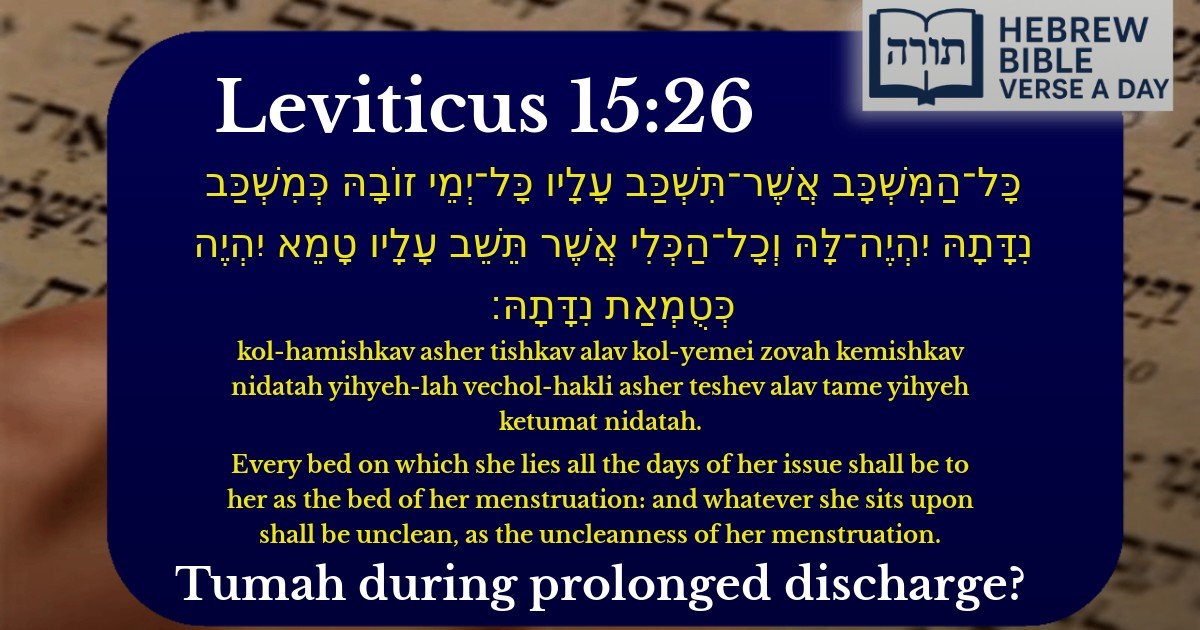
כָּל־הַמִּשְׁכָּב אֲשֶׁר־תִּשְׁכַּב עָלָיו כָּל־יְמֵי זוֹבָהּ כְּמִשְׁכַּב נִדָּתָהּ יִהְיֶה־לָּהּ וְכָל־הַכְּלִי אֲשֶׁר תֵּשֵׁב עָלָיו טָמֵא יִהְיֶה כְּטֻמְאַת נִדָּתָהּ׃
English Translation
Every bed on which she lies all the days of her issue shall be to her as the bed of her menstruation: and whatever she sits upon shall be unclean, as the uncleanness of her menstruation.
Transliteration
Kol-hamishkav asher tishkav alav kol-yemei zovah kemishkav nidatah yihyeh-lah vechol-hakli asher teshev alav tame yihyeh ketumat nidatah.
Hebrew Leining Text
כׇּל־הַמִּשְׁכָּ֞ב אֲשֶׁר־תִּשְׁכַּ֤ב עָלָיו֙ כׇּל־יְמֵ֣י זוֹבָ֔הּ כְּמִשְׁכַּ֥ב נִדָּתָ֖הּ יִֽהְיֶה־לָּ֑הּ וְכׇֽל־הַכְּלִי֙ אֲשֶׁ֣ר תֵּשֵׁ֣ב עָלָ֔יו טָמֵ֣א יִהְיֶ֔ה כְּטֻמְאַ֖ת נִדָּתָֽהּ׃
🎵 Listen to leining
Parasha Commentary
📚 Talmud Citations
This verse is quoted in the Talmud.
📖 Niddah 33a
The verse is discussed in the context of the laws concerning a woman's menstrual impurity (niddah), specifically addressing the impurity of objects she comes into contact with during her period.
📖 Zavim 95b
The verse is referenced in a discussion about the impurity of a zavah (a woman with abnormal discharge) and how it compares to the impurity of a niddah (menstruating woman).
Understanding the Verse in Context
The verse (Vayikra 15:26) discusses the laws of zavah, a woman who experiences irregular uterine bleeding beyond the days of her regular niddah period. The Torah equates the impurity (tumah) of a zavah to that of a niddah, extending the same restrictions to objects she comes into contact with during her state of impurity.
Key Halachic Principles
Comparative Tumah: Niddah vs. Zavah
The Talmud (Niddah 35b) derives from the phrase "כְּטֻמְאַת נִדָּתָהּ" that the impurity levels are identical - whether through direct contact (maga) or through carrying (massa). However, the Midrash (Toras Kohanim 15:26) notes that a zavah requires seven clean days and a korban, indicating a more stringent process for purification than a regular niddah.
Practical Implications