
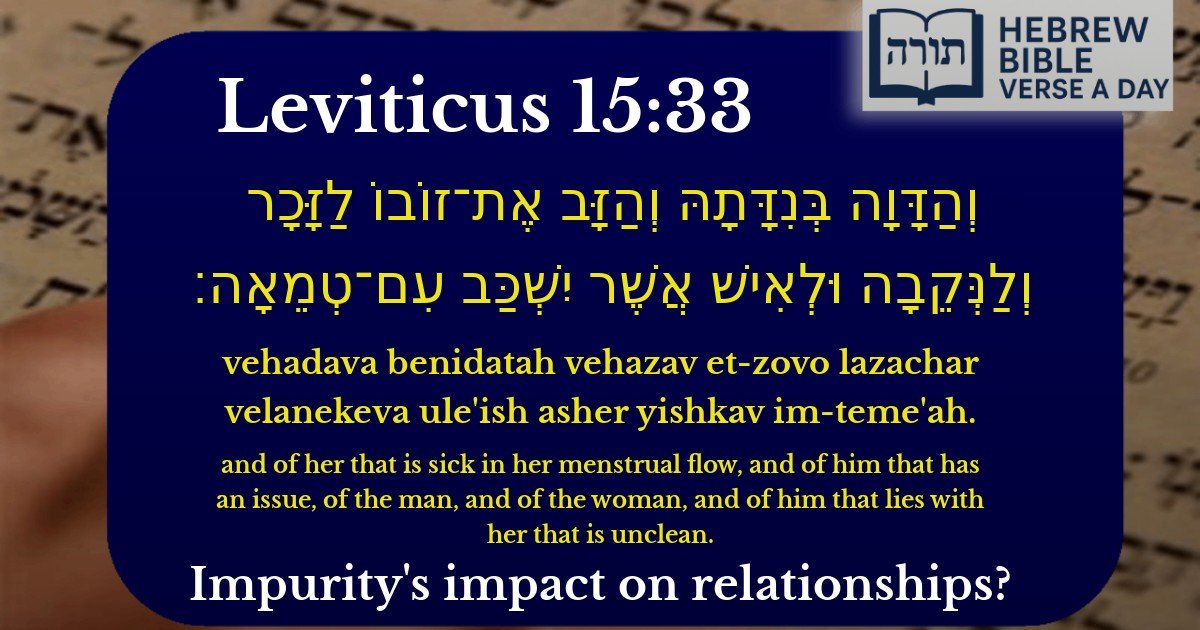

Leviticus 15:33 - Impurity's impact on relationships?

Leviticus 15:33 - ויקרא 15:33

Hebrew Text

וְהַדָּוָה בְּנִדָּתָהּ וְהַזָּב אֶת־זוֹבוֹ לַזָּכָר וְלַנְּקֵבָה וּלְאִישׁ אֲשֶׁר יִשְׁכַּב עִם־טְמֵאָה׃

English Translation

and of her that is sick in her menstrual flow, and of him that has an issue, of the man, and of the woman, and of him that lies with her that is unclean.

Transliteration

Vehadava benidatah vehazav et-zovo lazachar velanekeva ule'ish asher yishkav im-teme'ah.

Hebrew Leining Text

וְהַדָּוָה֙ בְּנִדָּתָ֔הּ וְהַזָּב֙ אֶת־זוֹב֔וֹ לַזָּכָ֖ר וְלַנְּקֵבָ֑ה וּלְאִ֕ישׁ אֲשֶׁ֥ר יִשְׁכַּ֖ב עִם־טְמֵאָֽה׃ {פ}

🎵 Listen to leining

Parasha Commentary

Overview of the Verse

The verse (Vayikra 15:33) discusses the laws of ritual impurity (tum'ah) related to a menstruating woman (niddah), a man or woman with a bodily discharge (zav or zavah), and one who engages in relations with an impure woman. These laws are part of the broader Torah framework of taharah (ritual purity) and tum'ah, which have deep spiritual and halachic significance.

Explanation of Key Terms

  • וְהַדָּוָה בְּנִדָּתָהּ ("and of her that is sick in her menstrual flow"): Rashi explains that davah refers to a woman experiencing menstrual bleeding, emphasizing the physical and ritual state of niddah. The term niddah signifies separation, as marital relations are prohibited during this period.
  • וְהַזָּב אֶת־זוֹבוֹ ("and of him that has an issue"): This refers to a zav—a man with an abnormal genital discharge. The Rambam (Hilchot Mechusrei Kapparah 1:1) details the conditions that classify one as a zav and the purification process.
  • לַזָּכָר וְלַנְּקֵבָה ("of the man, and of the woman"): The Talmud (Niddah 34a) clarifies that both men and women can become impure due to discharges, though the laws differ slightly between them.
  • וּלְאִישׁ אֲשֶׁר יִשְׁכַּב עִם־טְמֵאָה ("and of him that lies with her that is unclean"): This refers to a man who has relations with a niddah. The severity of this transgression is underscored in Vayikra 18:19 and 20:18, where it is prohibited under penalty of karet (spiritual excision).

Halachic and Spiritual Implications

The Sforno notes that these laws serve to elevate human conduct by distinguishing between permissible and forbidden states of intimacy. The concept of tum'ah is not inherently negative but reflects a spiritual state requiring purification before engaging in holy activities (e.g., entering the Beit HaMikdash or partaking of terumah).

The Midrash (Vayikra Rabbah 18:1) connects these laws to the broader theme of kedushah (holiness), teaching that self-restraint in physical matters leads to spiritual refinement. The Chatam Sofer adds that the meticulous observance of niddah and zav laws preserves the sanctity of Jewish family life.

Practical Observance

  • A menstruating woman must count seven "clean days" (shivah neki'im) and immerse in a mikveh before resuming marital relations (Rambam, Hilchot Issurei Bi'ah 11).
  • A zav or zavah must bring korbanot (offerings) after purification (Vayikra 15:14-15, 28-29).
  • Relations with a niddah are strictly forbidden, and violators are subject to severe consequences (Shulchan Aruch, Yoreh De'ah 183-184).

📚 Talmud Citations

This verse is quoted in the Talmud.

📖 Niddah 35b
The verse is referenced in discussions about the laws of ritual impurity, particularly concerning menstruation and abnormal discharges.
📖 Zavim 2a
The verse is cited in the context of defining the types of discharges that cause ritual impurity.

Frequently Asked Questions

Q: What does Leviticus 15:33 mean?
A: Leviticus 15:33 discusses the laws of ritual impurity (tumah) related to a woman during her menstrual period (niddah), a man with a bodily discharge (zav), and intimate relations with someone who is ritually impure. The Torah teaches that these states require purification processes before returning to ritual purity (taharah).
Q: Why is the concept of niddah important in Judaism?
A: The laws of niddah (menstrual purity) are foundational in Jewish family life, promoting holiness and self-discipline. They create periods of separation and reunion between spouses, strengthening relationships. The Rambam (Hilchot Issurei Biah) explains that these laws elevate the sanctity of marriage.
Q: How does a person become ritually pure after being in a state of zav or niddah?
A: For a zav or niddah, the Torah (Leviticus 15) requires counting seven 'clean' days without discharge, followed by immersion in a kosher mikveh (ritual bath). For certain discharges, sacrifices were also brought in the Temple era (as per Rashi on this verse).
Q: Do the laws of ritual impurity (tumah) still apply today?
A: While the full Temple-related laws of tumah (like bringing sacrifices) are currently inapplicable, the personal observance of niddah laws remains fully binding. The Shulchan Aruch (Yoreh De'ah 183-199) details contemporary halachic practice for family purity.
Q: What is the spiritual significance of these purity laws?
A: The Talmud (Berachot 57b) teaches that proper observance of family purity laws brings divine blessing. The Sages explain that these laws sanctify human relationships, teaching self-control and appreciation for the sacredness of marital intimacy (as reflected in Nachmanides' commentary on Leviticus 18:19).